Yamaha buggies: the model lines explained
By James Brown · Updated 29 August 2026 · 10 minute read
The Yamaha buggy range runs along three tracks. The Drive and Drive2 are the golf generations, Umax is the utility line built around work rather than a round, and Adventurer covers passenger carrying. Unusually among the golf marques, Yamaha has offered both electric and petrol drivetrains, and that matters a great deal second hand, because the two demand different servicing, different storage and different thinking about where the machine can be used at all.
Key takeaways
- The Drive and Drive2 are the golf generations, with Drive2 the later of the two.
- Umax is the utility line, arranged around a load bed and work rather than a round of golf.
- Adventurer is the passenger line, for moving groups rather than a pair of players.
- Yamaha has offered both electric and petrol drivetrains, so establish which is in front of you before anything else.
- A petrol machine brings noise, fuel handling and exhaust, which rules it out of indoor and enclosed sites however well it runs.
- Yamaha appears less often in British club fleets than the two larger golf marques, so used stock and independent support are thinner here.
- Confirm who services the machine near you before buying, because a good machine with no local engineer is a poor purchase.
The Drive and Drive2, the golf side
The golf machines run as generations. The Drive is the earlier of the pair and Drive2 the later, and both were built to do what a club fleet asks of a buggy: carry two players and their bags round a course, day after day, and be serviced quickly between rounds. A used buyer in Britain is most likely to meet these two, because golf machines are what fleets buy and fleets are what release machines back on to the market.
The generational difference shows in bodywork, seating, service access and the detail of how things are arranged, rather than in any dramatic change of purpose. As with any make, parts changed within the generations as well as between them, so the model name alone is not enough to order against. Take the serial number, let a dealer decode it, and give that number to the parts supplier at the start of the conversation rather than the end.
It is worth being clear that these machines were sold with a choice of drivetrain in at least some markets. That is the single most important thing to establish about a specific buggy, and it is not always obvious from a photograph in an advert. Ask the seller directly, and if the answer is vague, look for a fuel filler and an exhaust and listen to the machine start from cold.
Umax and the work end of the range
Umax is the utility line: a work platform arranged around a load bed rather than a bag rack, aimed at grounds teams, estates, sports venues, farms and facilities departments. It sits in the same part of the market as the utility lines from the other marques, and it is chosen for the same reasons. Something has to be carried, repeatedly, over ground that a van would either struggle with or damage.
Choosing a utility machine is a different exercise from choosing a golf buggy. The questions are what you have to carry, how heavy it is, how often, over what surface, up what gradient, and how many hours a day the machine has to keep going between charges or fills. Get those answers straight first, because a machine chosen on price and then asked to do more than it was built for will cost you the saving back in repairs within a year or two.
Utility lines also carry options a golf platform does not: bed arrangements, cab and screen fittings, tyre choices and bodies adapted to a particular trade. Which of them a used machine has depends on how it was ordered, possibly a long time ago by somebody who has since left. Check what is actually fitted and that it works, rather than what the line is capable of on paper, and operate any tipping mechanism yourself before agreeing a price.
Adventurer and moving people
Adventurer is the passenger line, for sites that need to move a group rather than a pair. Hotels, holiday parks, large venues, resorts and any operation shuttling visitors sit in this territory, and so do sports grounds and showgrounds moving staff between points. The engineering logic is the same as any people mover: more seats, more weight aboard, and running gear specified to cope with carrying it about all day.
Inspect a passenger machine harder than you would a golf buggy. Brakes get more work, tyres wear faster, suspension components take more punishment, and a machine that has spent seasons ferrying guests up an incline has had a hard life however tidy the paintwork looks. Test the brakes on a slope with weight aboard rather than empty on the flat, and ask directly what duty the machine has done and for how long.
Electric or petrol, and why it matters second hand
Offering both drivetrains is a genuine difference from a used buyer's point of view, and the choice is not a matter of taste. An electric machine is quiet, produces no exhaust, and can be used indoors, in marquees, in enclosed yards and around people without difficulty. A petrol machine is refuelled from a can rather than charged from a socket, which suits long working days on a large site with no convenient power and no time to stop.
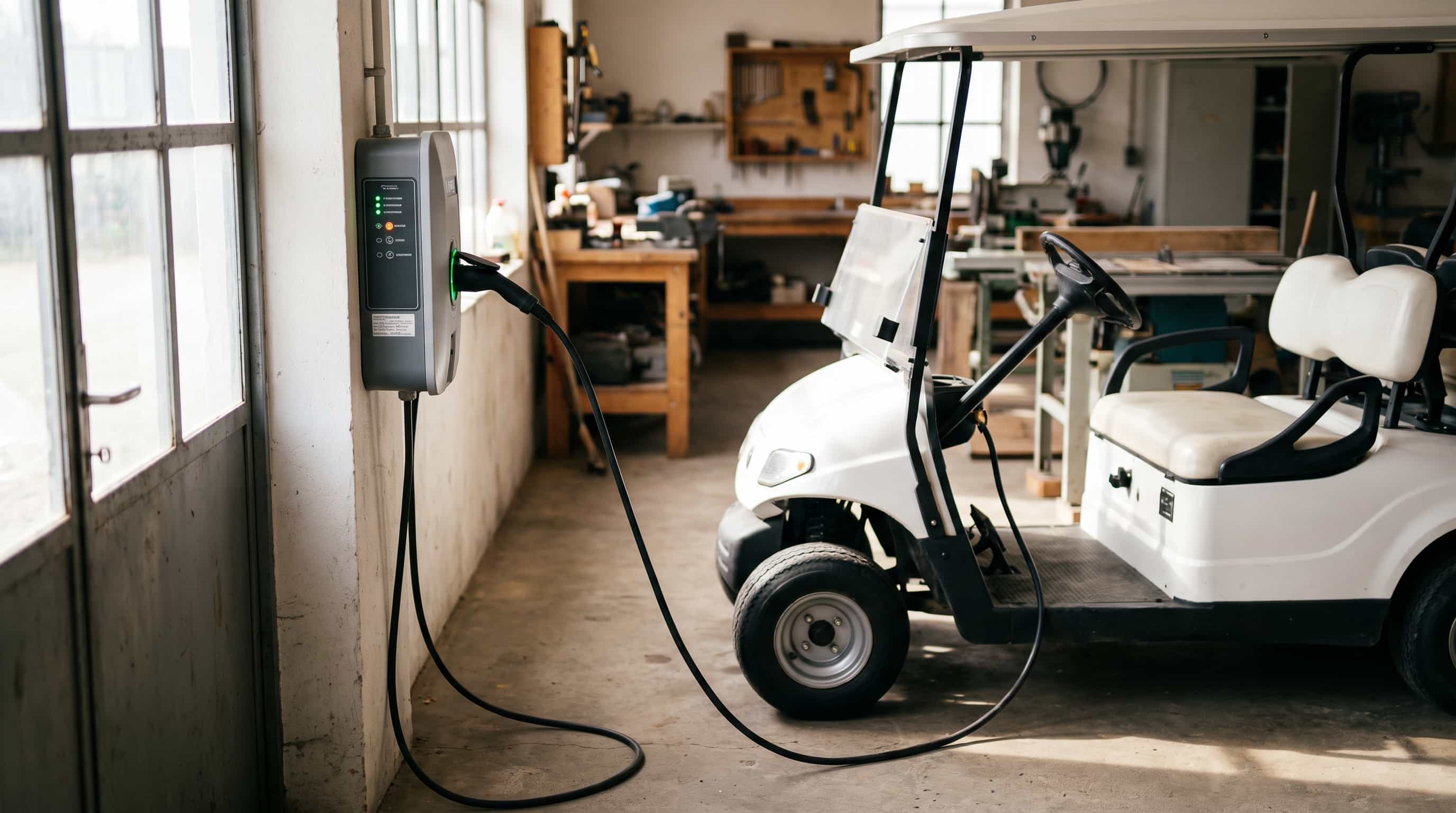
The costs sit in different places. Electric brings a battery pack that has a working life and eventually a replacement cost, plus a charging arrangement that has to exist where the machine sleeps. Petrol brings engine servicing, fuel storage with its own safety requirements, exhaust and noise. Neither is cheap in the way people hope when they compare the two. What decides it is where and how the machine will be used, not which sounds cheaper in the abstract.
Storage decides more of this than buyers expect. Sites with indoor space, enclosed buildings, marquees or noise-sensitive neighbours will not tolerate a petrol machine whatever its condition. Sites with no power where the machine lives will struggle with an electric one. Settle that question before you look at any specific buggy, because it removes half the market from your search and saves you several wasted journeys.
- Indoor use, enclosed spaces or noise-sensitive neighbours: electric, without argument.
- Long working days on a large site with no convenient power: petrol is worth considering.
- Turf, quiet early mornings and play in progress: electric is the usual answer on a course.
- Either way, confirm where and how the machine will be charged or fuelled before you buy it.
If yours is doing this and the checks here have not settled it, we diagnose and repair buggies, including a callout to wherever it is.
What a Yamaha owner notices
Living with any buggy comes down to unglamorous detail. How the seat lifts to reach what is underneath. Whether the charge point or the fuel filler is protected from weather. How the panels come off to reach a brake. Where water sits after a wash down. Whether the parking brake holds on a slope with a full load aboard. Those details decide whether a service is an hour of work or a wasted afternoon and a second visit.
On the electric machines, the battery question applies as it does to any make. Lead-acid packs need their levels checked and topping up with the correct water, and they suffer badly if the machine is left flat over winter. Lithium packs need no topping up and behave differently in cold weather. Establish which is fitted, and make sure the correct charger comes with the machine, because a unit that physically fits is not necessarily the right one.
On the petrol machines, treat it as you would any small engine that lives outdoors. Ask when it was last serviced, what oil is in it, how it starts from cold without a warm-up first, and whether it has sat with fuel in it through a winter. Stale fuel causes more running problems on seasonal machines than mechanical wear ever does, and the symptoms are easy to mistake for something expensive.
Support in Britain is the real question
Yamaha is a substantial name in golf machines internationally. In Britain it appears less often in club fleets than the two larger golf marques, and that has consequences a buyer should weigh honestly rather than dismiss. Fewer machines in fleets means fewer used ones coming out of them, a thinner independent trade in parts, and fewer engineers who see one of these every week and know its habits by heart.
That is a caution rather than a warning off. Plenty of these machines are in use here and being kept running perfectly well by people who planned for it. The point is that you should establish support before you buy rather than assume it. Ask the distributor or importer who covers your area. Ring an independent engineer near you and ask plainly whether they work on the line you are looking at and whether they hold the diagnostic equipment for it.
If both answers are thin and the machine still suits you, price a longer wait for parts and a further travelled engineer into your decision and go in with your eyes open. That is a legitimate trade for a machine that fits the job. What is not legitimate is assuming it will be fine because the badge is familiar from another part of the motor trade entirely.
Buying one sensibly
Start with the serial number and have it decoded rather than accepting a stated year from an advert. Buggies get rebuilt, rebodied and repainted, and a stated age with nothing behind it is worth very little. Photograph the plate before you go any further, because every parts conversation from that point onwards begins with that number and a supplier who does not have it cannot help you quickly.
Then look at the things that are hard to disguise. Steering play with the wheels straight ahead. Brake feel on a gradient. Corrosion underneath with a torch, particularly around welds and where brackets meet the frame. Tyre condition and age, not only tread depth. Seat frames, floor pans and anywhere water has been sitting quietly for a few seasons. Take somebody who knows machines with you if you do not.
Finally, be specific about what comes with it. The charger, if it is electric, and the correct one for the pack. Any keys, including spares. Any service records. Any manual or handbook. Those are the items people forget to ask about and then spend money replacing afterwards, and their absence is a perfectly fair thing to raise before you agree a figure rather than after you have paid one.
Common questions
- What is the difference between a Yamaha Drive and a Drive2?
- They are consecutive golf generations rather than different types of machine. Drive2 is the later of the two, with changes to bodywork, seating and the detail of how things are arranged and serviced. For an owner the practical differences are parts routes and service access. Confirm which generation you are looking at from the serial number rather than the bodywork, since panels get swapped between machines.
- Are Yamaha buggies petrol or electric?
- Both have been offered, which is unusual among the golf marques and is the first thing to establish about any specific machine. Electric suits indoor use, enclosed sites, turf and anywhere noise matters. Petrol suits long days on large sites with no convenient power. The two need different servicing, different storage and different safety arrangements, so decide what your site can accommodate before you start shopping.
- How do I tell whether a used buggy is petrol or electric?
- Look for a fuel filler and an exhaust, lift the seat to see what is underneath, and listen to it start from cold. An electric machine has a battery compartment and a charge point; a petrol one has a tank, a filler and an engine you can hear. If any doubt remains, the serial number decoded by a dealer will settle it, and it is worth settling before money changes hands.
- What is a Yamaha Umax used for?
- Work rather than golf. It is the utility line, built around a load bed for grounds teams, estates, venues, farms and facilities departments moving tools, materials and equipment over ground a van cannot use easily. What a particular machine can carry and tow depends on how it was specified and built, so take that from the maker's own documentation for the specific model rather than assuming.
- Are Yamaha buggy parts hard to get in the UK?
- Harder than for the two marques that dominate British club fleets, though far from impossible. There is distribution here, and independent engineers do work on them. The sensible test before buying is to ring a supplier with the serial number and ask them to source one ordinary wearing item, then judge from the answer you get and the wait you are quoted.
- Is a Yamaha a sensible buy second hand in Britain?
- It can be, provided you settle support first. The question is not about the engineering but about the market: these appear less often in British club fleets than the two larger golf marques, so there is less used stock and a thinner independent trade around them. Find an engineer who works on the line before you commit, and price a possible wait for parts into your offer.
- Can I use a petrol buggy indoors?
- No. A petrol engine produces exhaust gases and noise, and neither belongs inside a building, a marquee or any enclosed space where people are working or gathered. If the machine has to operate indoors, in a warehouse, at an exhibition or anywhere with limited ventilation, it needs to be electric. Your site's own risk assessment should record that decision and the reasoning behind it.
Still not right
We diagnose and repair golf buggies, service them on a plan, and send an engineer out to where the buggy is. Tell us the symptom and we will say what it usually means.