How to buy a golf buggy: a complete guide
By James Brown · Updated 26 July 2026 · 8 minute read

Buying a golf buggy comes down to a few decisions: new or used, electric or petrol, how many seats, and whether it is for a private estate, a business site or leisure. Electric suits most buyers for quiet running and low maintenance, and used suits a tighter budget as long as you check the battery and the history. Match the buggy to how and where you will use it first, then decide new or used within that.
Key takeaways
- Start from how and where you will use the buggy, not from the price.
- Electric suits most buyers; petrol suits long runs far from a charging point.
- New buys you a warranty and a fresh battery; used buys more buggy for the money.
- On a used buggy the battery is the single most important thing to check.
- Match the seats and the type, passenger or utility, to the real job.
Start with how you will use it
The right buggy follows from the job, so decide that before anything else. A buggy for a private estate or a large garden mostly carries a few people over gravel and grass, and a small passenger model does it. A buggy for a business or a work site carries tools and materials as well as people, which points at a utility model with a load bed. A buggy for leisure or a smallholding sits somewhere between the two.
Once you know the job, the seats, the type and the ground it has to cover all follow, and the new-or-used and electric-or-petrol decisions become much easier to make.
New or used
New buys certainty: a warranty, a fresh battery, and a buggy no one has worked hard before you. It costs more, and for an occasional user that cost can be hard to justify. Used buys more buggy for the money, and a well-kept used buggy has plenty of life in it, but the responsibility for checking it is yours.
The deciding factor is usually how much you will use it and how much you mind a repair bill. Heavy or business use leans towards new or nearly new for the warranty and the reliability. Light private use is where a sound used buggy makes the most sense.
Electric or petrol
Electric suits most buyers now. It runs quietly, produces no fumes, has fewer moving parts to maintain, and costs little to charge, which matters at a venue, a home or anywhere near people. Its limit is range and the need to charge, so a site with no power or a buggy that runs all day far from a socket has to plan for that.
Petrol answers that narrow case: long runs, remote ground, and refuelling from a can rather than waiting for a charge. It comes with noise, fumes and more maintenance, so it is worth choosing only where the range genuinely rules electric out. For most private and event use, electric is the straightforward choice.
Seats and type
Seats are simple once you know the job: two for a couple or a single worker, four for a family or a small team, six or more for moving groups. Err towards the seats you will actually use rather than the largest available, because a bigger buggy is longer, needs more room to turn, and asks more of the ground.
Type matters as much as seats. A passenger buggy is built to carry people in comfort. A utility buggy trades a row of seats for a load bed and is the right answer where the buggy has to carry kit as well as people. A wheelchair-access buggy is a specialist choice worth making from the start if you need it.
Looking for one of your own? Every buggy we list carries its specification and the checks this guide describes, so you can compare them on the same terms.
What to check before you buy
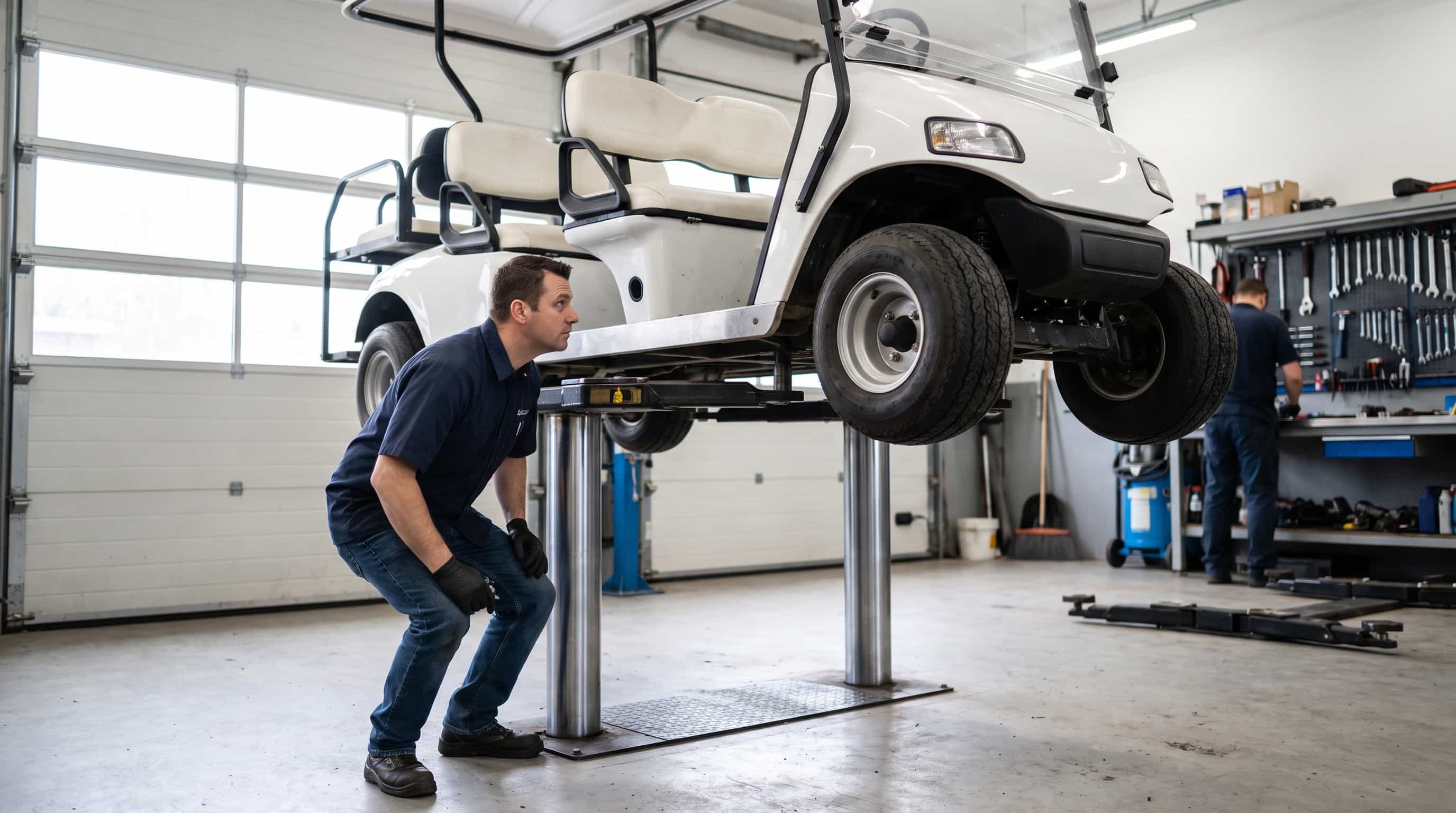
On any buggy, look over the tyres, the brakes, the chassis for corrosion or damage, and the general condition, and drive it forwards and back on a bit of ground like the ground you will use. On an electric buggy, the battery is the item that matters most, and our guide on buying a used golf buggy covers checking one in detail.
Ask for the service history and any paperwork. A buggy that has been serviced and can prove it is worth more than a cheaper one with no record, because the record is what tells you how the buggy has been treated.
Where to buy
You can buy from a dealer, which usually costs more but comes with some reassurance and often a warranty, or privately, which is cheaper but puts the checking on you. Wherever you buy, see the buggy in person, drive it, and do not send money for a buggy you have not seen.
Our own golf buggies for sale are listed with their specification and condition set out plainly, and where a listing is a used buggy its history is part of the listing. It is a sensible place to start a search, and the buying decisions above apply to any buggy you look at, ours or anyone else's.
Common questions
- Is it better to buy a new or used golf buggy?
- New if you want a warranty, a fresh battery and heavy or business use, and used if you want more buggy for the money and will use it lightly. A well-kept used buggy is a sound buy as long as you check the battery, the drivetrain and the service history first.
- Should I buy an electric or petrol golf buggy?
- Electric for most buyers, because it runs quietly, produces no fumes, needs little maintenance and costs little to charge. Petrol only where the range genuinely rules electric out, such as long runs far from a charging point, and you accept the noise, fumes and upkeep that come with it.
- How many seats does a golf buggy need?
- As many as you will actually use, and no more. Two seats suit a couple or a single worker, four suit a family or a small team, and six or more suit moving groups. A larger buggy is longer and needs more room to turn, so oversizing costs you space and money for seats you never fill.
- What should I check before buying a golf buggy?
- The battery first on an electric buggy, then the motor, tyres, brakes and chassis, and the service history. Drive it forwards and back on ground like the ground you will use, and see it in person. Never pay for a buggy you have not seen and driven.
- Should I buy from a golf buggy dealer or privately?
- A dealer usually costs more but offers reassurance, often a warranty, and somewhere to go back to; a private sale is cheaper but the checking falls entirely on you. Either can be a good buy. We sell our own new and used stock and list vehicles for private sellers, with each listing stating condition and price plainly.
See what is for sale
New and used buggies, each listed with its specification and history, so you can apply what this guide covers before you go and see one.
Related pages
Related guides
 New or used golf buggy, which to choose6 minute read
 Golf buggy finance explained6 minute read
 Buying a used golf buggy, what to inspect5 minute read
- How much does a golf buggy cost to buy or hire6 minute read
 Hiring versus buying golf buggies, which makes sense7 minute read
 Leasing a golf buggy for your business6 minute read