Re-shelled buggies and body kits explained
By James Brown · Updated 29 August 2026 · 10 minute read
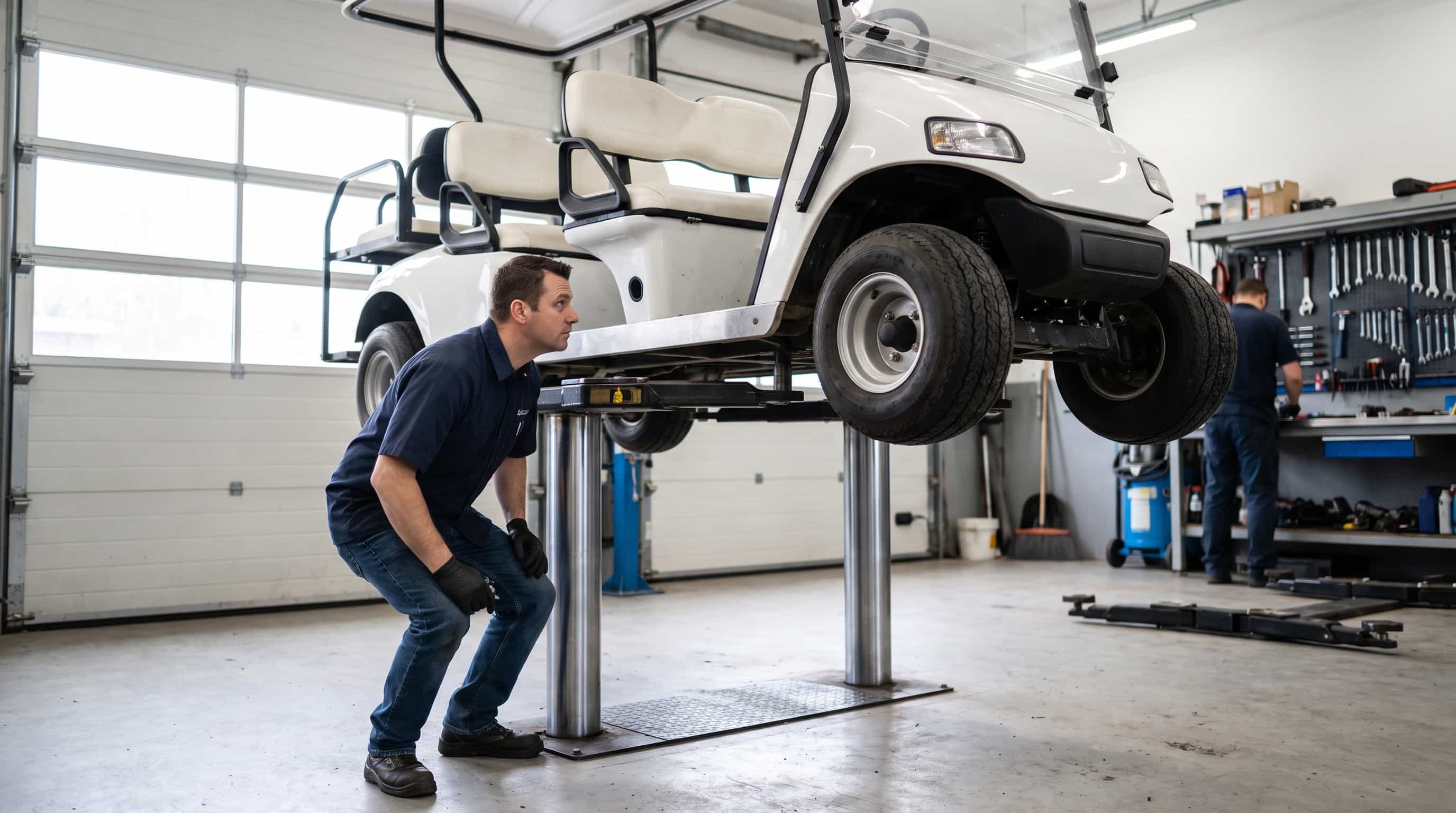
A re-shell is a body change, not a rebuild. The shell, bonnet, seats and trim are replaced, often with a vintage or car-styled kit, while the chassis, suspension, brakes, motor and battery set underneath carry on with whatever age and history they already had. Judge the vehicle by that platform first and the bodywork second. The questions worth asking are which platform it sits on, what was actually renewed with receipts to show it, and who did the work.
Key takeaways
- A re-shell changes the body; the chassis, brakes and battery set keep whatever history they already had.
- Rebodied, rebuilt and refurbished are trade words with no policed meaning, so ask for the itemised work list.
- Photograph the platform's identification plate, because on a re-shelled machine it is the easiest thing to lose.
- New panels sit over the floor pan and frame rails, which is exactly where corrosion and accident repair hide.
- Service access is decided by how the body comes apart, and a bonded shell adds labour to every job.
- Tell the insurer the vehicle is rebodied, because cover written on the wrong description is worth less than it looks.
- Styled bodywork narrows the resale market to the buyers who happen to share the taste.
What a re-shell actually is
Every buggy is two things bolted together. Underneath sits the platform: chassis rails, suspension, steering, brakes, wheels, and either a motor, controller and battery set or a small engine and its transmission. Over the top sits the body, meaning the shell, the bonnet, the roof supports, the seats and the trim. The two have very different lives. A body cracks, fades and gets kerbed long before a well kept platform is finished, and that mismatch is what creates the re-shell market in the first place.
Re-shelling covers a wide range of work. At the plain end it is a replacement panel set from the maker after damage, fitted to the machine it was designed for. In the middle sit aftermarket kits that restyle a common platform, often into something resembling a vintage roadster, a small van or a period car. At the far end there is one-off coachwork built for a venue or a livery. All three arrive on the used market described with the same handful of words, which is where the confusion starts.
Why the market exists at all
There is nothing disreputable about the idea. Buggy platforms are simple and long lived, and a chassis with straight rails, sound brakes and a fresh battery set has years of work left in it after the body has gone milky and split. Replacing panels is far less wasteful than replacing a whole vehicle, and on the common platforms the parts to do it are readily available. Done honestly, a re-shell is recycling with a paint job rather than a trick.
The styled kits answer a different demand. Hotels, weddings, holiday parks, film work and country estates want a vehicle that looks as though it belongs in the setting rather than on the eighteenth. A retro shell over an ordinary electric platform does that for a fraction of the effort of building a bespoke vehicle, and it keeps the driving controls, the charging routine and the servicing familiar to whoever maintains it.
Clubs and hire fleets supply most of the raw material. When a fleet is replaced, the machines going out often have plenty of mechanical life and tired bodies, which is exactly what a rebodying workshop wants to buy. Knowing that helps you read a listing properly. A smart body on a fleet-aged platform is a common and perfectly honest combination, provided the seller describes it that way rather than letting the paint do the talking.
The vehicle you are actually buying
The body has no age of its own that matters to you. What matters is the platform beneath it, and that carries every hour, every winter and every owner it ever had. A re-shell changes none of that. If the machine ran a full fleet life before the new panels went on, it is still a machine with a full fleet life behind it, and it deserves to be inspected and priced as one rather than as the thing it now resembles.
So start with the ordinary used-buggy checks and do them properly. Battery set age and behaviour on a run after resting off charge. Brake condition and whether the machine pulls up straight. Steering play. Tyre wear across the tread rather than at a glance. How the motor and controller behave under load on a slope. Evidence of who serviced it and when. The prettier the vehicle, the more discipline this takes, because a well finished body is a genuinely powerful distraction.
Questions that separate a rebody from a rebuild
Sellers use rebuilt, restored, refurbished and rebodied loosely, and none of those words carries a policed meaning in this trade. The way through is not to argue about vocabulary but to ask for the list. A workshop that renewed running gear can itemise it without hesitating. A workshop that fitted panels to a running machine will say so if asked directly, and that answer is perfectly acceptable, as long as the price reflects what was and was not done.
Take a photograph of the identification plate before you leave, whatever the answers turn out to be. It is the one piece of information that lets an engineer, a parts supplier or an insurer work out what the machine actually is later on. On a re-shelled vehicle it is easily lost, either covered by a new panel or thrown away with the old one, and a buggy nobody can identify is a buggy nobody can order parts for.
- Which platform is underneath, and where its identification plate or stamped serial can be seen.
- What was replaced, when, and whether there are parts receipts to look at.
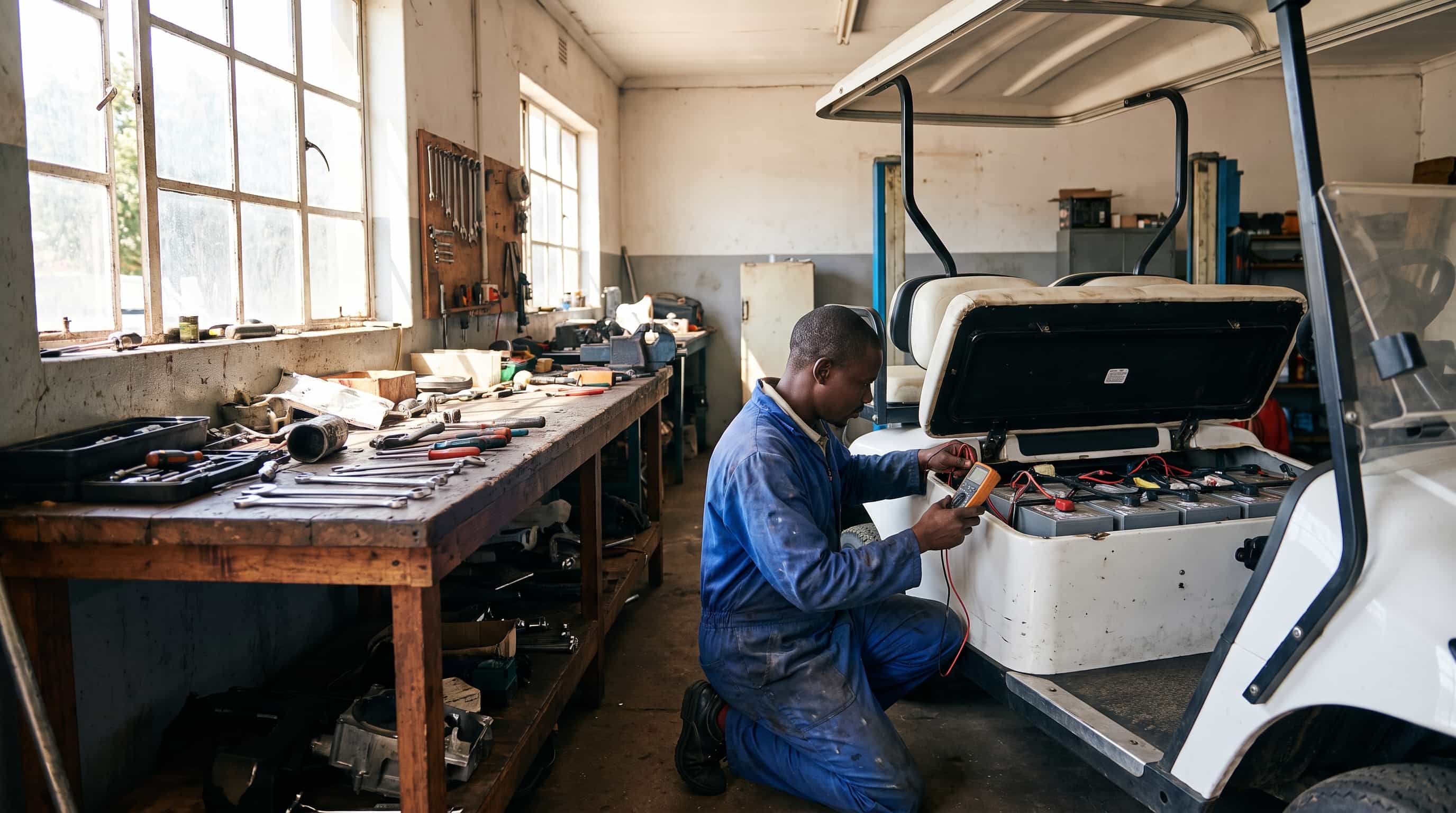
- How old the battery set is, and whether it was renewed as part of the work or carried over.
- Whether the frame has been repaired or welded anywhere now covered by bodywork.
- Who built it, and whether they also service what they build.
- Whether a manual and a parts catalogue exist for the platform underneath.
What a new body can hide
New panels sit directly over the areas that decide a used buggy's future: the floor pan, the frame rails, the suspension mounts and the battery tray. Corrosion in any of those is the difference between a machine worth keeping and one worth stripping for parts, and fresh bodywork is very good at concealing the early stages of it. Take a torch, get underneath, and spend your time looking at the frame rather than at the finish.
Accident repair is the other thing worth establishing. A shell is sometimes replaced because the old one was destroyed, and whatever destroyed it also reached the frame. Look for ripples in the rails, welds that do not match the factory ones, mismatched fasteners, and panels, roof struts or a seat base that sit unevenly against each other. A seller who volunteers that history is telling you something good about themselves, not something bad about the buggy.
Ask outright whether the machine has ever been submerged. Water damage to a controller, a wiring loom or battery terminals tends to show up months later as intermittent faults that are expensive to chase, and a rebody is a tempting way to move a flood-damaged machine on quietly. It is a fair question, it takes ten seconds, and an honest seller will not mind being asked it.
If yours is doing this and the checks here have not settled it, we diagnose and repair buggies, including a callout to wherever it is.
Fit, access and the things that stop working
A body kit has to accommodate everything the original body carried, and the cheaper ones do not manage it. Check that the charging point is reachable with the lead you own, that lights sit where a lens can actually be replaced, that the seats are bolted to proper mounts rather than to the shell itself, and that a bag rack or load bed still exists if you need one. Sit in it and drive it, because a restyled cab often quietly loses legroom or a clear view of the near-side front wheel.
Serviceability is the part people find out about later. An engineer needs to reach the controller, the battery connections, the motor and the brake adjusters, and a bespoke body can turn a half-hour job into a body-off morning. Ask how the panels come away, whether the wiring loom was extended or spliced to suit the new shape, and whether anything now needs the body removing for routine service. Extra bodywork also adds weight and sometimes width, which trims the range slightly and matters on narrow paths and inside a trailer.
Insurance, road use and resale
Tell your insurer what the vehicle actually is. A modified or rebodied buggy is not what a standard description assumes, and cover written against the wrong description is exactly the sort of thing that surfaces at claim time rather than at renewal. The insurer decides, not the seller and not the workshop that built it, and a short conversation before you commit settles the point while you still have the option of walking away.
Road ambitions get harder rather than easier with a kit. Using any buggy on a public road in Great Britain brings requirements around construction, lighting, registration and insurance, and that is DVLA territory rather than a matter of appearance. A vintage-styled shell does not make a machine road legal, and a bespoke body can complicate the evidence of what the vehicle is and where it came from. Ask before you buy rather than afterwards.
Resale is narrower too. A standard machine sells to anyone who wants a buggy. A machine styled to one particular taste sells to the people who share it, or to a buyer who wants the platform and will bear the cost of putting a standard body back on it. That is not a reason to avoid a re-shell, but it belongs in the sum when you are working out what the vehicle is worth to you rather than to its builder.
Buying one well
Treat it as two purchases made in one order. First buy the used buggy: platform, battery set, brakes, structure and history, all judged as though the body were plain white plastic. Then decide separately what the bodywork is worth to you, knowing that a competent conversion by a workshop that will also service it afterwards is a very different proposition from a kit bolted on at home over a wet weekend.
Where the vehicle is for a venue or a business, drive it on the ground it will really work on before committing, loaded the way it will really be loaded. Look at the finish from a metre away in daylight rather than in photographs, and ask what happens when a panel gets damaged: whether replacements exist, who makes them, and how long they take to arrive. A re-shell nobody can supply parts for eventually becomes an ordinary buggy with an expensive problem attached.
Common questions
- Is a re-shelled golf buggy the same as a refurbished one?
- No. Refurbishment describes work on the components that wear, above all the battery set, the brakes and the running gear. A re-shell describes new bodywork and nothing else. The two are often done together, and they are just as often confused on purpose. Ask which was actually done, and ask for the itemised list rather than accepting either word on its own.
- Can I put a body kit on a buggy I already own?
- Usually yes on a common platform, and the practical questions are fit and service access rather than whether it will bolt on. Confirm the kit is made for your exact platform and generation, ask how the lights, charging point and seat mounts are handled, and tell your insurer before the vehicle changes shape rather than after.
- Does a body kit affect the warranty?
- It can. A maker's warranty covers the vehicle as it was supplied, and anything the modification touches, loads differently or obstructs may fall outside it. If the machine is still in warranty, ask the supplying dealer in writing before any work starts. On an out-of-warranty machine the question moves to whoever built the kit and what they will stand behind.
- Will a re-shelled buggy be harder to service?
- Sometimes, and it depends entirely on how the body was designed to come apart. Panels that unbolt in minutes cost nothing in labour. A bonded or one-piece shell sitting over the controller and battery bay adds time to every job on the machine. Ask the builder how routine servicing is done, and ask a local engineer whether they will take the work on.
- Are vintage-styled buggies road legal?
- Styling has no bearing on it. Road use in Great Britain depends on how the vehicle is constructed, lit, registered and insured, and DVLA is the authority on what a specific machine would need. Most buggies are used on private land, where the landowner's rules apply instead. Settle the question with DVLA before you plan anything around road use.
- How do I value a re-shelled buggy?
- Value the platform as you would any used buggy of that age and history, then treat the bodywork as taste rather than as condition. Documented mechanical work, a recent battery set and a builder who services what they sell all add real value. A smart shell over an unknown platform mostly adds risk, and risk is not worth paying a premium for.
Still not right
We diagnose and repair golf buggies, service them on a plan, and send an engineer out to where the buggy is. Tell us the symptom and we will say what it usually means.