Golf buggy dealer and service support in the UK
By James Brown · Updated 29 August 2026 · 9 minute read

Support here comes in four shapes and they are not interchangeable. Appointed dealers hold the maker's diagnostics, genuine parts and warranty authority. Independent workshops cover many makes and usually cost less. Mobile engineers come to the machine, which matters because a stopped buggy cannot lawfully drive itself to a workshop. Fleet contracts buy planned visits and an agreed response. Decide which of them you need before a breakdown, because the choice is much harder to make from a standstill.
Key takeaways
- Appointed dealers hold warranty authority, the maker's diagnostics and correct part numbers; independents hold breadth and speed.
- Mobile attendance dominates the trade because a stopped buggy is awkward and expensive to move.
- Support follows the platform rather than the badge, so an older generation of a well-supported make can be poorly served.
- The useful questions for an engineer are about load-testing batteries, written reports and realistic attendance times.
- A fleet contract is worth what its planned visits and response times say, not what its discount says.
- Decide in advance how a machine gets moved if it will not drive, because recovery turns a small job into a day.
- Having the serial, the battery date and a clear symptom description raises the chance of a first-visit fix.
The four shapes support takes
Appointed dealers are the maker's own network. They hold current documentation, the diagnostic and programming equipment the maker issues, genuine parts, and the authority to carry out warranty work. Independent workshops trade that depth for breadth: they see many makes, they can often source and adapt, and they usually turn work round faster. Mobile engineers bring the same independent skill to your site in a van. Fleet contracts sit on top of any of these and buy planned attendance rather than reactive repair.
Most owners end up using more than one. A club might hold a contract covering planned servicing and battery testing, use an independent for tyres and body damage, and go to a dealer for the one machine still inside its warranty. That is not disorganisation, it is matching the job to the right source, and it works perfectly well as long as somebody keeps all the records for each machine in one place rather than three.
Where a main dealer is the right call
Warranty work is the clearest case, because only the network can authorise it and going elsewhere with a warranted machine is how cover gets lost. Controller diagnostics and programming are the second, since the maker's own tools read and set things a generic reader cannot reach. Anything where the exact part number genuinely matters is the third, and that means safety-critical components above all, where a component that fits is not the same as the component specified.
The limits are geography, lead time and age. Dealer coverage in the UK is thin compared with the car trade, so the nearest one may be a long way from you and the machine has to get there somehow. Parts for current models are usually straightforward, and parts for withdrawn ones considerably less so. There comes a point in any platform's life where the network stops being the practical answer and an independent who has kept the knowledge becomes the more useful call.
Independents and mobile engineers
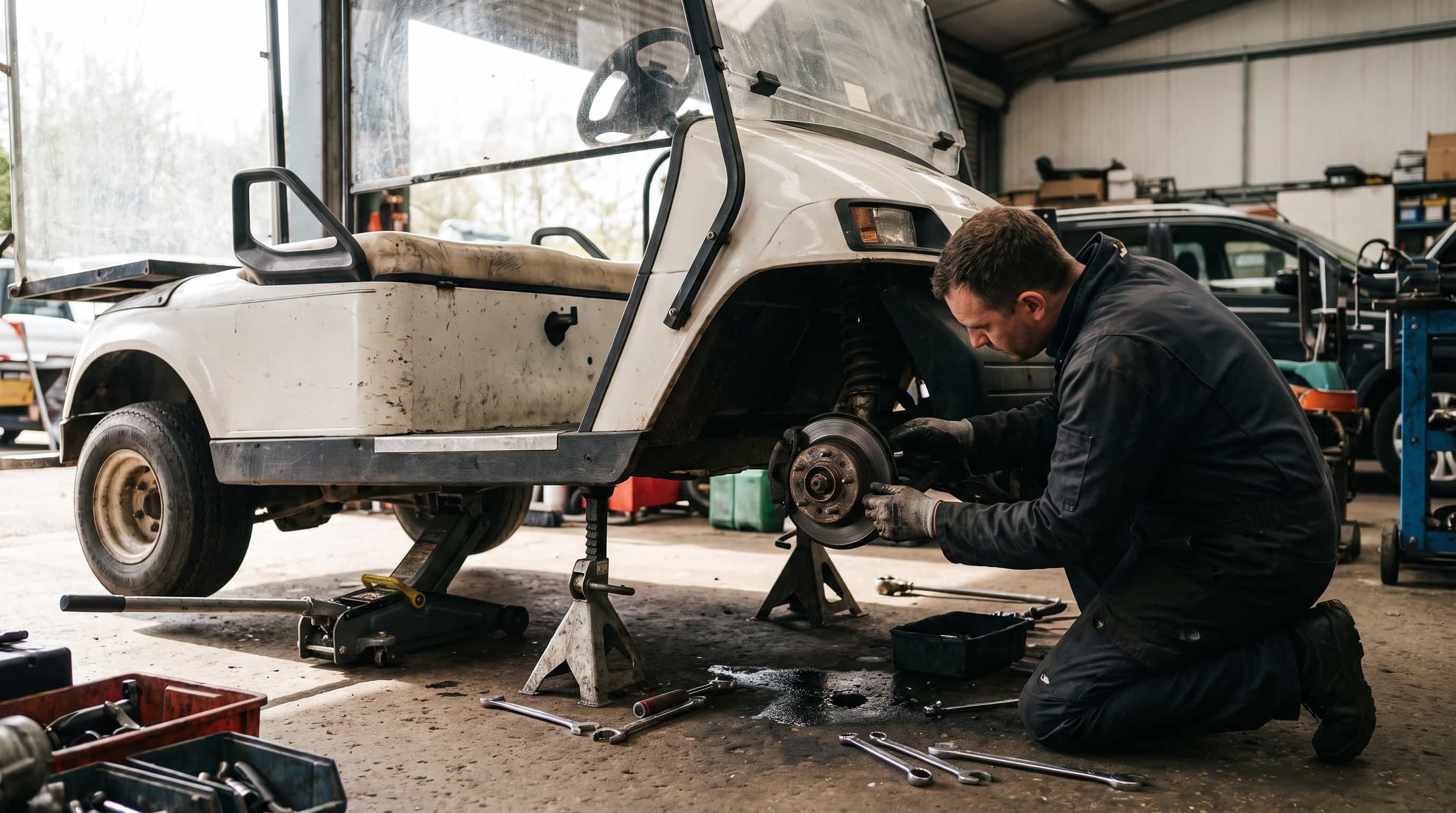
The independent trade is where most UK buggies are actually maintained. A good independent works across the common platforms, knows what tends to fail on each of them, holds or can quickly get consumables, and will give you a straight answer about whether a machine is worth spending money on. A mobile engineer adds the thing that matters most for a buggy, which is turning up to it rather than expecting it to arrive at a workshop under its own power.
Judging one is a matter of asking rather than of reputation, and the questions are not difficult. What separates an engineer who will still be useful to you in two years from one who fixes the immediate symptom is mostly method: how they test rather than guess, what they write down, and whether they tell you about the problem that is coming as well as the one that has arrived. The points below are worth putting to anyone before you book them.
- Do they work on your platform regularly, or would yours be the first one.
- Can they load-test a battery set rather than judging it from a resting voltage reading.
- Do they leave a written report saying what was checked, what was done and what is coming next.
- What do they carry in the van, and what has to be ordered in.
- Are they insured for work on your site, and will they send the certificate.
- What is a realistic attendance time in your part of the country, in season rather than in January.
What a fleet contract should actually contain
A contract earns its place once downtime costs you something, which for a club or a hire operation is immediately. The value is not the discount on labour. It is the planned visits and the agreed response, because together those turn maintenance from a series of surprises into a schedule somebody else owns and remembers on your behalf, which is worth considerably more than an hourly rate.
Get the specifics in writing and read them the way you would read an insurance policy. What is included and what is chargeable. How many planned visits, and at what point in the year, which for a golf club should mean before the season rather than during it. What response applies to a machine that has stopped, and whether that is working hours or the whole week. Whether battery testing is included, since it is the single most useful preventive check on an electric fleet. Whether a replacement machine appears if one is off the road for a long spell. And who holds the records at the end of it.
Support belongs to the model, not just the make
A make with a strong UK presence does not guarantee that your particular machine is supported. Support follows current and recent platforms, and it thins as a platform ages out of the network. Two buggies wearing the same badge can be very differently placed if one is current and the other is two generations back, and the badge is the part of the machine that tells you least about it.
This is a question to settle before buying rather than after, and it is an entirely fair one to put to a seller. Ask who services this platform locally, whether the wear parts are still current, and what the position would be if a controller or a charger failed. A cheap machine that nobody within reach will work on is not cheap. Our guides on parts availability by make and on which makes are supported here go into the detail.
If yours is doing this and the checks here have not settled it, we diagnose and repair buggies, including a callout to wherever it is.
Building a support plan before you need one
The plan is short and it takes an afternoon. Identify the machine properly and write down the serial, the model code and the date the battery set was fitted. Find two providers who will attend your address rather than one, and speak to both while nothing is wrong, which is the only time you will get an unhurried conversation out of either of them. Then establish who moves the machine if it cannot move itself, and whether that is a job you can do or one you have to buy.
Then decide what you hold yourself. On a single private machine that usually means the charger's documentation, a spare set of fuses of the correct rating, and knowing where the isolator or main disconnect sits. On a fleet it means consumables in stock, a daily check routine that catches problems while they are still small, and one named person who owns the relationship with the engineer. The plan is not elaborate. Its entire value is that it exists before the phone call rather than being invented during it.
- Serial number, model code and battery set date, written down and photographed.
- Two providers who will attend your postcode, contacted before anything has gone wrong.
- A decided answer to how the machine moves if it will not drive.
- Fuse ratings, the isolator location and the charger's own documentation kept to hand.
- For a fleet, a daily check sheet and one named person who owns the engineer relationship.
Transport, geography and the machine that will not move
A stopped buggy is an awkward object. It is heavy, one person cannot push it far, and it is generally not lawful to drive it along a public road to reach a workshop. That is why mobile attendance dominates this trade, and why the first question on any call-out is whether the fault is likely to be fixable where the machine is standing. Anything needing a bench is a different order of job before a spanner is lifted.
Where a workshop visit is genuinely needed, the practical routes are the provider collecting on a trailer, a plant transport firm, or you towing it yourself if you have the vehicle, the trailer and the ability to load a machine that may have no working brakes. Agree who arranges it before you need it. Rural sites, island locations and anywhere a van cannot get close to the buggy all deserve that conversation in advance rather than a discovery on the morning.
What to have ready when you call
First-visit fix rates rise sharply with the quality of the description, and preparing one costs you nothing. Give the make, model and serial, the age of the battery set, and what the machine does rather than what you have concluded is wrong with it. Say what changed and when: it was fine on Friday, it sat on charge over the weekend, it now moves a short distance and stops. Engineers work backwards from that far faster than from a diagnosis.
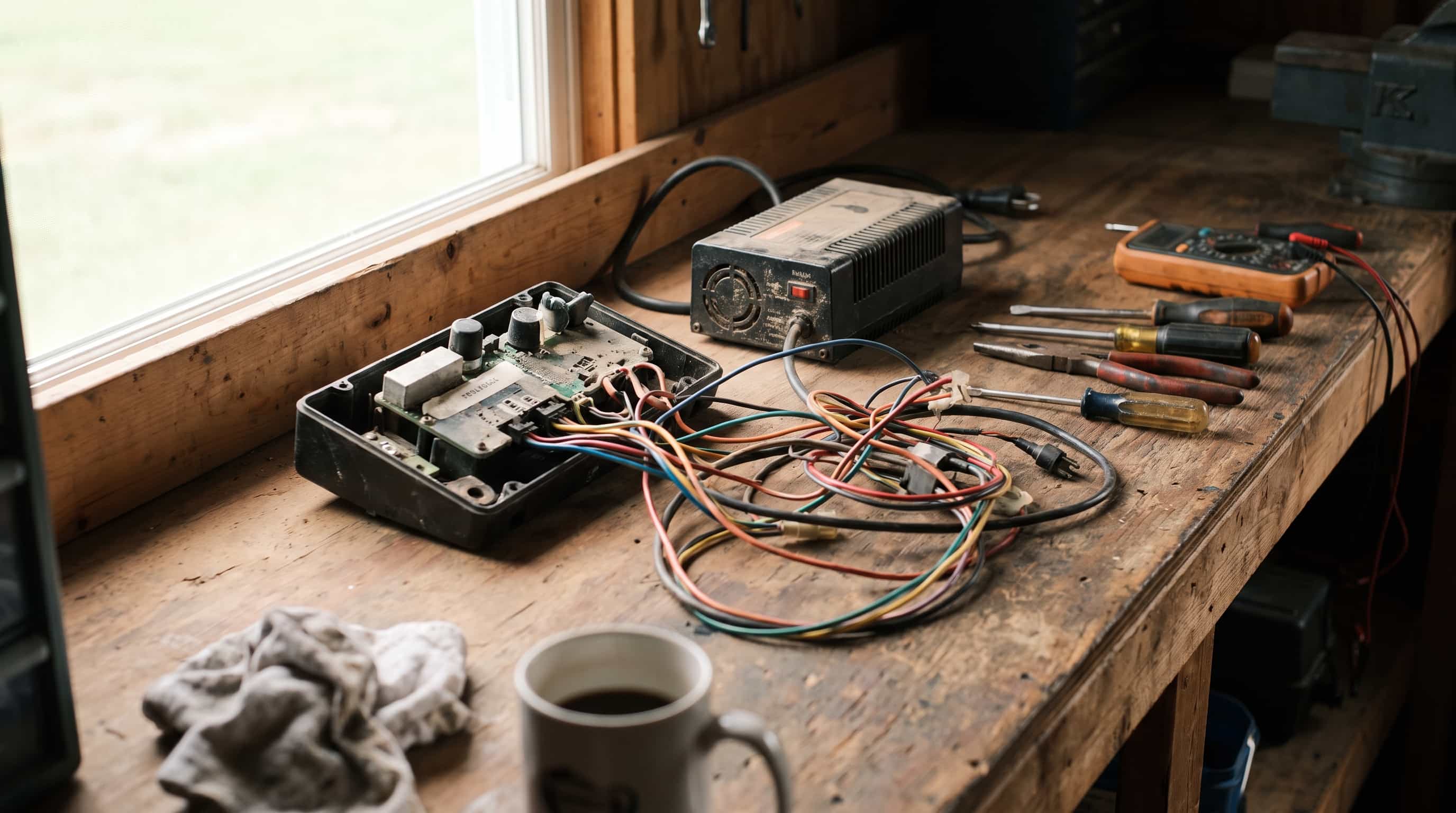
Then add the details they will ask for anyway. Whether any lights, codes or beeps appear and in what order. Whether the charger behaves normally and how long it runs before it stops. Whether the fault appears cold, warm, wet or constantly. Where the machine is standing, whether a van can reach it, and whether there is mains power there. That last one decides whether a battery set can be tested and charged on site, and it is the detail most often left out.
Common questions
- Can any garage service a golf buggy?
- Very few can, and it is not really a motor trade job. The systems sit closer to industrial electric vehicles than to cars: high-current traction batteries, a controller that usually needs its own software, and brake and steering hardware a car technician will not have seen before. A specialist buggy engineer, mobile or workshop-based, is the right trade to call.
- Do I have to use a main dealer to keep my warranty?
- For warranty repairs, yes, because only the network can authorise them. For routine servicing the position depends on the wording of the warranty you were given, and some allow competent independent servicing provided it follows the schedule and is documented properly. Read the warranty document and ask the supplying dealer in writing before assuming it either way.
- How do I find a golf buggy engineer near me?
- The maker or importer will name their appointed dealers, which is the starting point. Beyond that, golf clubs and holiday parks in your area already know who attends them, and asking a club's course manager is often quicker than a search engine. Whoever you find, put the practical questions about platform experience, battery testing and attendance times before booking.
- Can a mobile engineer replace batteries on site?
- Usually yes, and it is one of the most common mobile jobs there is. What they need is safe access, somewhere reasonably level to work, and a plan for taking the old set away, since traction batteries fall under waste and transport rules that a general skip does not cover. Confirm that disposal is included when you book rather than afterwards.
- Is a service contract worth it for a single buggy?
- For one private machine, usually not. A booked annual service with an engineer you have chosen does the same job without the commitment. Contracts start to earn their place once downtime costs money, or once enough machines make scheduling a burden in itself, which is the point most clubs and hire operators reach fairly quickly.
- What happens if parts for my buggy are no longer available?
- Common wear items rarely disappear, because brakes, bearings, tyres and cables have generic equivalents. The risk sits with the model-specific electronics and the body panels. An independent may repair or substitute a controller or a charger where a dealer would only replace, so ask before writing a machine off, and establish the position before buying an older platform.
Still not right
We diagnose and repair golf buggies, service them on a plan, and send an engineer out to where the buggy is. Tell us the symptom and we will say what it usually means.