Preventing theft, locks and trackers
By James Brown · Updated 21 July 2026 · 5 minute read
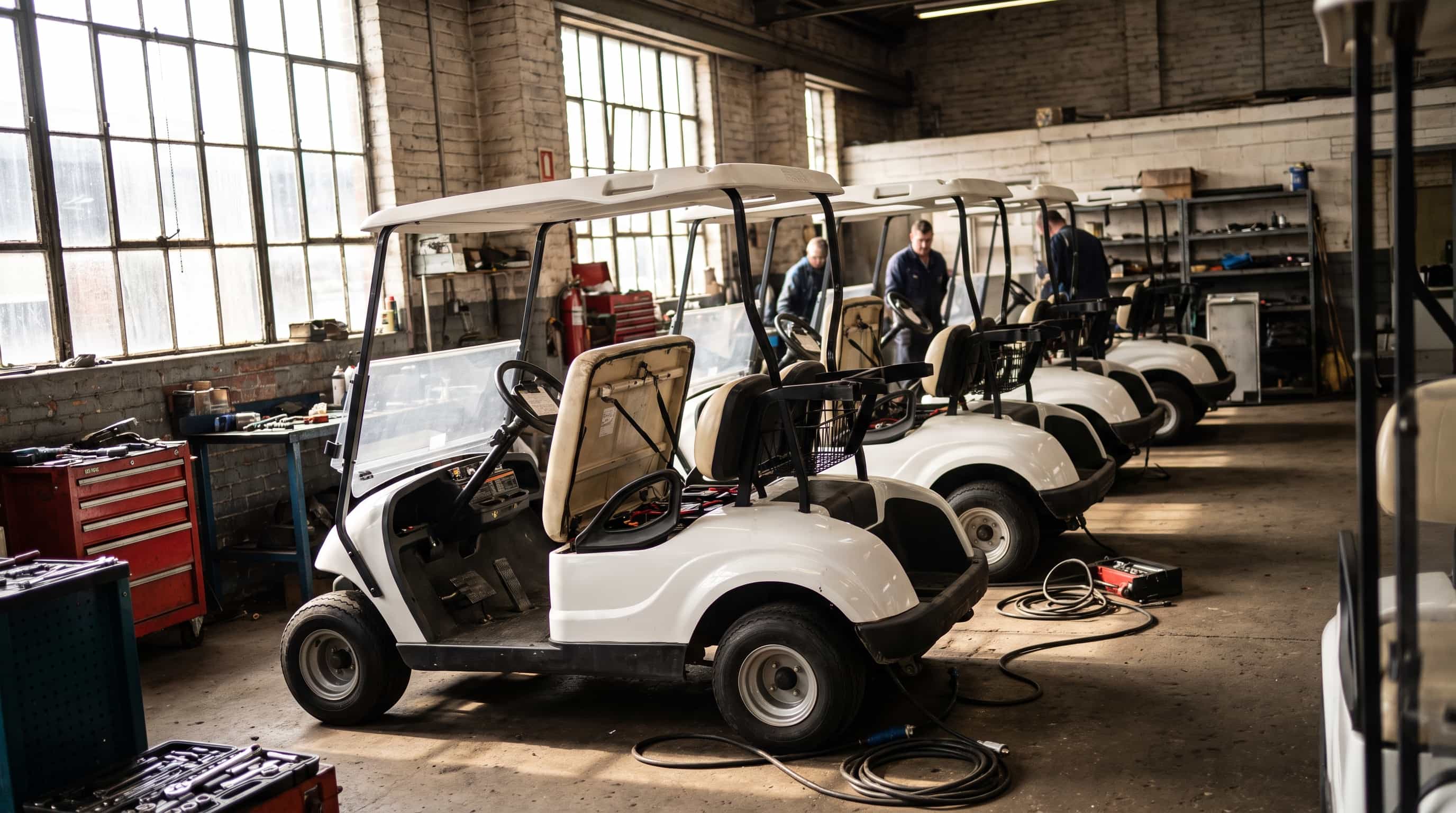
Golf buggies are stolen because they are valuable, portable and often left unsecured, so prevention layers physical locks, immobilising, secure storage, marking and a tracker. No single measure is enough on its own. The most effective and cheapest step is simply not leaving a buggy accessible and un-immobilised where it can be driven or loaded away.
Key takeaways
- Buggies are a theft target: valuable, portable, and often left out and unsecured.
- Layer your defences; no single lock or tracker stops a determined thief alone.
- Immobilising and a physical lock make a buggy harder to drive or load away quickly.
- Secure storage out of sight is the biggest single reduction in risk.
- A tracker aids recovery after the fact; it does not prevent the theft itself.
Why buggies get taken
A golf buggy is an attractive target for the same reasons it is useful: it holds real value, it is easy to move, and it is frequently left standing in the open, sometimes with the key in it, at courses, venues and events. Many are taken not by sophisticated theft but by opportunity, driven or wheeled away because nothing stopped them in the few minutes it took. Understanding that shapes sensible prevention: most of the risk is opportunistic, so most of the defence is about removing the easy opportunity rather than defeating a professional.
Layering the defences
No single measure does the whole job, so the practical approach is layers, each of which slows a thief and raises the chance they give up or are caught. A physical lock, a wheel clamp or a stout lock on the steering or a wheel, makes a buggy awkward to drive or roll away. Immobilising, removing the key and using any built-in or added immobiliser, stops it being simply driven off. Together those turn a thirty-second theft into a job that needs tools, time and nerve, which is often enough to send an opportunist elsewhere.
Storage and marking
The largest single reduction in risk is where the buggy sleeps. A buggy locked inside a secure building, out of sight, is far less likely to be taken than one left out overnight under a cover, however good the cover looks. If secure indoor storage is possible, it is worth more than any gadget. Marking helps too: a visible, recorded identity, and a note of the serial or identification numbers, makes a buggy harder to sell on and easier to prove yours if recovered, and marking that is clearly present can deter a thief who wants an anonymous machine.
If yours is doing this and the checks here have not settled it, we diagnose and repair buggies, including a callout to wherever it is.
What a tracker really does
Trackers are worth having, but it is worth being honest about what they do. A tracker does not prevent a theft; it improves the chance of recovering the buggy afterwards by showing where it has gone. That is genuinely valuable, especially for a fleet, but it works alongside prevention rather than instead of it, and a buggy that is easy to steal and merely tracked is still a buggy that gets stolen and, sometimes, found stripped. So fit a tracker for recovery, and still lock, immobilise and store the buggy properly to stop the theft happening in the first place. For a venue running several buggies, building these habits into the daily routine, keys controlled, buggies immobilised and secured when not in use, is what actually keeps the fleet.
Common questions
- What is the most effective way to stop my buggy being stolen
- Secure indoor storage, out of sight, does more than any single lock or gadget, because most thefts are opportunistic and a buggy that cannot be seen or reached is a poor opportunity. Combine that with removing the key and immobilising it, and you have removed the easy theft that accounts for most losses.
- Are trackers worth fitting
- Yes, but for what they actually do. A tracker helps you recover a buggy after it is taken by showing where it has gone; it does not prevent the theft. Fit one for recovery, especially across a fleet, and still lock, immobilise and store the buggy properly, since a tracked but easily stolen buggy is still stolen.
- How do I protect a fleet at a venue
- Control the keys, immobilise and secure the buggies when they are not in use, store them out of sight overnight, and record their identification numbers. Build those steps into the daily routine so they happen every day rather than when someone remembers, since a fleet left out and keyed is a standing invitation.
Still not right
We diagnose and repair golf buggies, service them on a plan, and send an engineer out to where the buggy is. Tell us the symptom and we will say what it usually means.
Related pages
Related guides
 Golf buggy troubleshooting, a complete guide9 minute read
 Golf buggy battery state of charge, reading it properly4 minute read
- Common Club Car faults and fixes6 minute read
- Transporting a golf buggy safely5 minute read
 Fleet maintenance planning for venues6 minute read
 Daily checks for fleet operators5 minute read