Golf buggy end-of-season maintenance
By James Brown · Updated 21 July 2026 · 4 minute read
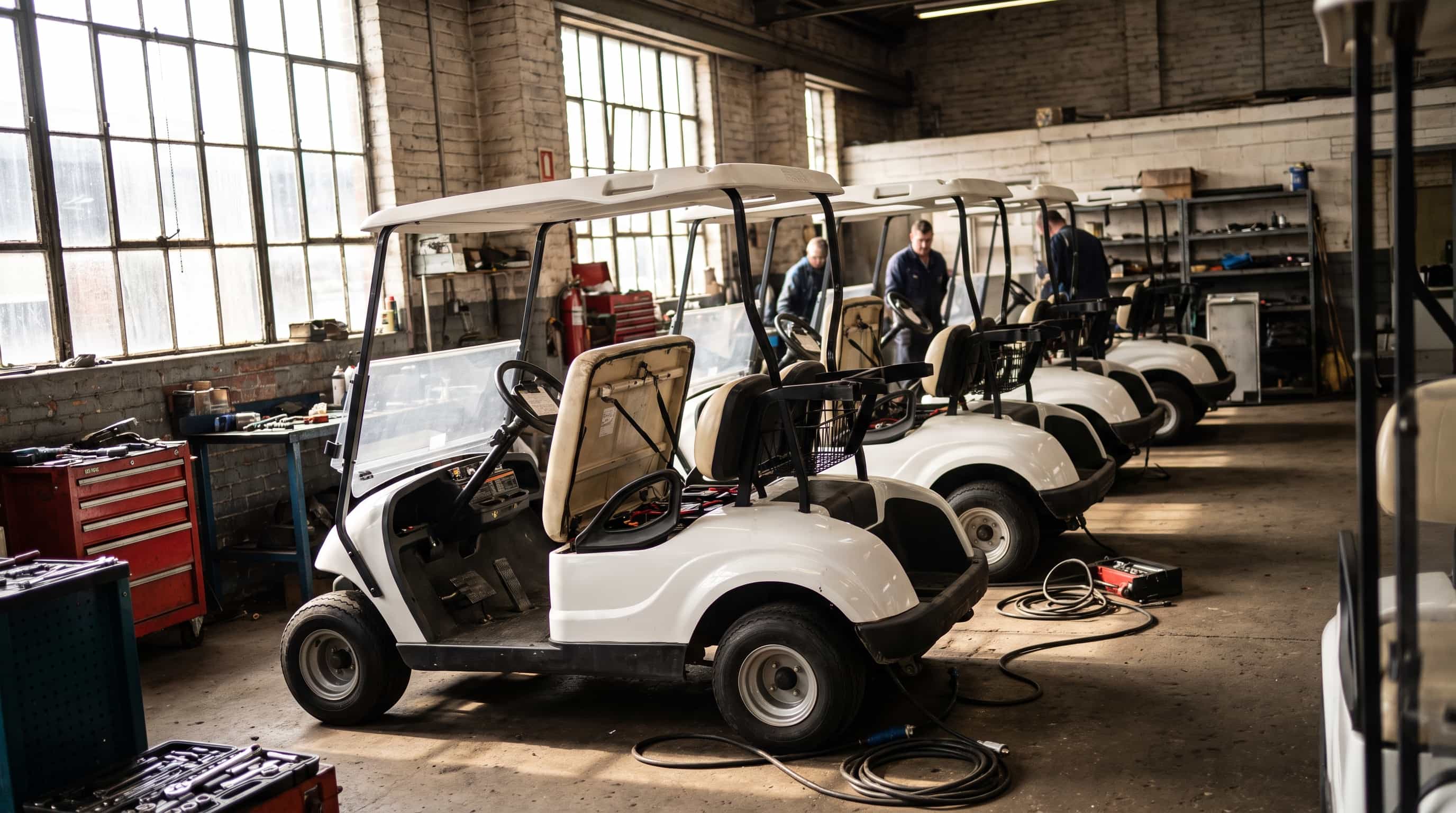
At the end of a season, clean and dry the buggy properly, sort the batteries for storage, and deal with the wear the season caused rather than leaving it to next year. Doing the work now, while faults are fresh and time is available, means the buggy is stored right and comes out ready, instead of needing a repair before its first event.
Key takeaways
- End-of-season work sets the buggy up for storage and for next season at once.
- Clean and dry the buggy thoroughly, since damp shut away all winter corrodes.
- Sort the batteries: full charge and a maintenance plan for the storage period.
- Deal with the wear the season caused now, while it is fresh and time allows.
- Doing it now beats meeting the same faults as breakdowns next season.
Why end of season is the moment
The end of a busy season is the natural time to put a buggy right, for two reasons that reinforce each other. The buggy has just done its hard miles, so whatever wore or started to fail is fresh and identifiable rather than forgotten. And there is time before it is needed again, so work can be planned rather than rushed. Leaving it all until spring means meeting the same faults as breakdowns at the start of next season, under time pressure, which is exactly the wrong moment. So the end-of-season pass is really two jobs in one: closing out the season's wear and preparing the buggy for storage.
Clean, dry and inspect
Start where the storage guide does: clean the buggy thoroughly and, crucially, dry it, because a buggy shut away dirty and damp for months corrodes where you cannot see, which is where next season's electrical faults come from. Washing off the mud, grass and grime of a season, drying it properly, and paying attention to the battery area and connections removes the damp that would otherwise do slow damage all winter. While cleaning, inspect: this is a good moment to notice the tyres' wear, a developing squeak, a light that has stopped working, a seat starting to split, the small things a season accumulates.
Sort the batteries
The batteries need deciding on before storage, since they are what winter kills. Charge the set fully, and put in place how it will be kept topped through the storage period, as the storage and maintenance-charging guides describe, whether that is a charger left connected safely or a plan to charge periodically. On a flooded lead-acid set, check and top up the water and clean the terminals now, so it goes into storage in good order. And if the season revealed a tiring set, lost range, slowing, overnight loss, the end of season is the honest time to plan a replacement, so a new set is ready rather than discovering the old one is dead in spring.
If yours is doing this and the checks here have not settled it, we diagnose and repair buggies, including a callout to wherever it is.
Deal with the wear now
The temptation is to store the buggy and worry about the faults later, and the whole argument of this guide is not to. The brakes that were getting soft, the steering that felt loose, the noise that was developing, the tyres that were worn, are all better dealt with now, while they are fresh and time allows, than met as failures at the first event of next season. A thorough service, the seasonal one from the servicing guide, fits naturally here, closing out the season's wear on the brakes, steering, suspension, drive and electrics. For a fleet, doing this across the buggies at season's end is how the fleet comes out reliable in spring rather than one breakdown at a time. Put the buggy away right, and it comes out ready.
Common questions
- What should I do to my buggy at the end of the season
- Clean and dry it thoroughly, sort the batteries with a full charge and a plan to keep them topped through storage, and deal with the wear the season caused, brakes, steering, tyres and the small faults, rather than leaving it. A thorough service fits here too. The aim is a buggy stored right that comes out ready next season.
- Why not just leave the repairs until spring
- Because you meet them as breakdowns at the first event, under time pressure, which is the worst moment. At season's end the faults are fresh and identifiable and there is time to fix them properly. Doing the work now, while the season's wear is obvious and time allows, is far better than discovering it when guests are relying on the buggy.
- What about the batteries over winter
- Charge the set fully and put in place how it will be kept topped through storage, since a set left flat degrades and can be dead by spring. On flooded lead-acid, check and top up the water and clean the terminals now. If the season showed the set tiring, plan a replacement at season's end so a new set is ready rather than found dead in spring.
Still not right
We diagnose and repair golf buggies, service them on a plan, and send an engineer out to where the buggy is. Tell us the symptom and we will say what it usually means.
Related pages
Related guides
 Golf buggy troubleshooting, a complete guide9 minute read
 Extending the life of an electric buggy6 minute read
 Golf buggy display or gauge not working4 minute read
- Winter storage, preparing a buggy6 minute read
 Servicing schedule, what and when6 minute read
- Cleaning and caring for bodywork and seats5 minute read