Golf buggy controller settings and programming
By James Brown · Updated 21 July 2026 · 4 minute read
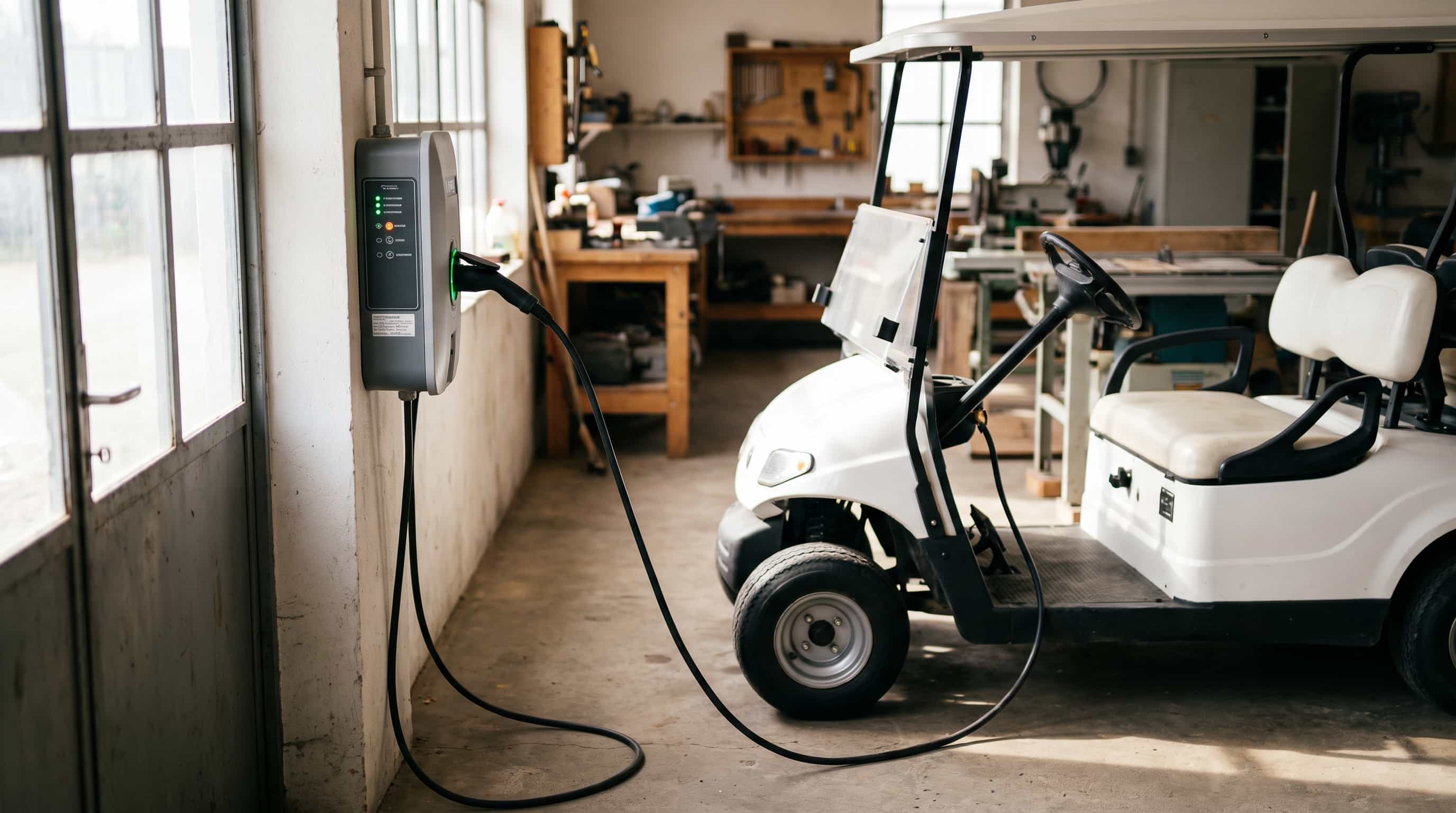
Many controllers have settings, such as top speed and how sharply the buggy accelerates, that can be adjusted with the right handheld programmer for that controller. It explains why a buggy can be set slow or gentle, and why a slow buggy is sometimes a setting not a fault. Programming needs the correct equipment and care, so it is usually an engineer job.
Key takeaways
- Many controllers have adjustable settings, such as top speed and acceleration.
- This is why a buggy can be deliberately set slow or gentle, not faulty.
- Changing settings needs the correct handheld programmer for that controller.
- Wrong settings can make a buggy drive unsuitably or unsafely for the setting.
- Programming is usually an engineer job, done with the right equipment and care.
What can be set
The controller does not just drive the motor; on many buggies it holds settings that shape how the buggy behaves, and these can be adjusted. Common settings include the top speed, how sharply or gently the buggy accelerates from rest, and how it responds in various conditions. This is genuinely useful: a buggy for a golf course, a busy venue full of people, or nervous passengers can be set to a lower top speed and a gentle acceleration, while one for a more open working setting can be set differently. So the way a buggy drives is not fixed; within what the controller allows, it can be tuned to suit the setting.
Why it explains some faults that are not faults
Understanding that controllers are programmable resolves a recurring confusion in the other guides. A buggy reported as slow is often not faulty at all but simply set to a lower top speed, frequently by a previous owner, course or venue and then forgotten, as the slow-buggy guide notes. A buggy that pulls away very gently may be on a soft-start setting rather than struggling. So before chasing a mechanical or electrical fault for a buggy that is slow or gentle, it is worth establishing whether it is simply set that way, because a setting is the cheapest possible explanation and a common one. Checking or changing the setting, though, needs the right approach.
It needs the right equipment
Adjusting controller settings is not done with a screwdriver and a guess. It needs the correct handheld programmer or tool for that specific controller, which reads and changes the settings the controller allows, and knowledge of what the settings mean for that unit. This is the same equipment used to read the fault codes in the error-codes guide. Without the right tool, you cannot properly see or change the settings, and improvising is not an option, so this is one area where the equipment barrier naturally points the job towards someone who has it, typically an engineer or a knowledgeable supplier who works on that controller.
If yours is doing this and the checks here have not settled it, we diagnose and repair buggies, including a callout to wherever it is.
Why care matters
Beyond needing the equipment, programming deserves care because the settings affect how the buggy drives and how safe it is in its setting. Setting a buggy's top speed or acceleration wrongly can make it drive unsuitably, too fast for a venue full of people, or in a way that does not match how it will be used, and getting drive settings wrong is not something to do casually on a vehicle that carries passengers. So controller programming is usually an engineer job, done with the right programmer, an understanding of the settings, and the judgement to set the buggy appropriately for how it will be used. For an owner, the useful things to take away are that a slow or gentle buggy may just be set that way, that changing it needs the right equipment, and that setting it correctly for the setting, especially a guest-facing one, is worth doing properly rather than guessing.
Common questions
- Can the speed of a golf buggy be changed
- On many buggies, yes. The controller holds settings such as top speed and acceleration that can be adjusted with the correct handheld programmer for that controller. This is why a buggy can be set slow and gentle for a venue full of people, or differently for open working use. Changing it needs the right equipment and care, so it is usually an engineer job.
- My buggy is slow, is it broken or just set that way
- It may well be set that way. A buggy reported as slow is often simply on a lower top-speed setting, frequently left by a previous owner, course or venue and forgotten, rather than faulty. So before chasing a mechanical or electrical fault, establish whether it is set slow, since that is the cheapest and a common explanation. Checking the setting needs the right programmer.
- Can I change the controller settings myself
- Not without the correct handheld programmer for your specific controller and an understanding of the settings, and doing it wrong can make the buggy drive unsuitably or unsafely for its setting. Because it affects how a passenger-carrying vehicle drives, controller programming is usually an engineer job, done with the right equipment and the judgement to set the buggy appropriately.
Still not right
We diagnose and repair golf buggies, service them on a plan, and send an engineer out to where the buggy is. Tell us the symptom and we will say what it usually means.
Related pages
Related guides
 Golf buggy troubleshooting, a complete guide9 minute read
 Water damage and wet weather faults6 minute read
- Golf buggy free-wheels or rolls when parked4 minute read
- Controller faults and error behaviour6 minute read
- Reading golf buggy controller error codes4 minute read
- Speed problems, buggy running slow6 minute read