Common Cushman and utility buggy faults
By James Brown · Updated 21 July 2026 · 5 minute read
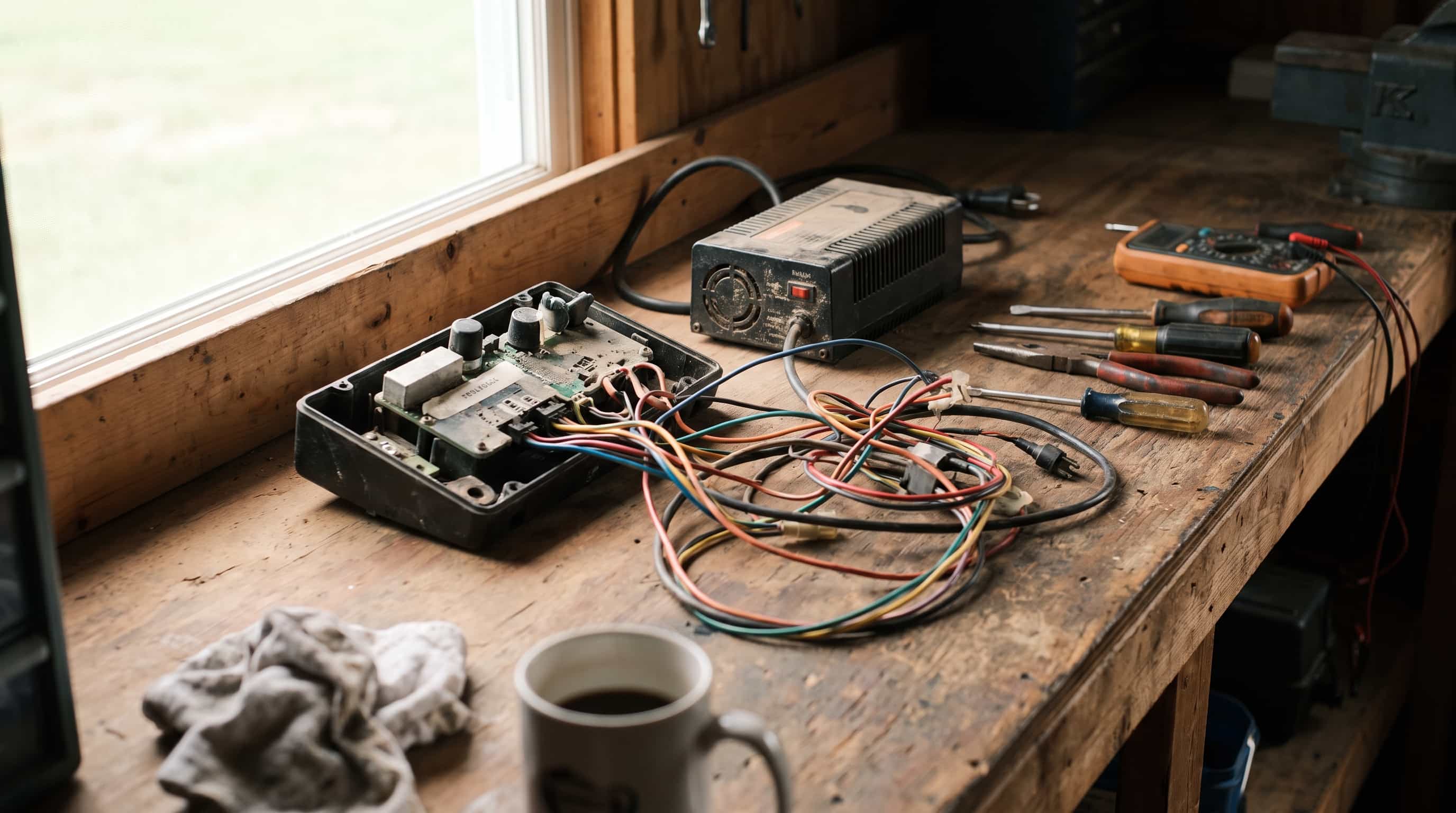
Cushman is a common make of utility buggy, and utility buggies share the same core faults as any electric buggy, batteries, connections, solenoid, controller, throttle, brakes and steering, plus the extra wear that carrying loads and doing site work brings to the drivetrain, suspension and tyres. The make is named factually with no affiliation implied, and the general guides apply.
Key takeaways
- Cushman is named factually as a common utility make; no affiliation is implied.
- Utility buggies share the core electric-buggy fault categories with passenger buggies.
- Carrying loads and site work add extra wear to the drivetrain, suspension and tyres.
- Overloading is a real risk on utility buggies and shortens the life of hard-worked parts.
- Establish whether yours is electric or petrol, as some utility buggies are petrol.
Naming the make and the type
Cushman is one of the makes UK owners associate with utility and work buggies, so its faults are searched for by name, and it is reasonable to write about it, purely to be useful and with no partnership or endorsement implied. As with every brand guide here, no model specifications or figures are invented; the maker's documentation for your exact model is the reliable source for those. The wider point is that utility buggies, whatever the badge, share their core with passenger golf buggies, so the diagnostic thinking across this knowledge base applies to them directly, with some extra considerations that come from the work they do.
The extra wear of work
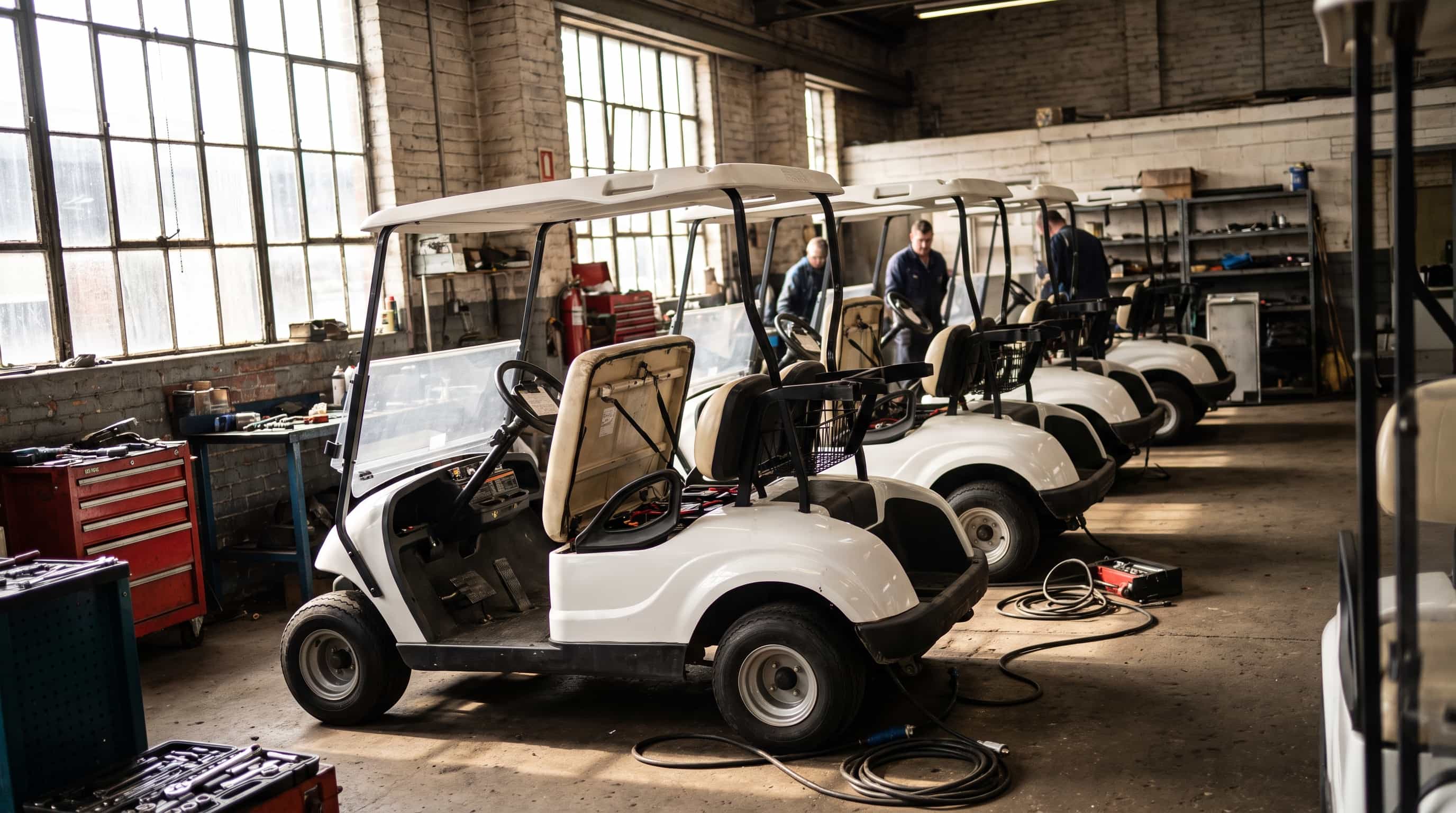
What sets utility buggies apart is the work they do, and it shows in extra wear. Carrying loads, and often heavy ones, on grounds, farms and sites, works the drivetrain, suspension, tyres and brakes harder than gentle passenger duty, so those parts wear faster and need watching more closely. Overloading is a particular risk: a utility buggy invites being loaded up, and persistently carrying more than its rating slows it, works the batteries and drivetrain hard, and shortens the life of the parts doing the work, exactly as the general guidance warns but more so on a buggy used to carry. Rough site ground adds knocks to the suspension and steering, and picks up more punctures. So a hard-worked utility buggy benefits from more frequent checks and servicing than a lightly used passenger one, matched to how hard it is used.
If yours is doing this and the checks here have not settled it, we diagnose and repair buggies, including a callout to wherever it is.
The same safety line
For all the extra wear, the safety line does not move. Brakes, steering, a burning smell, or a swollen or damaged battery go to an engineer on a utility buggy exactly as on any other, and a utility buggy carrying loads makes sound brakes and steering matter more, not less. So the approach is the familiar one: diagnose the shared electrical and drive faults with the general guides, watch the load-related wear on the drivetrain, suspension, tyres and brakes closely because the work is harder, keep to the buggy's load rating, use the maker's documentation for the model-specific detail, and hand the safety-critical faults to an engineer. A utility buggy earns its keep by working hard, and it stays reliable by being maintained in proportion to that work.
Common questions
- Are utility buggies different from golf buggies to fix
- In their core, no. Utility buggies share the same electric-buggy systems, batteries, connections, solenoid, controller, throttle, brakes and steering, so the general symptom guides apply. What differs is the extra wear from carrying loads and site work, which works the drivetrain, suspension, tyres and brakes harder, so those need watching more closely on a utility buggy.
- Does carrying loads cause extra faults
- It causes extra wear rather than different faults. Carrying loads, especially heavy ones over rough ground, works the drivetrain, suspension, tyres and brakes harder, so they wear faster and pick up more knocks and punctures. Overloading beyond the rating makes it worse, shortening the life of hard-worked parts, so keeping to the load rating and servicing in proportion to the work matters.
- Is my Cushman electric or petrol
- Both types of utility buggy exist, so check the maker's plate or manual, because it changes the diagnosis. Electric models fault through the battery, solenoid, controller and throttle, and the general guides apply. Petrol models add an engine with fuel, ignition and starting faults an electric buggy does not have, which is a separate discipline from the electrical guidance here.
Still not right
We diagnose and repair golf buggies, service them on a plan, and send an engineer out to where the buggy is. Tell us the symptom and we will say what it usually means.
Related pages
Related guides
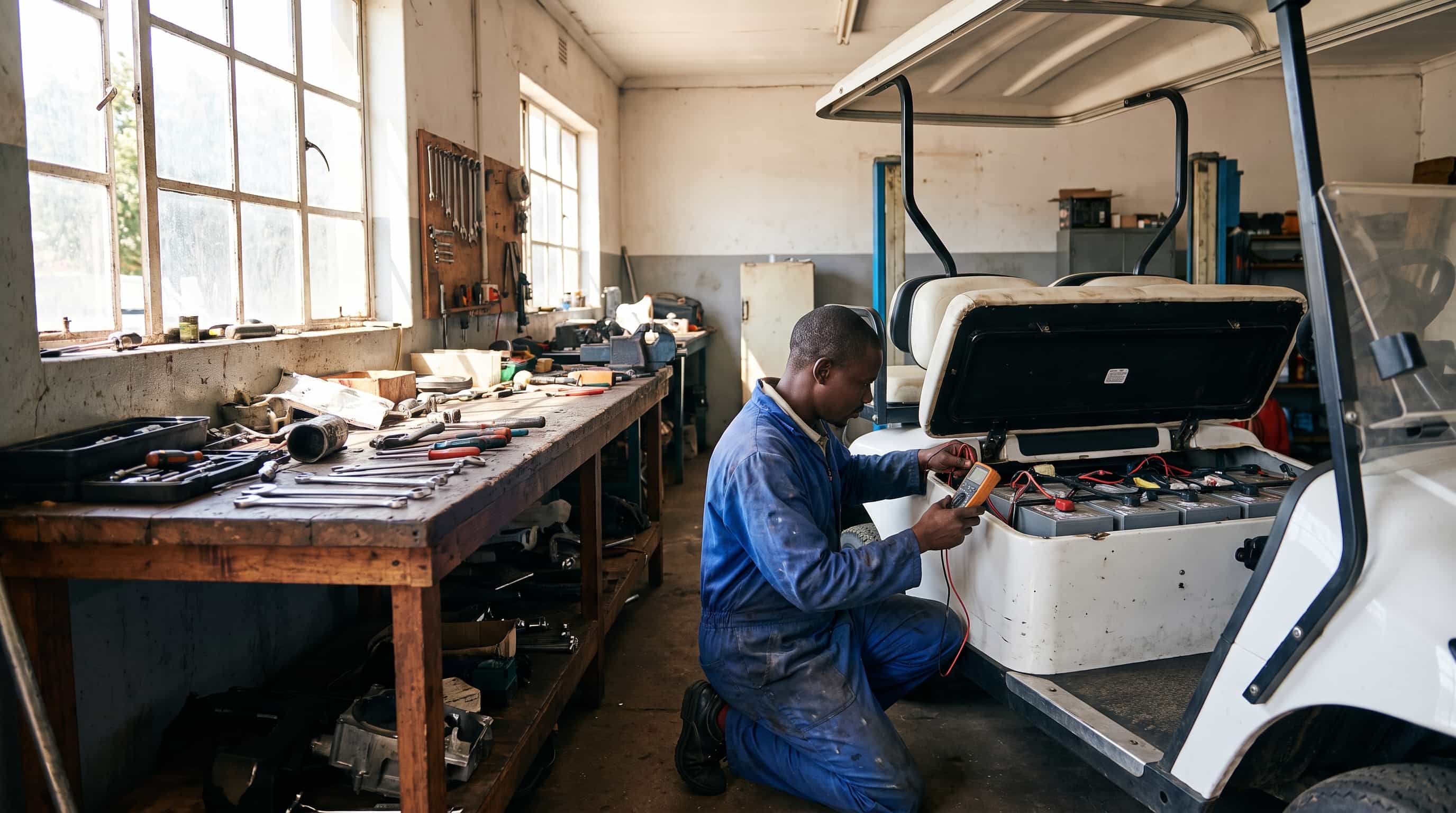 Golf buggy troubleshooting, a complete guide9 minute read
- Cleaning and caring for bodywork and seats5 minute read
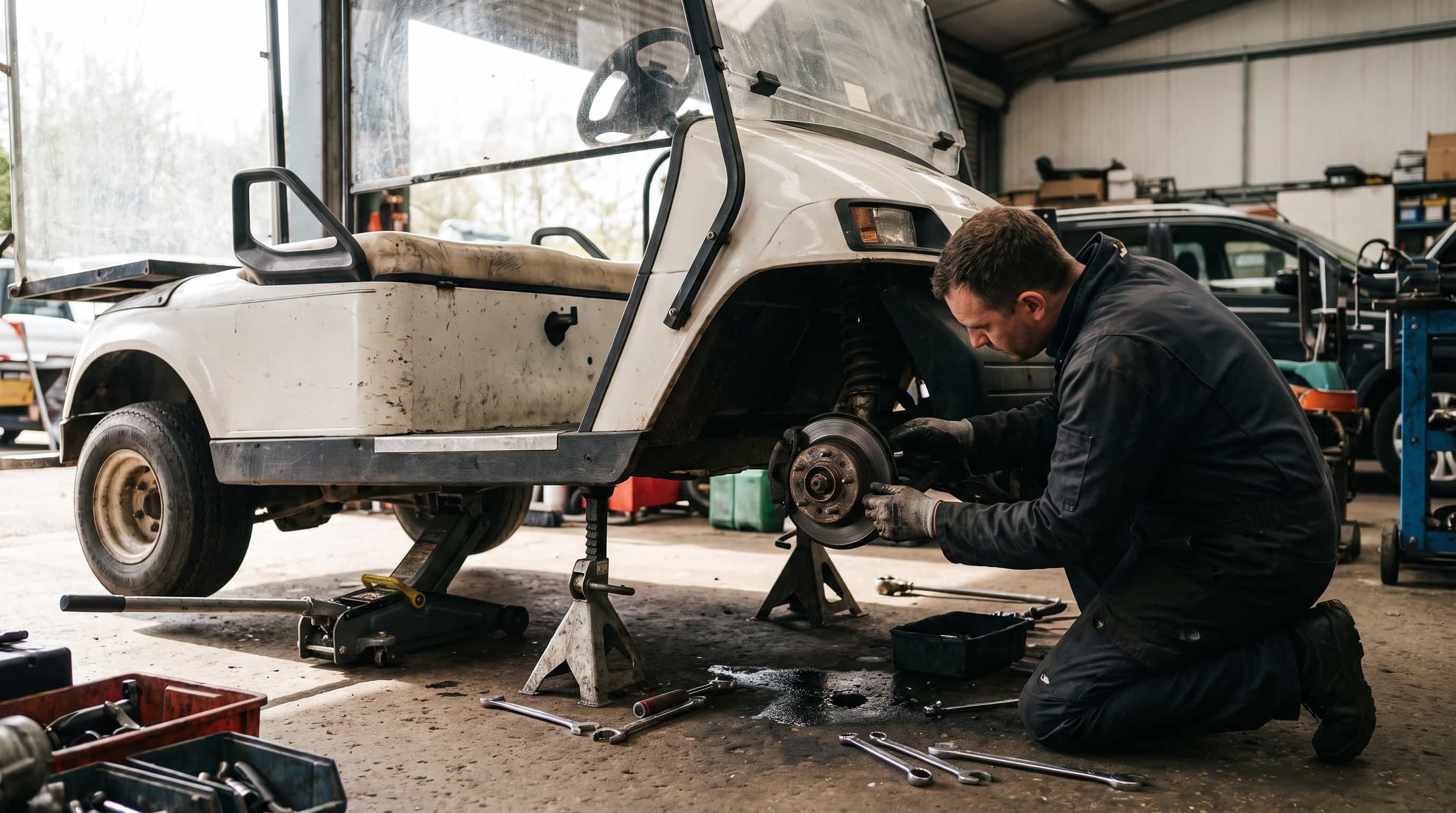 Golf buggy battery age and date codes4 minute read
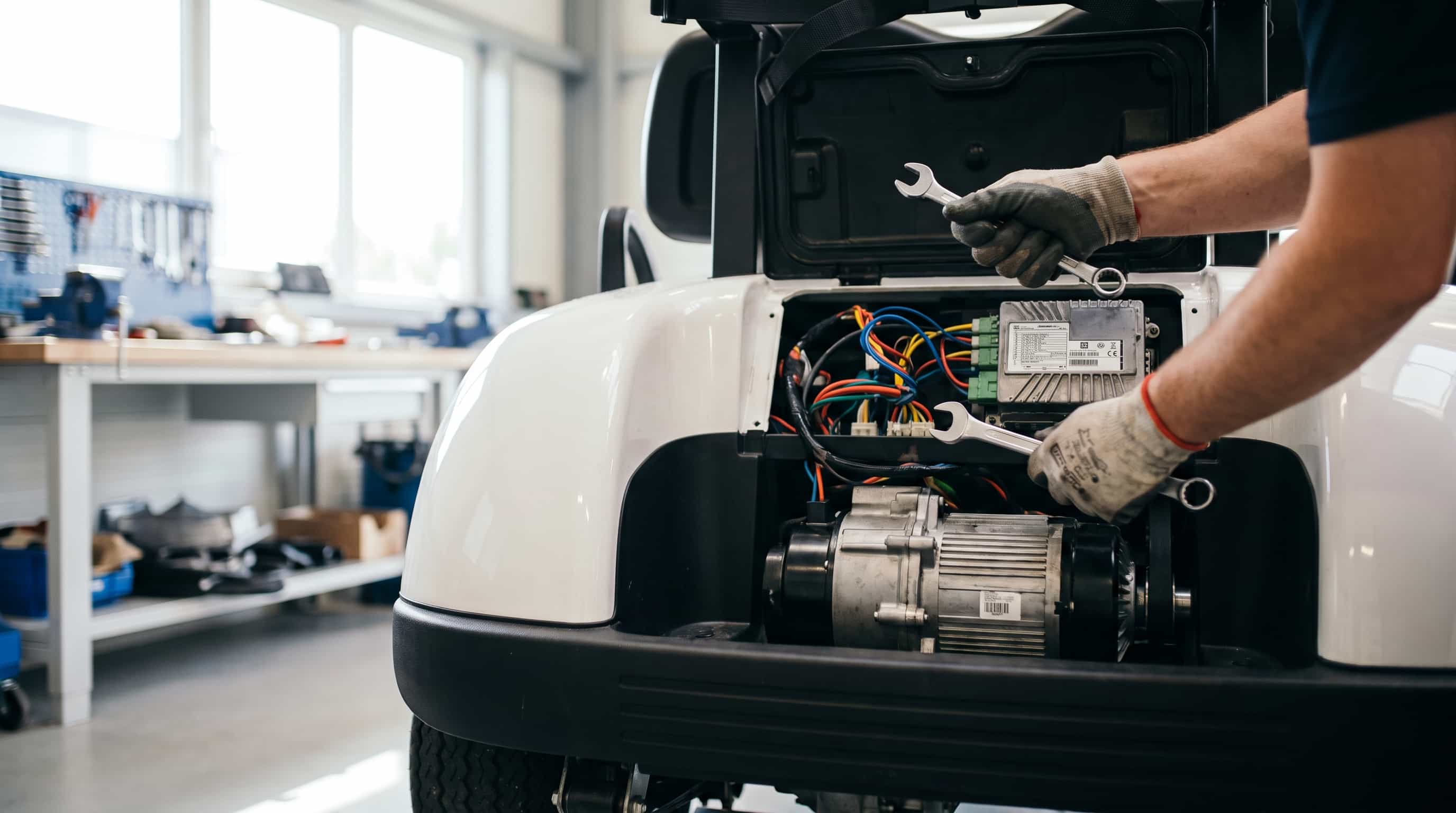 Common electric golf buggy faults across brands5 minute read
 Common Club Car faults and fixes6 minute read
- Motor problems, symptoms and causes6 minute read