Buying a used Club Car: what to check
By James Brown · Updated 29 August 2026 · 11 minute read
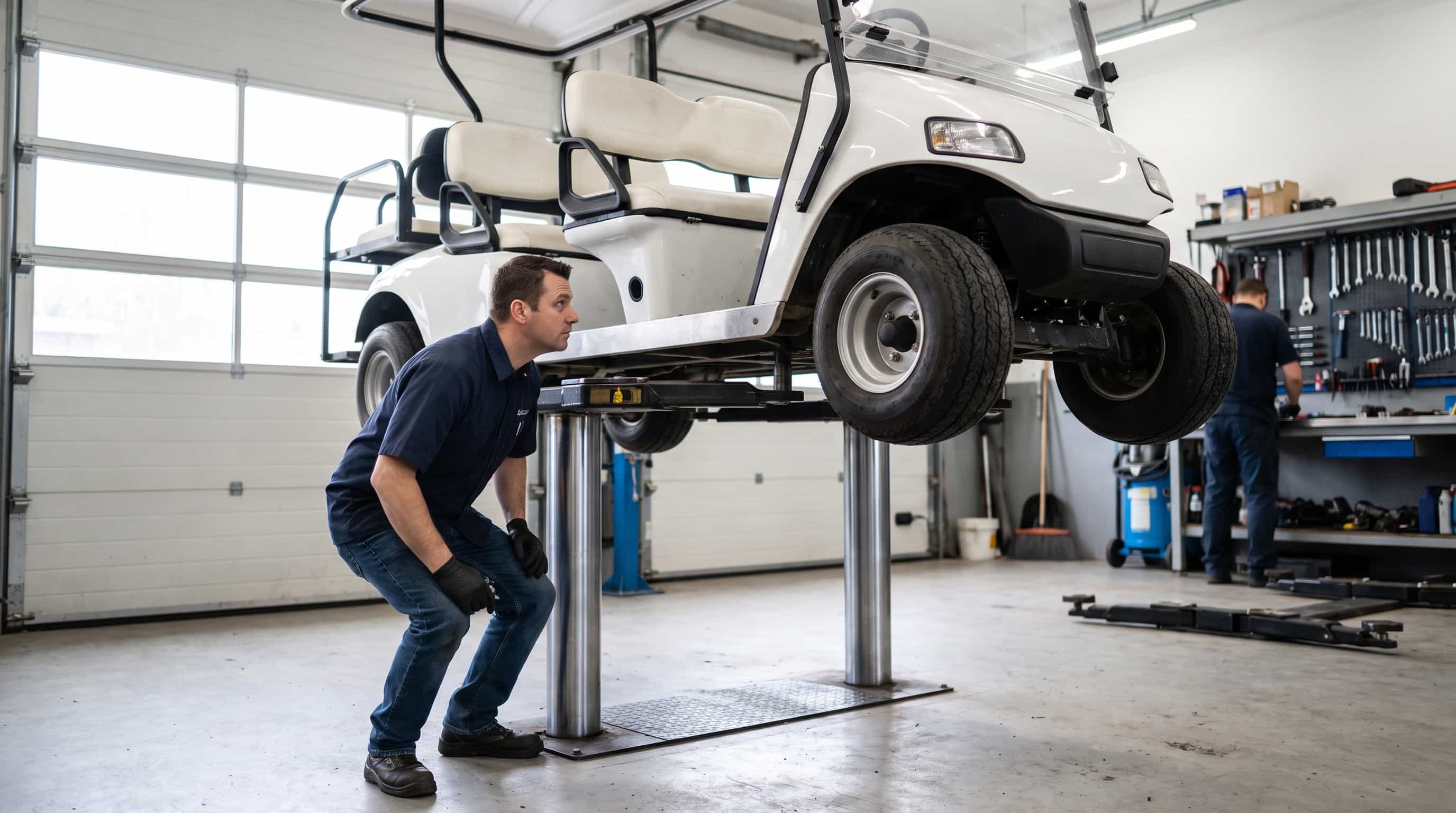
Establish which line you are looking at and get the serial number before anything else, because Club Car has run several golf car and utility lines and parts do not cross between them. Then inspect in order: the frame and its fixings, the battery set and its cabling, the brakes and steering, and only then the bodywork. A tidy machine and a good machine are different things, and the difference is almost always underneath.
Key takeaways
- Get the serial number first, because the line and generation decide which parts fit.
- Club Car has long used an aluminium chassis, so corrosion shows at the fixings and the steel parts bolted to it.
- Panels unbolt and swap easily, so a clean body proves nothing about the machine under it.
- The battery set, tyres, brake shoes and seat foam are the items most likely to be on their second life.
- Ex-fleet machines are usually well maintained and heavily used, which is a trade rather than a warning.
- Ask when the battery set was fitted and by whom, and ask to see the charger with the vehicle.
- Pull away up a slope from a standstill, because a tired set and a weak brake both show there.
Which Club Car you are actually looking at
Club Car has put its name on golf cars, personal vehicles and utility machines, and the names overlap in conversation far more than they do in a parts catalogue. The golf car side includes the DS and the later Precedent, with Onward and Tempo appearing on more recent machines. The utility and people-carrying side carries its own names, Carryall and Villager among them. These are not trim variations on one vehicle. They are different machines with different parts.
Before you look at anything else, find the serial number and photograph it. Where the plate sits varies by line and by generation, so look under the seat, along the frame rail beneath the body and around the dash. That number is what a parts supplier will ask for, and it resolves the generation in a way the model name never can, however confidently the advert uses it.
This matters on a marque with long-running lines. A line that stayed in production for many years will have been revised inside that run, and a supplier's catalogue splits at serial breaks rather than at year ends. Two Precedents standing in the same yard are not necessarily the same machine underneath, and the seller may have no idea which is which, because nobody ever told them and nobody looked.
The frame, and the marque's own corrosion story
Club Car has built its golf cars on an aluminium chassis for a long time, and it is the thing owners of other makes tend to mention first. It is a genuine advantage in a wet country, because the main structure does not rust the way a steel frame does. It is not an exemption from corrosion, and treating it as one is how people end up buying a machine with a sound-looking frame and rotten everything else attached to it.
Look at the joins. Fasteners, brackets, spring hangers, suspension components and hardware are not all the same metal, and dissimilar metals sitting together in wet, salted or fertilised ground corrode where they touch. Take a torch, get underneath and look at where things bolt together rather than along the span of the rail. White powdery deposits around a fixing are the aluminium telling you that joint has been wet for years.
Give the battery tray area particular attention. Acid from a lead-acid set that has been over-filled or allowed to gas hard attacks everything it reaches, and the tray, its supports and the cabling above it take it first. On any make this area repays the most careful looking. On this one it is where the corrosion the frame material spares you elsewhere tends to turn up instead.
Panels, seats and the tidy machine problem
Club Car bodies are moulded panels bolted to the frame, and they come off. That is convenient for repairs and inconvenient for buyers, because a set of clean panels can be fitted to any machine in an afternoon. A shiny buggy tells you somebody cared about how it looked on the day they sold it. It does not tell you a thing about what has been done to the parts that cost money.
Look for the small tells instead. Cracks radiating out from the mounting points, which is where panels fail rather than in the middle of a flat surface. Colour that does not match between panels, or between panel and dash. Drilled holes with nothing in them, often left from fleet numbers, card holders or sand bottle brackets. Seat foam collapsed at the outer edge on the driver's side, which is honest wear and hard to disguise.
None of this is a reason to reject a machine. It is a reason to weight the seller's story correctly. If the panels are new and the seller says the buggy has done light work, ask why the panels needed replacing. Usually there is a straightforward answer about a knock in a shed. Occasionally the answer explains the rest of the inspection, and it is worth hearing before you get that far.
The battery set and everything attached to it
On an electric buggy the battery set is the largest single item of value and the one most likely to be near the end of its life. Ask two questions and listen to how confidently they are answered: when was this set fitted, and who fitted it. An owner who knows usually has the receipt somewhere. An owner who does not know is telling you, without meaning to, that the set came with the machine.
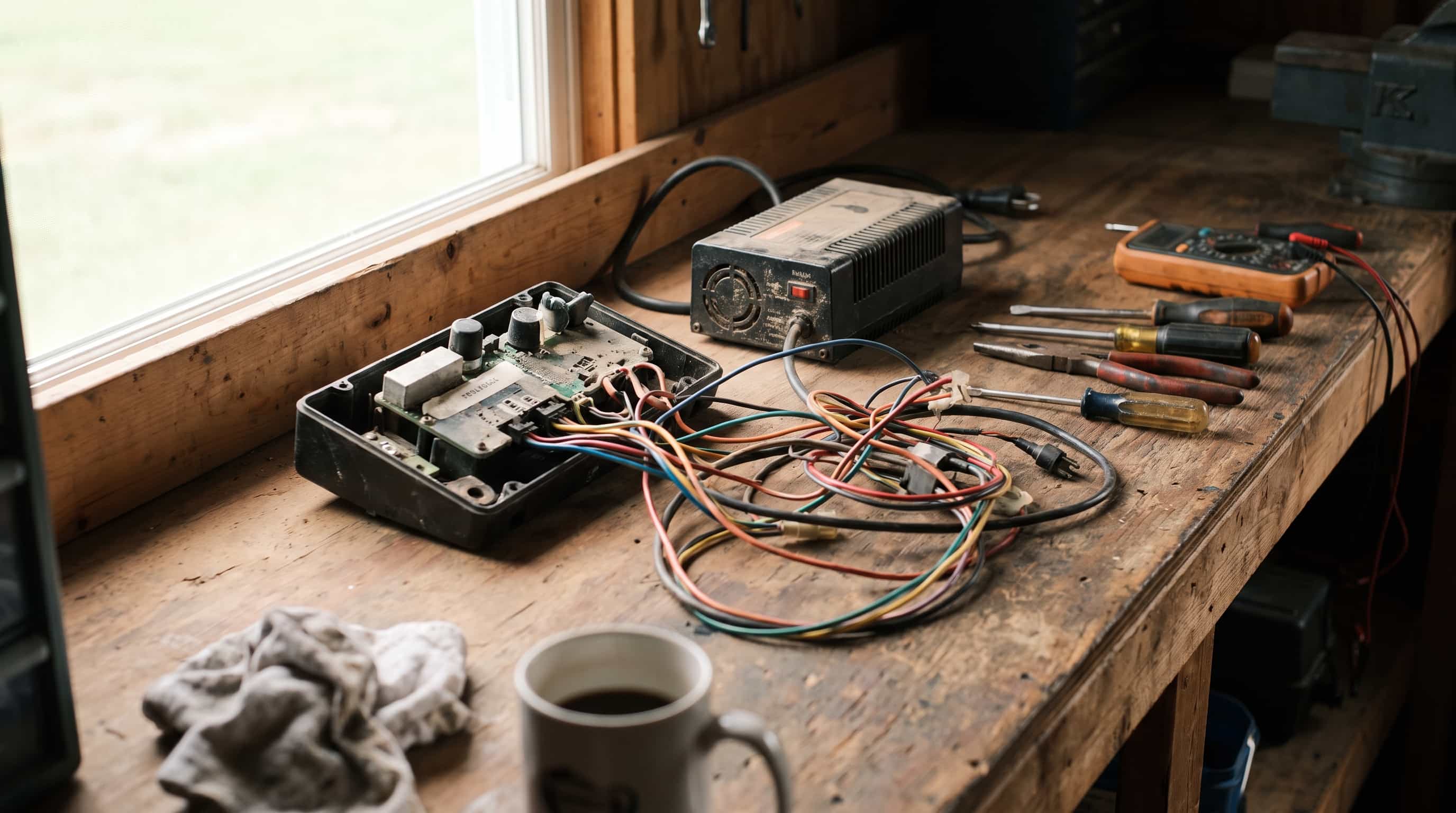
Then look. Matching batteries of the same make and the same age are a good sign. A mixed set is somebody replacing failures one at a time, which shortens the life of the whole set because the weakest member drags the rest down at every charge. Check the terminals for corrosion and the cables for heat damage or improvised repairs. Check the tops for damp, which on a lead-acid set means over-filling or over-charging. Then ask for the charger and watch it start.
If the set is lithium, ask when and by whom the conversion was done and whether any paperwork survives. A good conversion is a genuine asset. It also takes the machine outside the maker's own documentation for charging, state-of-charge display and sometimes controller settings, so you want to know who to ring when it needs attention, and the answer should be a name rather than a shrug.
- When the set was fitted, and by whom, with a receipt if one exists.
- Whether all the batteries match in make, type and age.
- Terminals, cable ends and the tray beneath, checked for corrosion.
- The charger present, matching, and starting on the vehicle in front of you.
Brakes, steering and the parts already on their second life
The wear items on this marque are the wear items on any golf car, and by the time a machine reaches the used market most of them have been replaced at least once. Brake shoes and cables, tyres, seat covers and foam, the throttle assembly, the solenoid, suspension bushes and wheel bearings all come round on a cycle. Their state tells you how the machine has been kept far more reliably than the hour meter or the year in the advert.
Test the brakes properly rather than at walking pace across a yard. On most golf cars the park brake latches through the pedal, so press it, get out, and see whether the machine holds on a slope facing both ways. Then roll and brake from speed and feel whether it pulls to one side, which usually means one side is doing the work. Grinding is metal on metal, and that is a repair rather than an adjustment.
Steering should feel tight at the wheel with a little free play and no more, and it should not kick back over rough ground beyond what the surface explains. Turn to full lock in both directions with the machine moving slowly and listen. Clonks and knocks at the front are bushes, bearings or steering components. They are ordinary repairs, and they are repairs worth pricing before you agree a figure rather than after.
If yours is doing this and the checks here have not settled it, we diagnose and repair buggies, including a callout to wherever it is.
Petrol or electric, and what it changes
Club Car has offered both, and although electric is what most buyers here are looking at, petrol machines circulate in this country and turn up in yards without the advert making it obvious. Establish which you are looking at before you start inspecting, because the two share a body, a set of wheels and very little else that matters to a buyer. Lift the seat if you are not sure what is underneath.
A petrol machine moves the inspection to the engine, the drive belt and clutches, the exhaust and the fuel system. Start it from cold, which means arriving before the seller has warmed it up, and listen to it idle. Look for oil where it should not be, smell for fuel around the tank and lines, and expect a belt-driven transmission to show wear you can see. The consumables cost less than a battery set and the servicing comes round more often.
An electric machine puts the money into the battery set and takes it out of the servicing. Neither drivetrain is the correct answer in the abstract. What decides it is your site, your tolerance for noise and your appetite for maintenance, and then whether the particular machine in front of you has been looked after in the way its drivetrain needs, because a neglected example of either is a poor buy.
Fleet history and what it tells you
A great many used Club Cars in this country have come out of a golf club fleet, and buyers treat that as a warning when it is closer to a trade. Fleet machines are serviced on a schedule by somebody paid to do it, because a buggy that will not start on a Saturday morning is lost revenue and an unhappy member. They are also used hard, by many different drivers, over the same ground, day after day through the season.
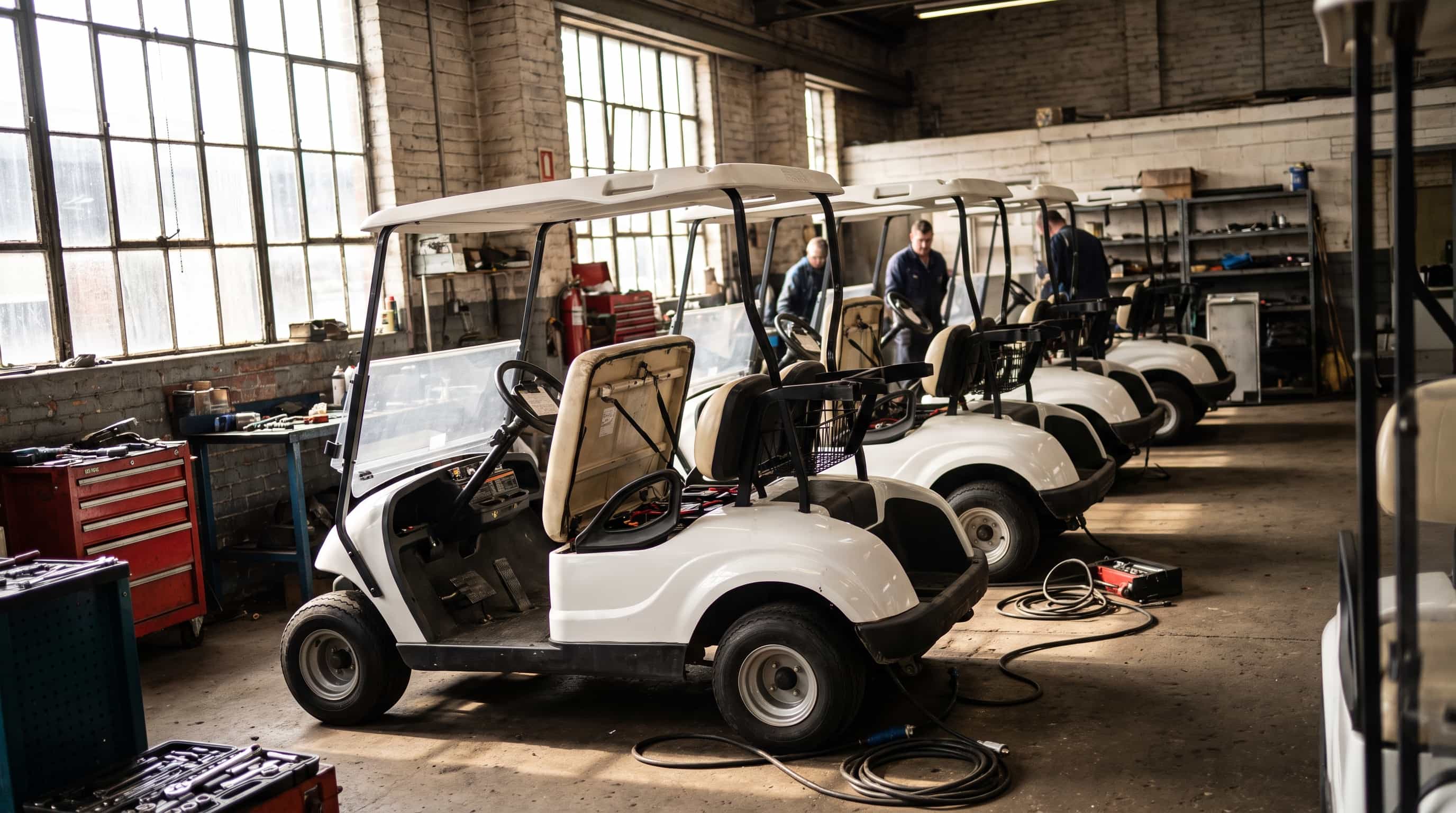
You can usually spot one without being told. Uniform, heavy wear across the seat and the floor. Drilled holes for numbers and card holders. Brackets that once held sand bottles. A body colour chosen by somebody buying a fleet rather than a vehicle. Several identical machines standing in the same yard is the clearest sign of all, because they were bought together and retired together, and the seller will normally confirm it if you ask directly.
The useful question to a fleet seller is not how many hours it has done but what was done to it while it was in service and what has been replaced since it came out. Fleet operators keep records because they have to. The version to be more careful with is the ex-fleet machine that has since passed through two private owners, because the records stopped at the gate and nobody has kept any since.
What to ask while you are still in the seat
Drive it, and drive it the way it will be used. From a standing start, up a slope, carrying the weight it will normally carry. That single manoeuvre loads the battery set, the motor, the controller and the brakes at once, and a machine that pulls away cleanly on the flat but struggles on a rise is telling you the set is tired even though it charged to full an hour ago.
Then ask the questions that have answers a seller either has or does not: what has been replaced and when, who services it, where it spends the winter, and is the charger the one that came with it. Ask to see the serial plate rather than being told the year. Then ask what they would fix next if they were keeping it, which is the question that most often produces an honest answer.
- Pull away up a slope from a standstill, loaded as you would use it.
- Latch the park brake on a gradient, get out, and watch it.
- Full lock each way at walking pace, listening at the front.
- Charger present, matching and starting on the machine.
- Serial plate found, photographed and legible.
- A straight answer to what has been replaced, and when.
Common questions
- How do I tell which Club Car model I have?
- By the serial number rather than the shape. Find the plate, photograph it and give the number to a dealer for the make or a parts supplier, who can tell you the line and the generation. The body is a weak guide because panels are bolted on and get swapped between machines, and two vehicles that look identical can take different parts.
- Are Club Car frames rust free?
- The aluminium chassis Club Car has long used does not rust the way steel does, which is a real advantage in British weather. It is not the whole story. Fixings, brackets, springs and the hardware bolted to the frame are not all aluminium, and they corrode where they sit against it. Check the joints and the battery tray with a torch rather than glancing along the rail.
- Is an ex-fleet Club Car worth buying?
- Often yes, with your eyes open. Club fleets are serviced on a schedule and records usually exist, which is more than most private machines offer. They have also been used hard by many drivers. Ask what was replaced during service and since it came out, expect wear on the seats and floor, and price the tyres and battery set on what you find.
- What should I check first on a used Club Car?
- The serial plate, then the battery set, then the brakes. Identity decides which parts fit and what the machine actually is. The battery set is the largest cost waiting for you. The brakes decide whether it is safe to use while you sort out the rest. Bodywork comes last, because it is the easiest thing on the vehicle to make look good.
- How can I tell if the batteries need replacing?
- Not by looking alone, though looking tells you plenty. Mismatched makes or ages mean the set has been repaired piecemeal. Corroded terminals and damp tops mean neglect or over-charging. Then drive it up a slope from a standstill, because a tired set performs on the flat and fades under load. For a definitive answer, ask an engineer to test the set properly.
- Does it matter that a Club Car is petrol rather than electric?
- It changes what you inspect and what it costs to keep, not whether it is a good machine. A petrol example needs the engine, belt drive, exhaust and fuel system checked, and it wants servicing more often. An electric one puts the money into the battery set. Decide on your site and your noise tolerance first, then inspect for the drivetrain in front of you.
Still not right
We diagnose and repair golf buggies, service them on a plan, and send an engineer out to where the buggy is. Tell us the symptom and we will say what it usually means.