Buying a used E-Z-GO: what to check
By James Brown · Updated 29 August 2026 · 11 minute read

Establish the platform before you touch anything. E-Z-GO has run more than one golf car platform and they differ in drivetrain and braking, so the parts, the fault patterns and even the way the machine feels to drive are not shared between them. Get the serial number, confirm petrol or electric in person, then work through the frame and underside, the battery tray and cabling, the brakes and steering, and the bodywork last. A clean body is the cheapest thing on the vehicle to arrange.
Key takeaways
- Which platform you are on decides the inspection, because the drivetrain and braking arrangements differ.
- The TXT and the RXV are the two names most used machines here carry, and their parts do not cross over.
- Frame materials and coatings have changed across the range, so get underneath with a torch instead of assuming.
- The battery tray, its cabling and the metal beneath it show neglect before anything else does.
- Petrol machines exist in the UK and adverts do not always say, so ask before you travel.
- Ex-fleet examples bring maintenance records and heavy, even wear, which is a trade rather than a warning.
- Two spellings appear in adverts, E-Z-GO and EZGO, and searching one hides half the market.
Establishing the platform before anything else
E-Z-GO's golf cars are usually described by platform rather than by year, and the two names that dominate the used market here are the TXT and the later RXV. Names such as Express and Shuttle appear on personal and people-carrying models, older lines that predate the TXT still turn up in yards, and trim names sit on top of all of it. That is how an advert can be technically accurate and still leave you unsure what is being sold.
Do what you would do on any make: find the plate, photograph it, and treat the serial number as the identifier. The model name puts you in a family. The number puts you on a machine, and it is what a parts supplier will ask for before they quote you anything. Note also that the make is written two ways in adverts, with hyphens and without, and searching only one spelling hides half of what is for sale.
It is worth being blunt about why this matters more here than on some makes. The platforms are genuinely different machines under broadly similar bodies, so a part, a diagnosis or a piece of advice that applies to one may not apply to the other at all. Getting the platform wrong wastes a day, and occasionally it wastes the price of a component you cannot send back.
What the platform changes about the inspection
The drivetrain and braking arrangements are not shared across the platforms, and that is the difference which reaches you as a buyer. The RXV is the one people notice, because its braking behaves differently from the more conventional arrangement on a TXT, and a driver used to one can misread the other completely. If you have only ever driven one platform, the other can feel wrong while it is working exactly as designed.
So take the test drive seriously and take it on the platform's own terms. Ask the seller how the machine should behave, then check the maker's documentation for that platform rather than working it out by trial on a slope. What you are looking for is consistency: the same behaviour every time, no delay in taking up, no lurching, and a machine that stays where it is put on a gradient. Anything intermittent is a fault, whichever platform it is.
The parts consequence is simple and expensive to ignore. Controllers, motors, brake components and much of the wiring do not transfer between platforms. Advice from a forum, a video or a friend with a different machine can be exactly right for their buggy and useless for yours. Establish the platform first, then take advice about that platform, and tell whoever you are asking which one you have.
The frame and the underside
Frame materials and coatings have varied across E-Z-GO's range and across the years, and the marketing language around them has varied too. Do not take it on trust in either direction. Take a torch, get the machine on level ground and look underneath: at the frame rails, at the crossmembers, at where the floor meets the frame, and at the mounting points for the suspension and the seat frames.
You are looking for scaling rather than surface rust, for repairs that have been painted over, and for anywhere a bracket has been welded or bodged back on. Poke gently at anything flaking. Sound metal argues back. Metal that gives way is structural, and structural corrosion on a machine this size is the point at which a cheap buggy stops being cheap, because the labour to put it right does not care what you paid.
Pay particular attention to the area beneath and around the battery tray, which is where acid, water and salt collect on any electric machine. On a buggy that has spent British winters outside, that is the part of the frame that has had the hardest life, and it is out of sight unless you look for it deliberately. Sellers rarely hide it. Most of them have simply never looked either.
The battery tray, the cabling and the charger
Lift the seat and spend real time here. Matching batteries of the same make and age are what you want to see. A set assembled from whatever was available, replaced one at a time as each failed, will not last as long as its newest battery suggests, because the weakest member drags the rest down every time the set is charged.
Look at the terminals for corrosion and at the cables for heat marks, hardened insulation or a repair somebody made with what they had to hand. Look at the tops of the batteries for damp, which on a lead-acid set means over-filling or over-charging. Then ask for the charger, plug it in and watch it start on the machine in front of you. A charger that is missing, or that belongs to a different vehicle, is a problem you inherit on day one.
If the set is lithium, ask who converted it, when, and whether there is any paperwork. Lithium conversions are common, often well done and genuinely worth having, and they also move the machine away from the maker's documentation for charging and for the state-of-charge display. What you want is a name you can ring when it needs attention, rather than a story about somebody who used to do that sort of work.
- All batteries the same make, type and age.
- Terminals clean, cables sound, no improvised repairs.
- The tray and the metal beneath it dry and solid.
- The correct charger present and starting on the vehicle.
- A date and a name attached to when the set was fitted.
Petrol machines, and why the advert may not say
E-Z-GO has built petrol golf cars as well as electric ones, and petrol examples circulate in the UK. Adverts do not always make it clear, partly because sellers assume everyone knows what they have, and partly because a photograph of a seat, a body and a canopy looks the same either way. Ask before you travel, and lift the seat as soon as you arrive rather than at the end of the inspection.
A petrol machine changes the inspection entirely. Start it from cold, which means asking the seller not to run it before you get there, and listen to it turn over, catch and settle. Check the oil for level and colour, look for leaks around the engine and transaxle, smell for fuel, and look at the drive belt and clutches, because a belt-driven transmission wears where you can see it once you know to look.
Neither drivetrain is the right answer in the abstract. Petrol suits long days and remote ground with no charging arrangement; electric suits quiet sites and lighter servicing. What matters for the machine in front of you is that it has been maintained in the way its drivetrain needs, and a neglected petrol engine is as expensive a mistake as a dead battery set.
If yours is doing this and the checks here have not settled it, we diagnose and repair buggies, including a callout to wherever it is.
Brakes, steering and the parts already replaced
By the time a golf car reaches its second or third owner, most of its consumables have been round at least once. Brake shoes and cables, tyres, seat foam and covers, the throttle assembly, the solenoid on machines that have one, bushes and wheel bearings are all ordinary replacements. Their condition is a reliable record of how the machine has been kept, and it is a good deal harder to dress up than the paintwork is.
Test the brakes from speed rather than at a crawl. Feel for pulling to one side, which means one side is doing the work. Listen for grinding, which is metal on metal and a repair rather than an adjustment. Park on a gradient, set the park brake and get out, then do the same facing the other way. A machine that creeps is a machine that will roll away from somebody eventually, and that is not a fault to negotiate over.
Steering wants to feel tight with a little free play and no more. Turn to full lock in both directions at walking pace and listen at the front for knocks. Drive over rough ground and feel whether the wheel fights you beyond what the surface accounts for. These are ordinary repairs, and the point of finding them now is to have them priced before you agree a figure rather than afterwards.
Reading an ex-fleet example
Many used E-Z-GO machines here have come from a club or venue fleet, and the wear pattern gives it away: heavy but even, and spread across every machine that came out with it. Drilled holes for numbers and card holders. Bracket mounts for sand bottles. A body colour chosen by somebody buying a fleet rather than a vehicle. Several identical buggies in one yard is the plainest sign there is.
Treat it as a trade rather than a verdict. Fleet machines are serviced to a schedule by somebody who is paid to do it and who loses money when one will not start. Records usually exist, and a fleet seller will normally hand them over. Against that, they have been driven by hundreds of people who did not own them, over the same ground, through the season, and nobody was gentle with them.
The question to ask a fleet seller is what was done in service and what has been replaced since it came out, and to ask for whatever records came with the machine. The version to be more careful with is the ex-fleet buggy that has since passed through two private owners, because the records stopped at the gate and nobody has kept any since.
The drive, and what to get in writing
Drive it loaded, and drive it up a slope from a standing start. That one manoeuvre loads the battery set, the motor, the controller and the brakes together, and it separates a machine that charges to full from a machine that can still do a day's work. On a petrol example the same climb tells you about the clutches and the belt, because a worn take-up judders or slips exactly when it is asked for effort.
Before money moves, get the identity and the story on paper: the serial number, what has been replaced and when, who has serviced it, and a plain statement that the seller owns the machine and it is not subject to finance. None of that is unreasonable to ask, and a seller with nothing to hide will not mind giving it. If the answers get vaguer as the questions get more specific, that is your answer.
- Serial number photographed, not transcribed from an advert.
- Platform confirmed, and petrol or electric confirmed in person.
- Battery set date and fitter, or an accepted allowance for a new set.
- Charger present, correct and working on the vehicle.
- Park brake holding on a slope in both directions.
- Written confirmation of ownership and no outstanding finance.
Common questions
- How do I know if I am looking at a TXT or an RXV?
- Ask the seller, then confirm it from the serial plate rather than from the shape, because panels and seats move between machines. A dealer for the make or a parts supplier can identify the platform from the number in one call. It is worth doing before you travel, since the two platforms differ in drivetrain and braking and their parts do not cross over.
- Is EZGO the same as E-Z-GO?
- Yes. The make is written with hyphens and without, and adverts use both along with varying capitalisation. Search both spellings or you will only see part of what is for sale, and set up alerts for both if you are hunting seriously. It makes no difference at all to the machine, the parts or the questions you should be asking about it.
- Are petrol E-Z-GO buggies common in the UK?
- They exist here and they turn up without the advert saying so. Ask before you travel and lift the seat when you arrive. A petrol machine is not a worse buy, but it changes the inspection completely: engine, oil, drive belt, clutches, exhaust and fuel system instead of a battery set, and a servicing routine that comes round more often.
- What is the most expensive thing to go wrong on a used E-Z-GO?
- On an electric machine the battery set is normally the largest single item, and it is the one most likely to be due. Structural corrosion is worse when you find it, because labour dominates the bill. Controllers and motors matter but are less often the problem than tired batteries and neglected connections, which is where an honest diagnosis starts.
- Should I avoid an ex-fleet buggy?
- No, but buy it as what it is. Fleet machines are maintained on a schedule and usually come with records, and they have also worked hard with many different drivers. Ask what was replaced in service and since, expect worn seats, floor and tyres, and price the battery set on evidence. The harder buy is an ex-fleet machine two private owners later with nothing written down.
- Can I use general golf buggy repair advice on an E-Z-GO?
- For the shared systems, yes. Batteries, connections, tyres, brakes and steering behave the same on any make. For anything touching the drivetrain, the braking or the controller, work from documentation for your platform, because the arrangements differ across the range and advice written for one can be wrong for another. Say which platform you have whenever you ask for help.
Still not right
We diagnose and repair golf buggies, service them on a plan, and send an engineer out to where the buggy is. Tell us the symptom and we will say what it usually means.
Related pages
Related guides
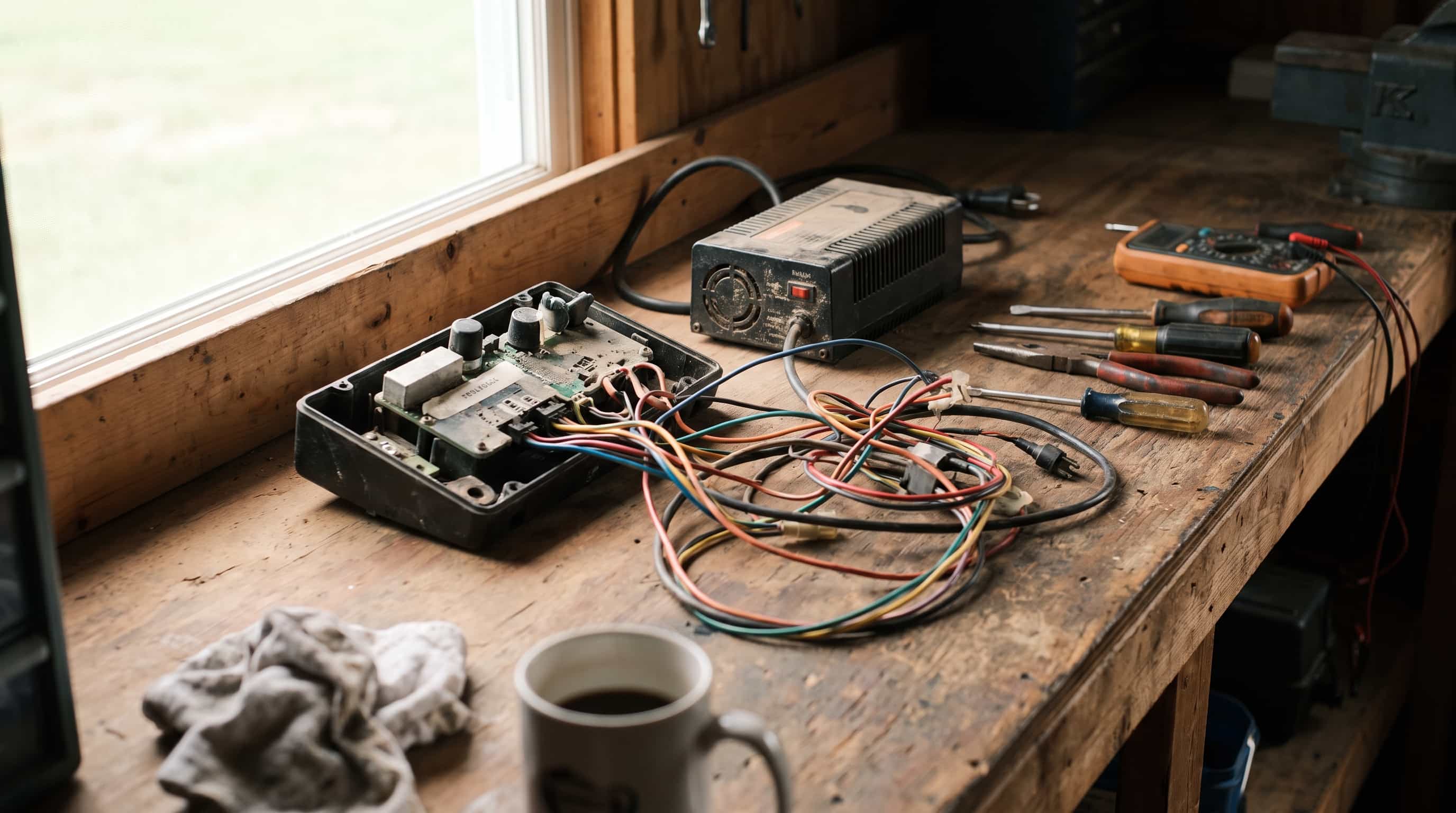 Golf buggy makes explained: who builds what10 minute read
 Buying a used Yamaha buggy: what to check11 minute read
 Which golf buggy make holds its value11 minute read
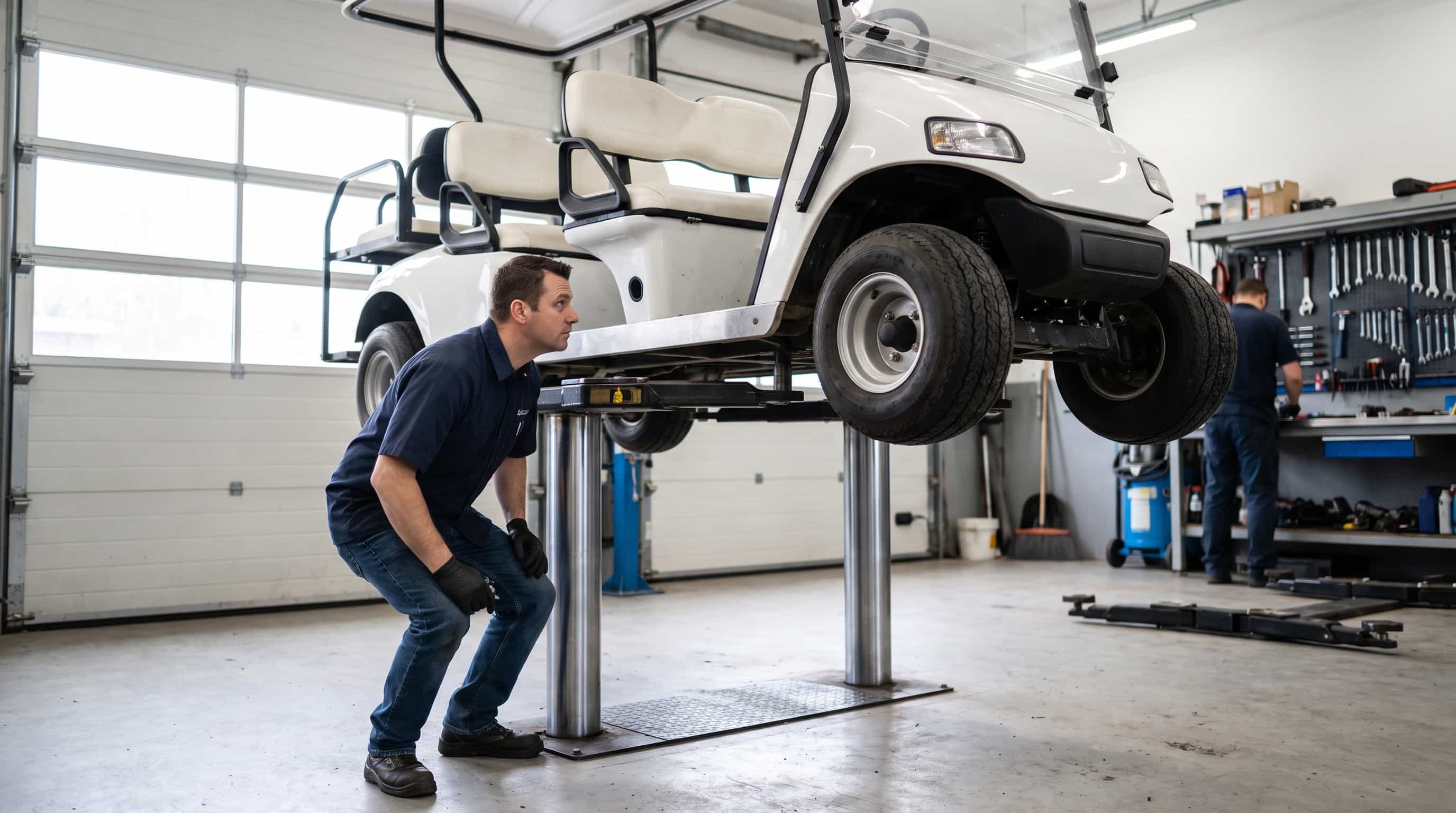 Buying a used golf buggy, what to inspect5 minute read
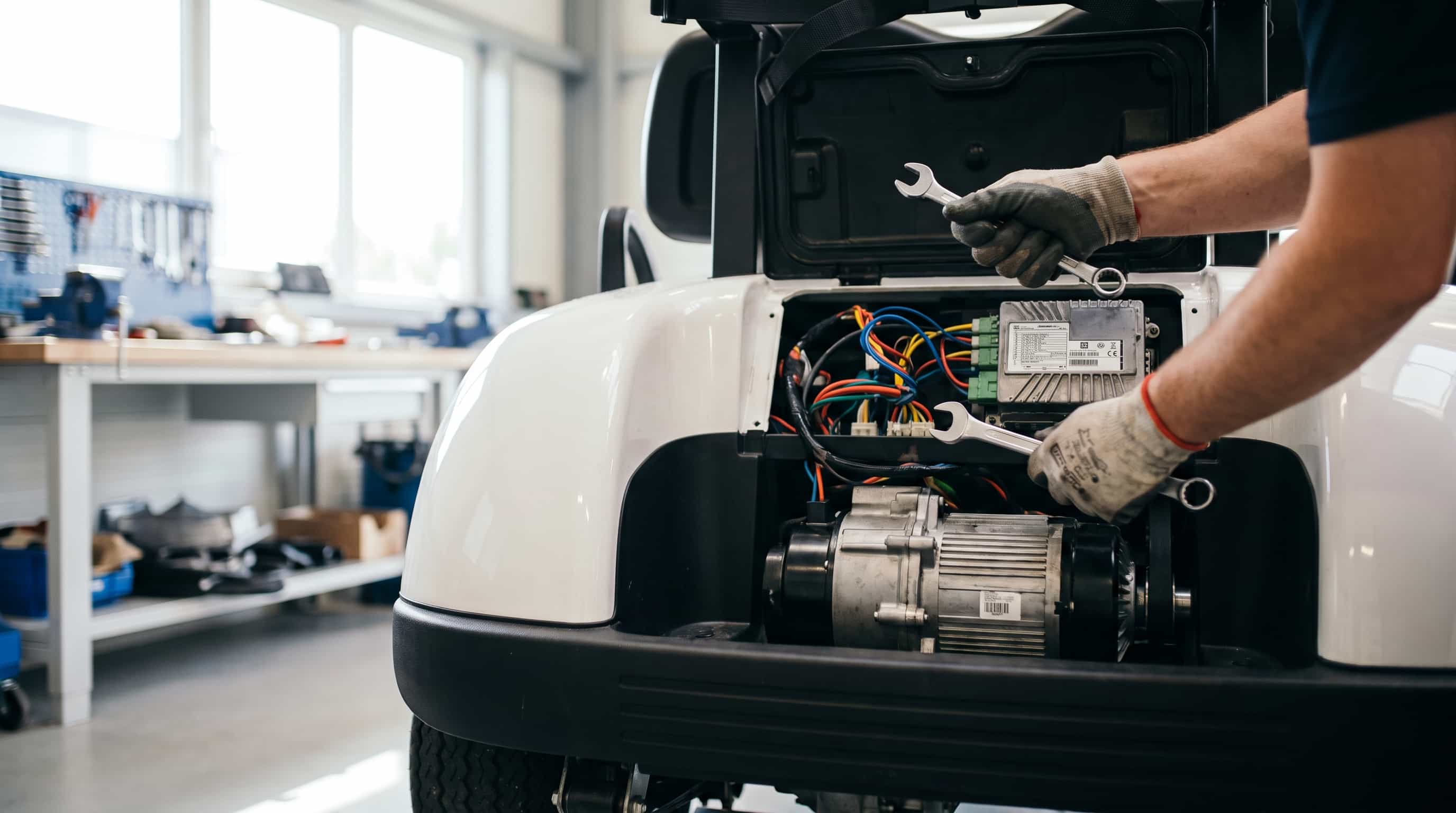 E-Z-GO RXV or TXT: which is which9 minute read
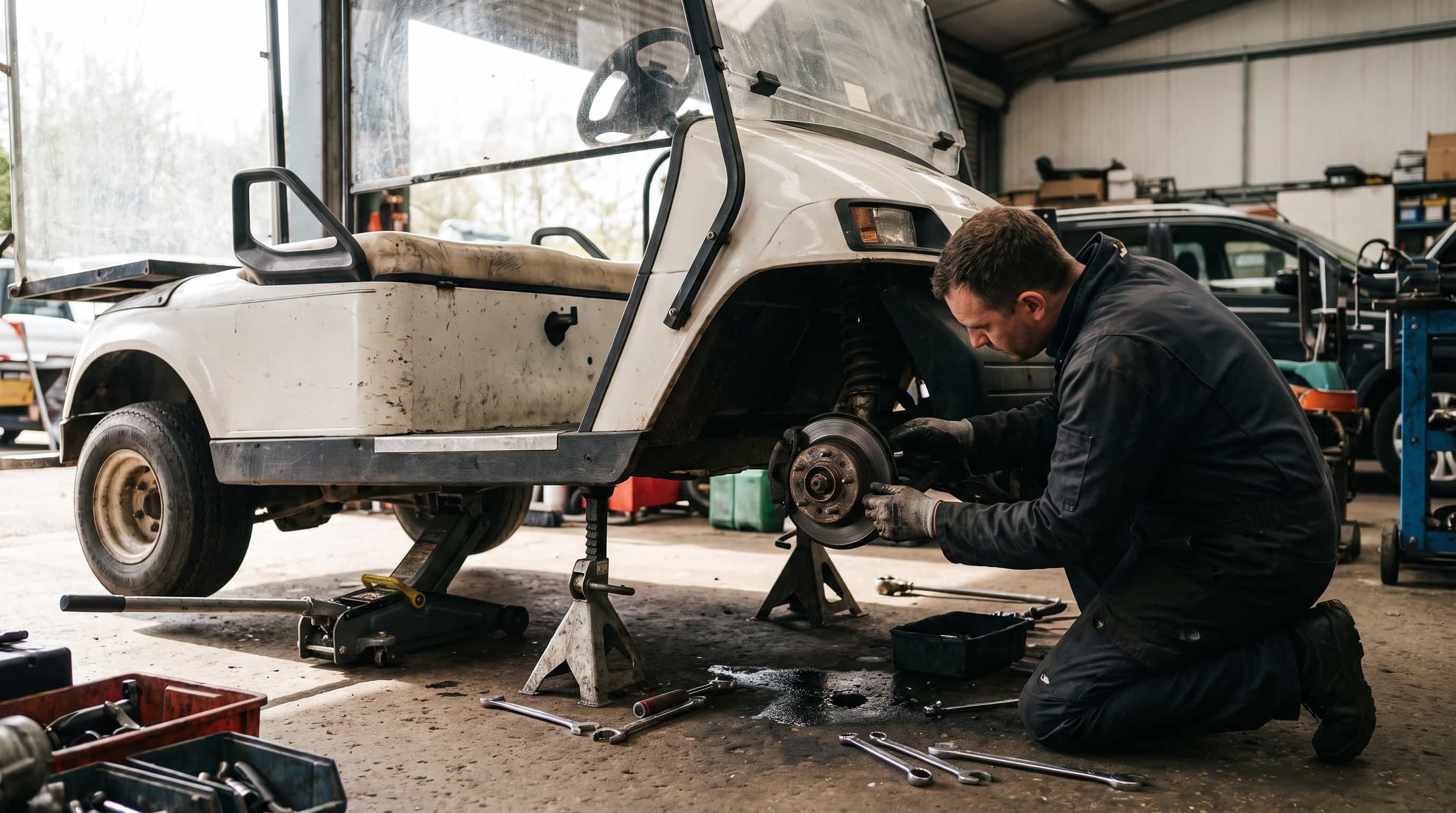 Common EZGO faults and fixes6 minute read