Making your event inclusive with buggy transport
By James Brown · Updated 21 July 2026 · 6 minute read

Making an event inclusive with buggy transport means planning for disabled and less mobile guests from the start: a wheelchair-access vehicle so guests travel in their own chair, designated pick-up points people can find, routes that actually work, and enough capacity that no one is left waiting or left out.
Key takeaways
- Inclusion is planned in, not added on when a guest struggles.
- The wheelchair-access buggy lets guests travel in their own chair.
- Designated, findable pick-up points make the service usable.
- Routes have to suit the vehicle, or the access is only nominal.
- Enough capacity means no one has to opt out of part of the day.
Inclusion is a plan, not a rescue
An inclusive event is one where disabled and less mobile guests were thought about before they arrived, not one that scrambles to help when someone visibly cannot manage. That difference is everything. Planning buggy transport into the event from the start, as part of how the whole thing works, is what turns good intentions into an event that genuinely includes everyone.
The test is simple: could a wheelchair user, or an older guest who cannot walk far, attend your event and experience all of it comfortably, without having to ask for special arrangements on the day? If the answer needs an anxious improvisation, the inclusion was not planned. If it is just how the event runs, it was.
Let guests travel in their own chair
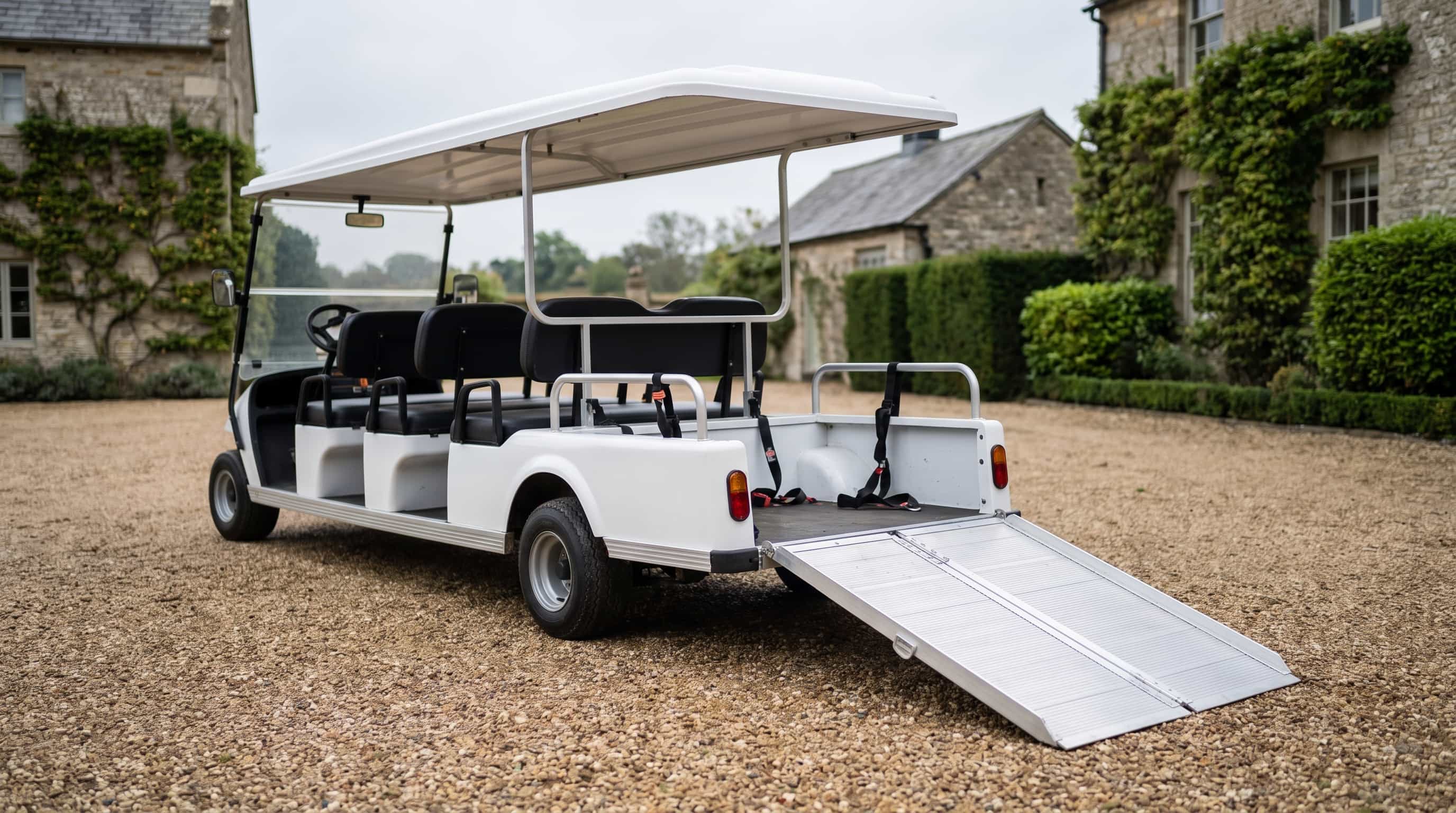
For wheelchair users, the single most important element is the wheelchair-access buggy, which lets a guest travel in their own chair rather than transferring to a seat. Being asked to transfer, or being left out because transferring is not possible, is exactly the kind of barrier an inclusive event removes. Travelling in their own chair is easier, safer and more dignified, and it means a wheelchair user moves around the event on the same terms as everyone else.
Make the service findable
An access service only helps if guests know it exists and where to find it. Designated pick-up points, clearly marked and communicated in advance and on the day, are what make the difference between a service guests can rely on and one they never discover. Tell guests before the event that accessible transport is available, and signpost it clearly on site, so using it is straightforward rather than a matter of luck or asking around.
Working out what this costs for your own event? Tell us the venue and dates and you will have an itemised written quote within one working hour.
Routes that actually work
An access buggy is only as good as the route it can run. Level or ramped access, firm surfaces and a sensible path between the points guests need to reach all have to be there, or the access is nominal. Plan the accessible routes deliberately, checking that the vehicle can genuinely get from the pick-up points to the places guests want to be. A wheelchair-access buggy that cannot reach the ceremony, the marquee or the viewing point is not providing access, whatever the intention.
Enough capacity that no one opts out
Finally, size the service so no one is left waiting a long time or, worse, quietly deciding not to bother. Inclusion fails at the point where a guest concludes it is easier to sit out part of the day than to wait for a buggy that never seems to come. Enough capacity for the guests who need it, planned to the likely demand, is what keeps the promise of inclusion real rather than notional.
Common questions
- What makes an event genuinely inclusive
- Planning for disabled and less mobile guests from the start rather than reacting when someone struggles: a wheelchair-access vehicle, findable pick-up points, working routes and enough capacity, so everyone can experience all of the event comfortably.
- Why does the wheelchair-access buggy matter so much
- Because it lets a guest travel in their own chair rather than transferring or being left out. That removes a real barrier and lets a wheelchair user move around the event on the same terms as everyone else.
- How do guests know the access service is there
- Tell them before the event and signpost it clearly on the day, with designated, marked pick-up points. A service guests cannot find is a service that does not help, however well intended.
- How much capacity does the service need
- Enough that no one is left waiting a long time or decides to opt out of part of the day. Size it to the likely demand, since inclusion fails at the point a guest concludes it is easier to sit out than to wait.
Ready to get a price
Tell us about your event and we will send an itemised written quote within one working hour.