Golf buggy throttle and potentiometer faults
By James Brown · Updated 21 July 2026 · 5 minute read
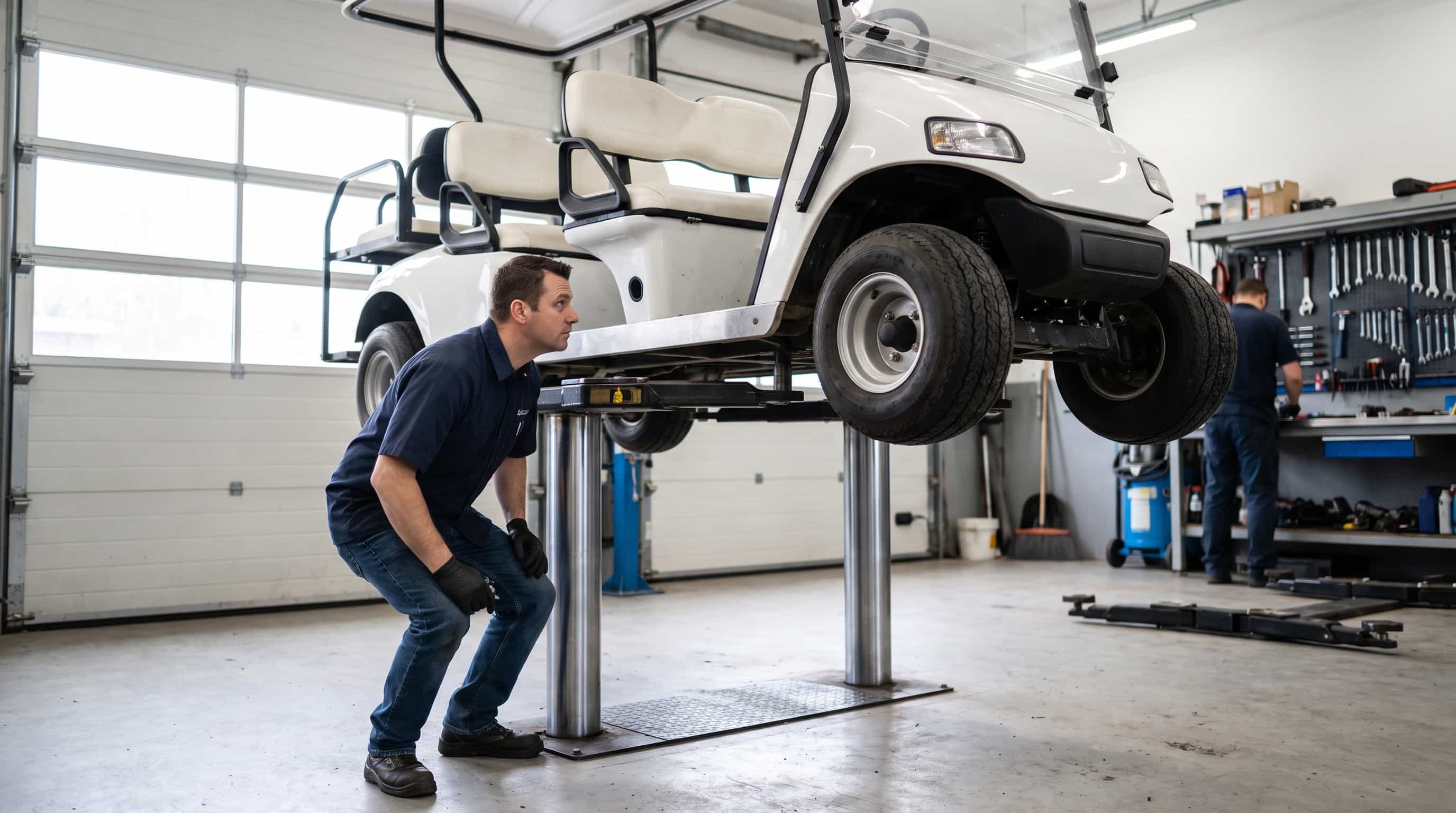
The throttle sensor, a potentiometer or a Hall-effect device, tells the controller how far you have pressed the pedal. When it wears, gets dirty, or loses a good connection, it sends an unsteady or wrong signal, which shows as surging, hesitation, or no drive at all. The sensor and its connector are the first things to check when power delivery is uneven.
Key takeaways
- The throttle sensor converts pedal position into a signal the controller acts on.
- A worn or dirty sensor sends a jumpy signal that becomes surging or hesitation.
- A poor connection at the sensor causes the same symptoms and is cheaper to fix.
- A failed sensor, or one the controller rejects, can stop drive entirely with a fault code.
- The sensor and its connector are the first check for uneven or missing power delivery.
What it is and does
Between your foot and the controller sits the throttle sensor. As you press the pedal, the sensor changes its output, and the controller reads that as how much power you want, delivering it smoothly and in proportion. On older buggies the sensor is often a potentiometer, a resistive device with a wiper that moves as the pedal moves; on newer ones it may be a Hall-effect device that senses position without contact. Either way, its job is to give the controller a clean, steadily rising signal, and most throttle faults are really faults in the cleanliness or steadiness of that signal.
The surging and hesitation faults
A potentiometer wears where its wiper travels, and dirt or damp can get into it, so its output can become jumpy, jittery instead of a smooth rise. The controller faithfully turns that jumpy input into jumpy power, which the driver feels as surging or hesitation. A poor or corroded connection at the throttle plug does the same, because the controller sees an unsteady voltage whether the sensor or the wire is at fault. This is why, when a buggy surges or hesitates, the throttle and its connector are the first place to look, and why checking the connection, cheap and quick, comes before suspecting the sensor itself.
The no-drive fault
A throttle fault does not only cause surging. Controllers watch the throttle signal for validity, and if it reads a signal that is out of range or clearly wrong, an open circuit, a short, a sensor stuck at full, it will refuse to drive and usually log a throttle fault code, precisely so the buggy does not lurch off on a faulty signal. So a buggy that will not drive, with the controller showing a throttle-related code, can be a throttle sensor or wiring fault rather than anything deeper. Reading the code, as the controller guide describes, points you straight at it.
If yours is doing this and the checks here have not settled it, we diagnose and repair buggies, including a callout to wherever it is.
Checking and the limit
An owner can do the useful first steps: inspect the throttle connector for looseness, dirt or corrosion and clean it, and read any controller fault code that names the throttle. Testing the sensor itself with a meter, checking that its output rises smoothly across the pedal travel without dropouts, is within reach for someone comfortable with a multimeter, and a sensor that jumps or drops out is confirmed faulty. Replacing it is a recognised job. Where it goes to an engineer is when the code and checks do not add up, or when you are not confident working around the drive controls, since a mis-set or wrongly fitted throttle can make a buggy drive unpredictably, which is not a safe thing to guess at.
Common questions
- My buggy surges when I press the pedal
- Surging is usually the throttle signal being unsteady, from a worn or dirty sensor or a poor connection at its plug, which the controller turns into jumpy power. Check and clean the throttle connector first, since that is quick and cheap, then test the sensor for a smooth output. A tired battery can also cause surging, so check that too.
- Could the throttle stop the buggy driving at all
- Yes. Controllers reject a throttle signal that reads out of range or clearly wrong and refuse to drive, usually logging a throttle fault code, so the buggy does not move on a faulty signal. A no-drive fault with a throttle-related code points at the sensor or its wiring rather than a deeper fault, so read the code first.
- Can I replace the throttle sensor myself
- Checking and cleaning the connector, and testing the sensor with a meter, are within reach if you are comfortable with basic electrical work, and replacement is a recognised job. Hand it to an engineer if the checks do not add up or you are not confident around the drive controls, since a wrongly fitted throttle can make the buggy drive unpredictably.
Still not right
We diagnose and repair golf buggies, service them on a plan, and send an engineer out to where the buggy is. Tell us the symptom and we will say what it usually means.
Related pages
Related guides
 Golf buggy troubleshooting, a complete guide9 minute read
 Golf buggy pedal sticks or does not return4 minute read
 Golf buggy service plans explained5 minute read
- Golf buggy jerks or surges5 minute read
- Controller faults and error behaviour6 minute read
- Golf buggy accelerates slowly from a stop4 minute read