Golf buggy runs only in reverse, not forward
By James Brown · Updated 21 July 2026 · 4 minute read
A buggy that reverses but will not go forward has a direction-specific fault, the mirror image of the more common no-reverse problem. Since reverse works, the battery, solenoid, controller and motor are all healthy, so the fault is in the forward contacts of the direction switch or its forward wiring. The switch is the first place to look.
Key takeaways
- Reverse working proves the shared drive path, battery, solenoid, controller, motor, is healthy.
- The fault lies in the forward contacts of the direction switch or the forward wiring.
- The direction switch has separate contacts per direction, so forward can fail alone.
- Test and clean the switch before replacing, since worn contacts often clean up.
- Take care testing, because a buggy that suddenly regains forward drive can lurch.
What a working reverse tells you
This fault is the reverse image of the more familiar no-reverse one, and it diagnoses itself the same way. The fact that the buggy drives in reverse proves that the whole shared drive path is working: the battery is delivering, the solenoid is closing, the controller is driving the motor, and the motor is turning. If any of those had failed, reverse would not work either. So the problem is confined to whatever is used only for forward, and that is a very short list: the forward contacts inside the direction switch, and the wiring that carries the forward selection. The fault has narrowed itself before you touch anything.
The direction switch, forward side
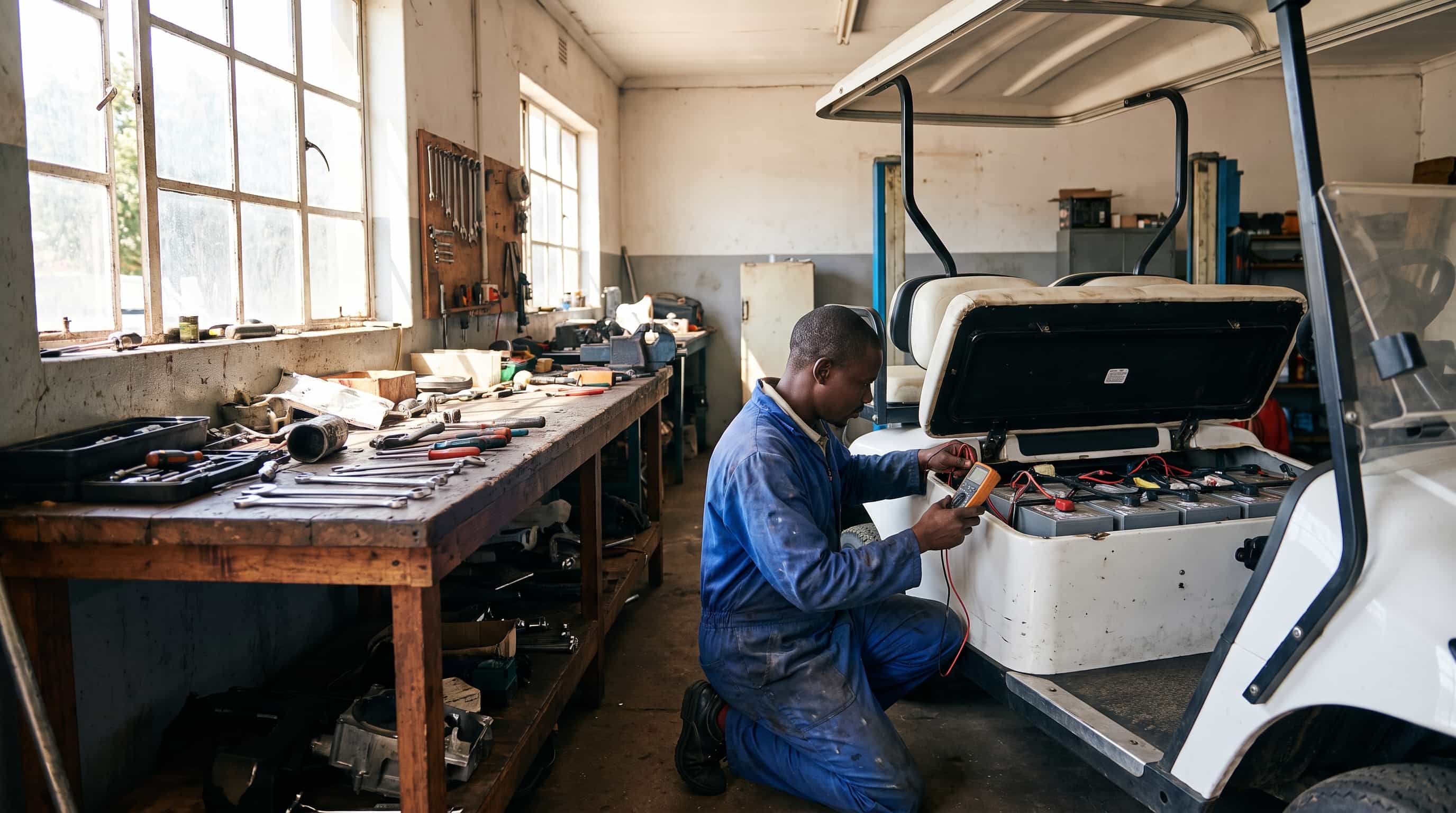
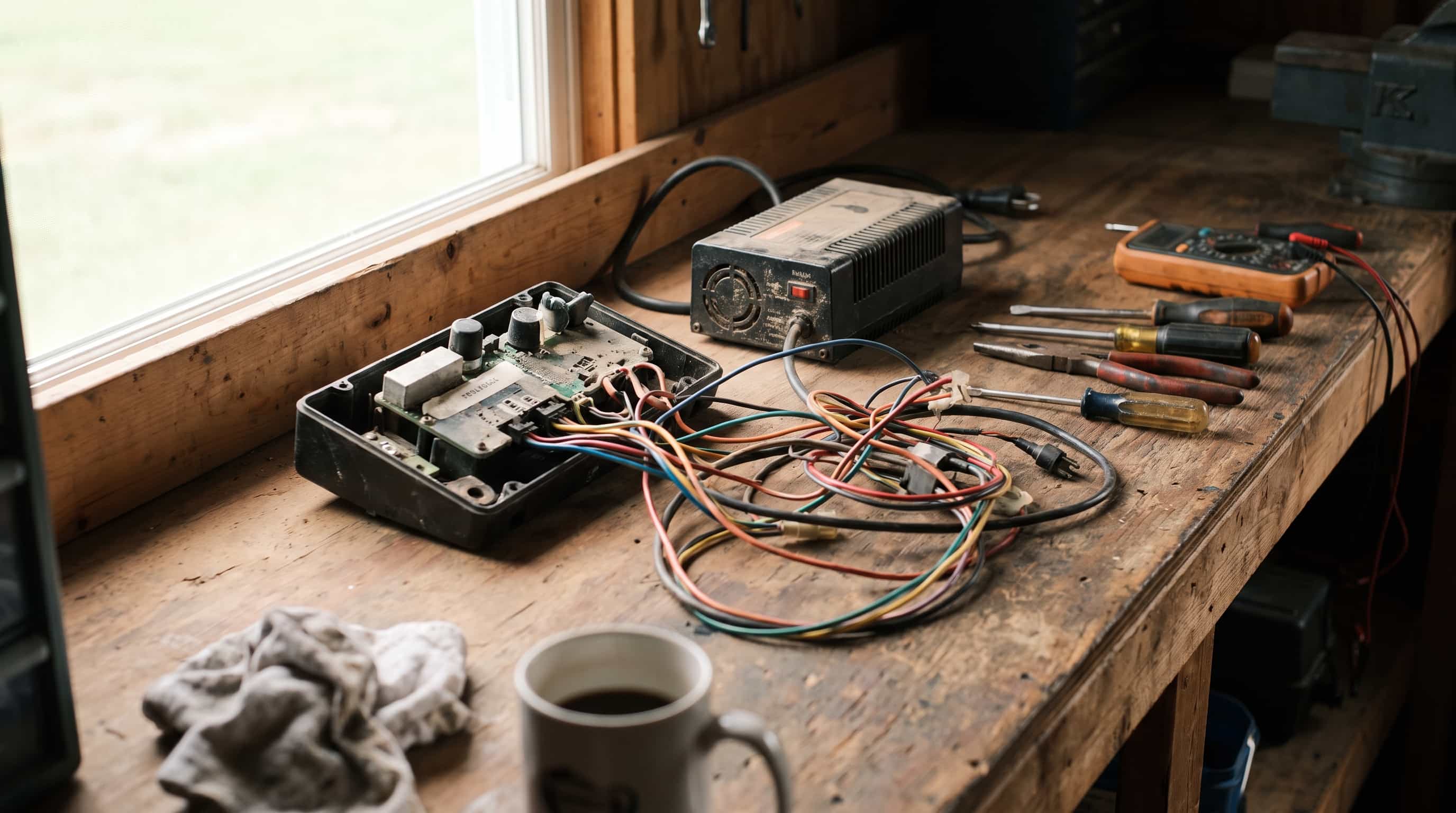
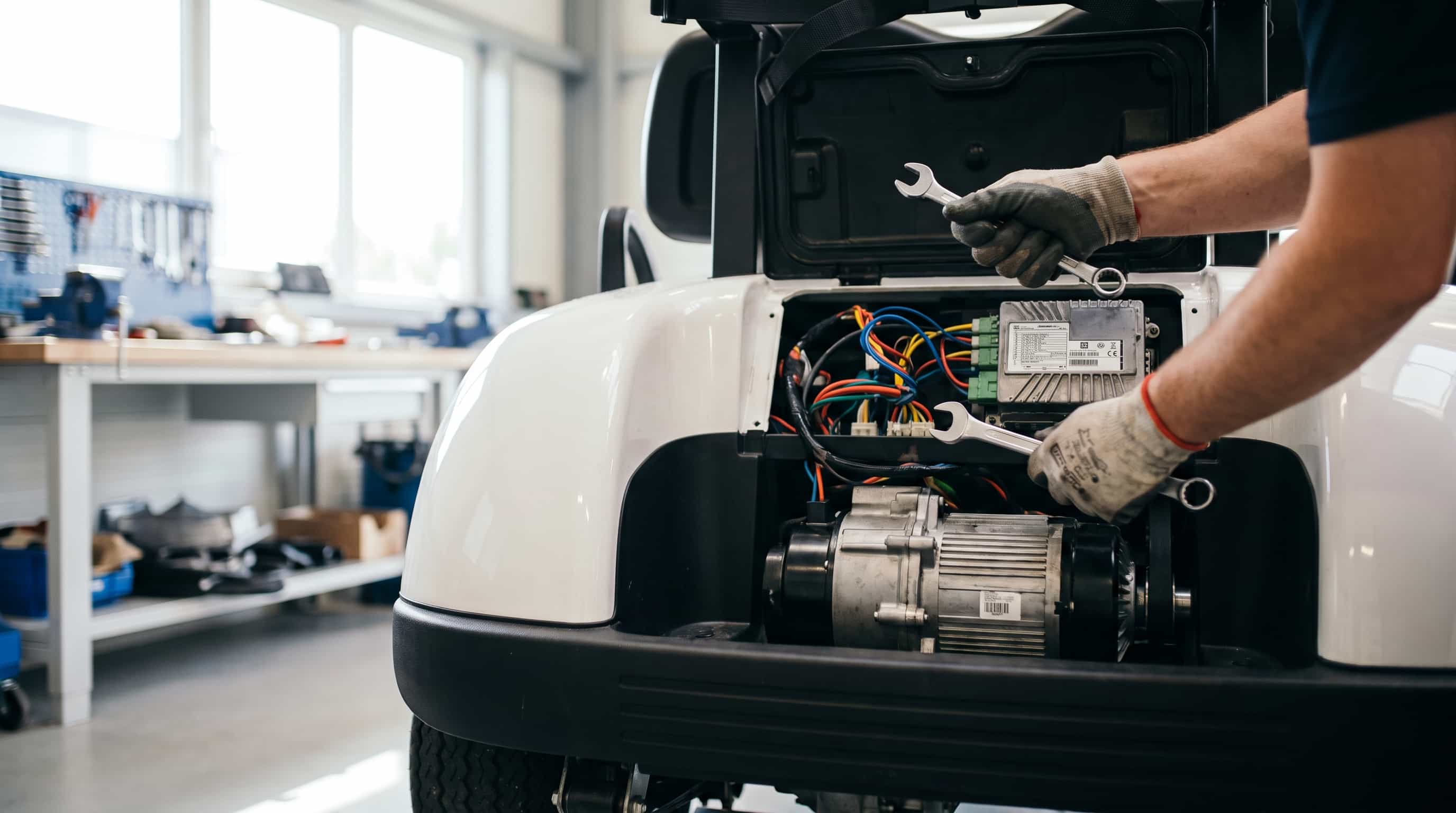
As covered in the switch guide, the forward-reverse switch has separate contacts for each direction, and they wear or corrode independently. Here it is the forward contacts that have failed, dirty, pitted or broken, while the reverse contacts are fine. Testing the switch with a meter confirms whether the forward path makes a good connection when forward is selected. If it does not, the switch is the fault. Contacts that are merely dirty can often be cleaned back to working order, restoring forward drive without a new part; contacts that are burnt or broken mean the switch needs replacing, which is a recognised job.
If the switch is good
If the switch tests fine on the forward selection, the fault has moved into the forward wiring from the switch into the controller or motor circuit, a broken or corroded connection on the forward side alone. That is a tracing job that may need an engineer with the wiring diagram for your model, since it means following the forward path to find where it is broken.
If yours is doing this and the checks here have not settled it, we diagnose and repair buggies, including a callout to wherever it is.
Testing safely
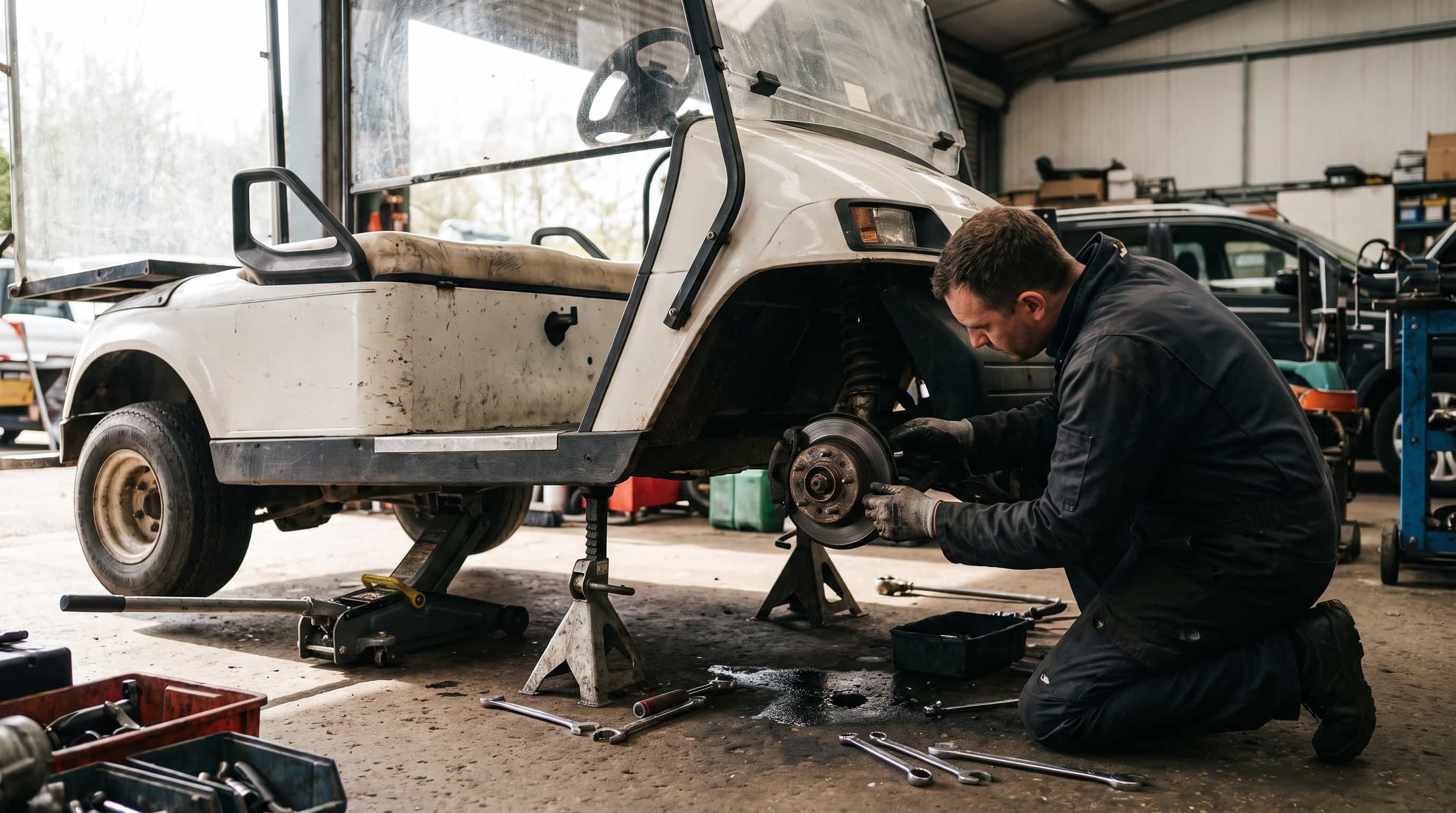
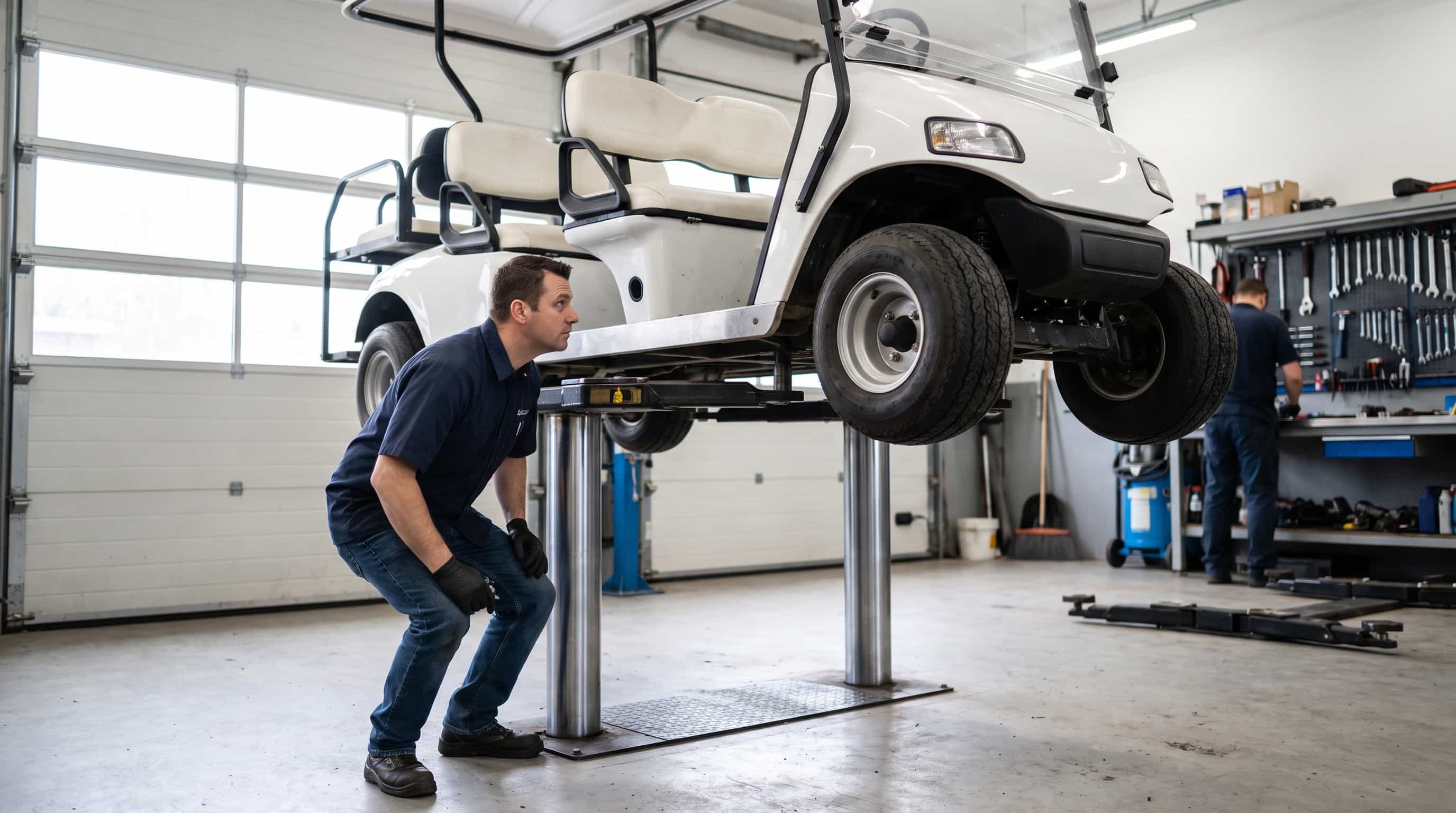
One safety note specific to this fault. When you are working to restore forward drive, be aware that the buggy may suddenly regain it, and a buggy that lurches forward unexpectedly while you are leaning over it is a hazard. So do your testing with the buggy safely supported or in a clear space, wheels free or chocked as appropriate, and keep yourself out of the path of movement. As with any direction fault, check whether the buggy actually moves in the selected direction gently and safely, rather than relying on sounds, and hand the wiring trace to an engineer if the switch checks out and forward still will not engage.
Common questions
- Why does my buggy reverse but not go forward
- Because reverse working proves the shared drive parts, battery, solenoid, controller and motor, are all healthy, so the fault is confined to the forward side: the forward contacts of the direction switch, or the forward wiring. The direction switch, with its separate contacts per direction, is the first and most likely place to look.
- Is this the same as the no-reverse fault
- It is the mirror image. The no-reverse fault has good forward contacts and failed reverse ones; this has good reverse contacts and failed forward ones. The diagnosis is identical in method: test and clean the direction switch first, then check the wiring for the failing direction if the switch is good.
- Is it safe to test
- Take care, because the buggy may suddenly regain forward drive and lurch while you are working on it. Test with the buggy safely supported or in a clear space, wheels free or chocked, and keep out of the path of movement. Check actual movement gently and safely rather than by sound, and involve an engineer for a wiring trace.
Still not right
We diagnose and repair golf buggies, service them on a plan, and send an engineer out to where the buggy is. Tell us the symptom and we will say what it usually means.