Golf buggy dies then restarts
By James Brown · Updated 21 July 2026 · 4 minute read
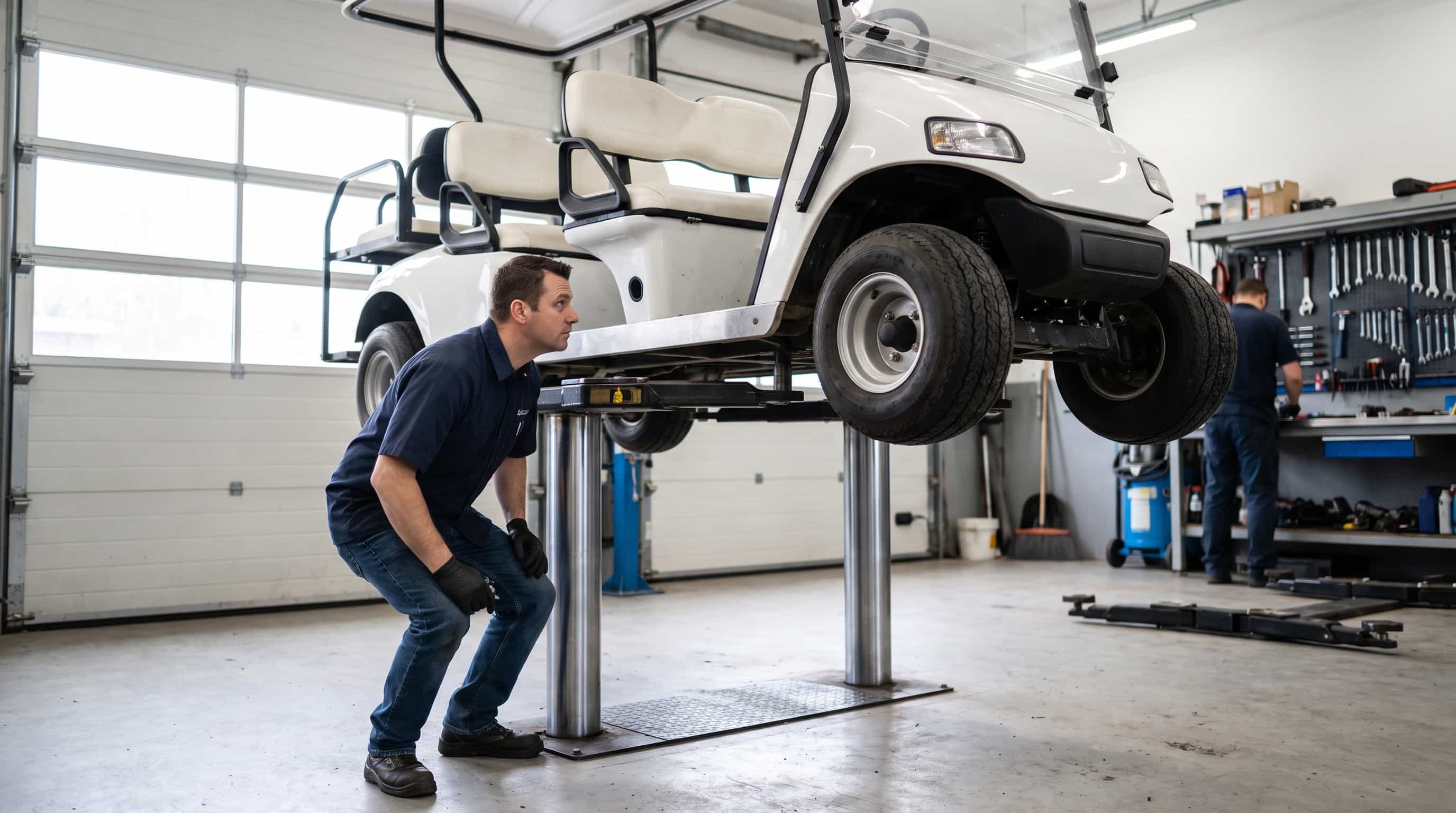
A buggy that dies then restarts has an intermittent fault, and intermittent almost always means a connection or a switch that loses contact then makes again, or a controller that cuts out to protect itself then resets when it cools. It is tempting to ignore because it recovers, but an intermittent fault becomes a permanent one, so it still needs finding.
Key takeaways
- Dying then restarting is an intermittent fault, and intermittent points at connections or switches.
- A loose or corroded connection makes and breaks contact, so the buggy cuts out and returns.
- A hot controller can cut out then reset once it cools, mimicking a random death.
- An intermittent safety switch, seat or pedal, does the same.
- It recovers, so it is easy to ignore, but intermittent faults become permanent, so fix it.
Intermittent is the clue
The pattern is the diagnosis. A fault that comes and goes, dying and then restarting, is behaving in a way that a solid, broken component does not. A failed part stays failed; it does not fix itself for twenty minutes. So a buggy that dies and comes back is telling you the fault is intermittent, and intermittent faults have a short list of usual suspects: a connection that is only just making contact, a switch that loses and regains contact, or a component like the controller that cuts out under a condition and recovers when it passes. Recognising it as intermittent, rather than hunting for a dramatic failure, is what points you at the right places.
Connections and switches
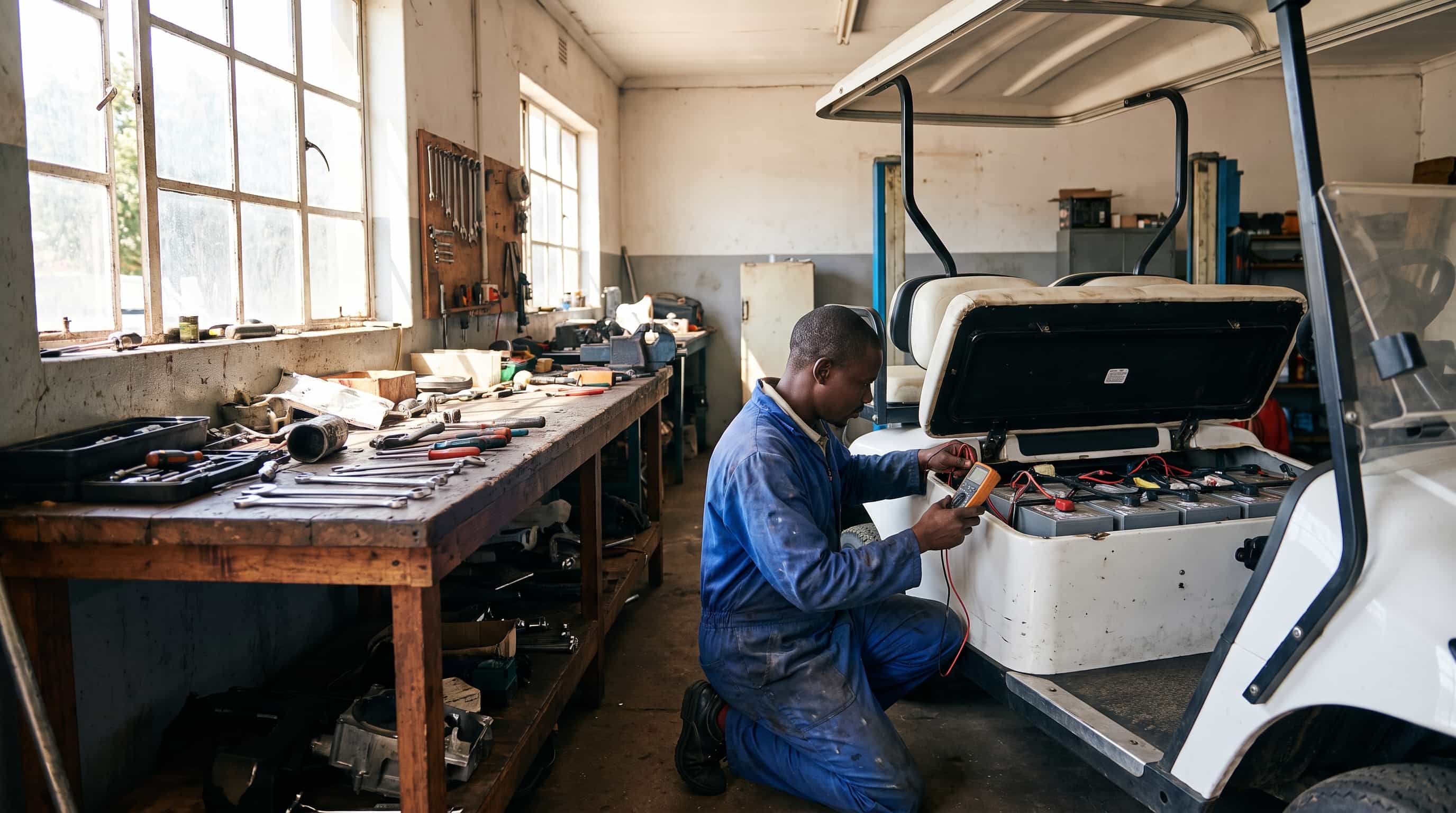
The commonest cause is a poor connection, exactly as in the cutting-out guide. A loose or corroded battery terminal, cable lug or connector carries current until a bump, heat, or a moment of movement breaks it, at which point the buggy dies, and then contact is remade and it restarts. That is why so many die-then-restart faults trace back to the terminals and connections, and why cleaning and tightening them is the first thing to do. The safety micro-switches are the other classic: an intermittent seat or pedal switch cuts the drive when it loses contact and restores it when it makes again, giving the same come-and-go death. Both are cheap, common, and where the fault usually lives.
The hot controller
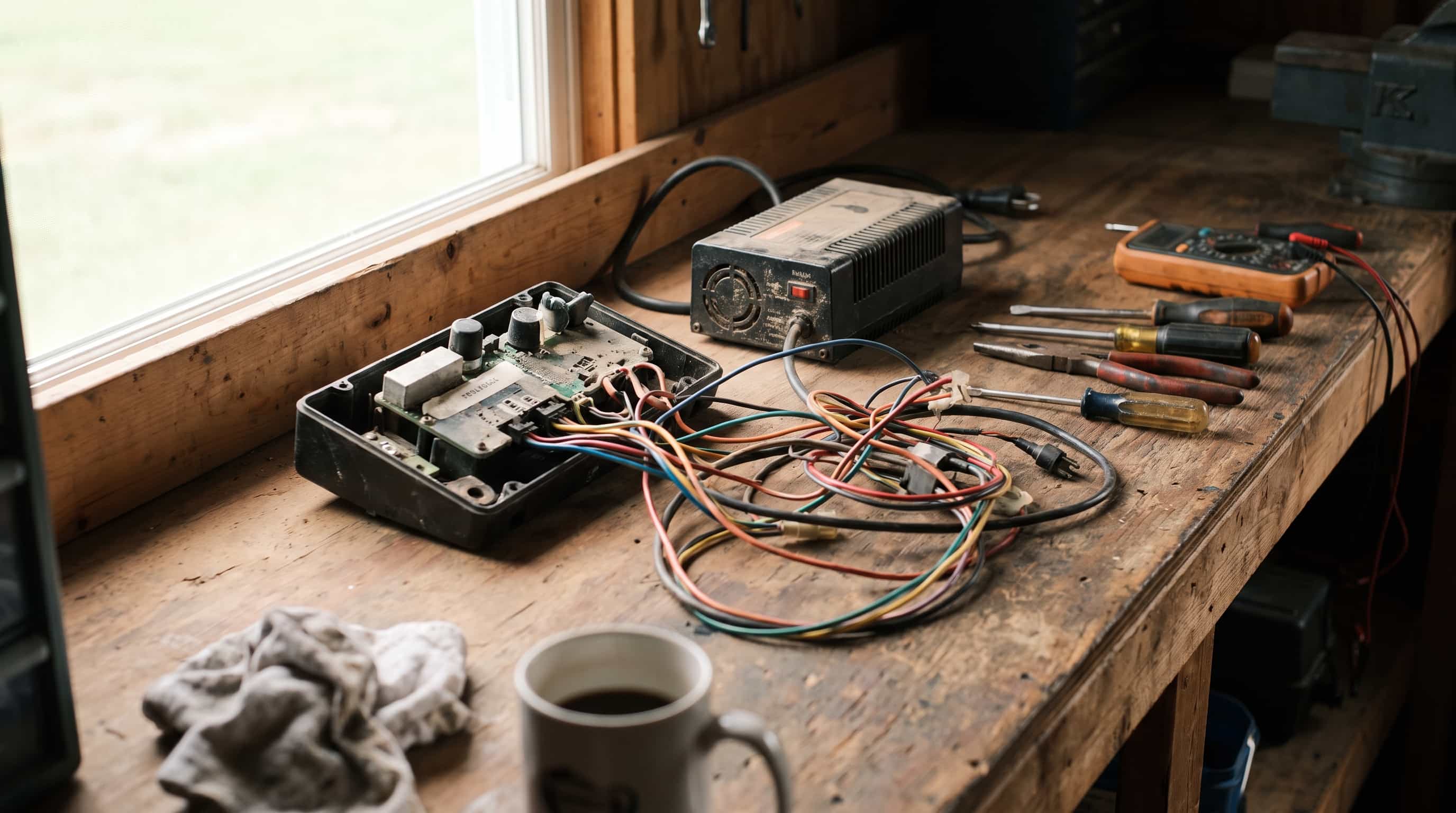
The other pattern is heat-related and worth separating. A controller that is cutting out to protect itself from over-temperature will die under the conditions that overheat it, a long climb, a hot day, hard repeated use, and then restart once it has cooled and its protection releases. That looks like a random death and recovery, but it is tied to load and heat rather than to a bump, so the timing distinguishes it: heat-linked deaths after hard work point at protective cut-out, while bump-linked deaths point at a connection. As the controller guide explains, that is the controller doing its job, and the fix is to address the heat, load and battery rather than the controller itself.
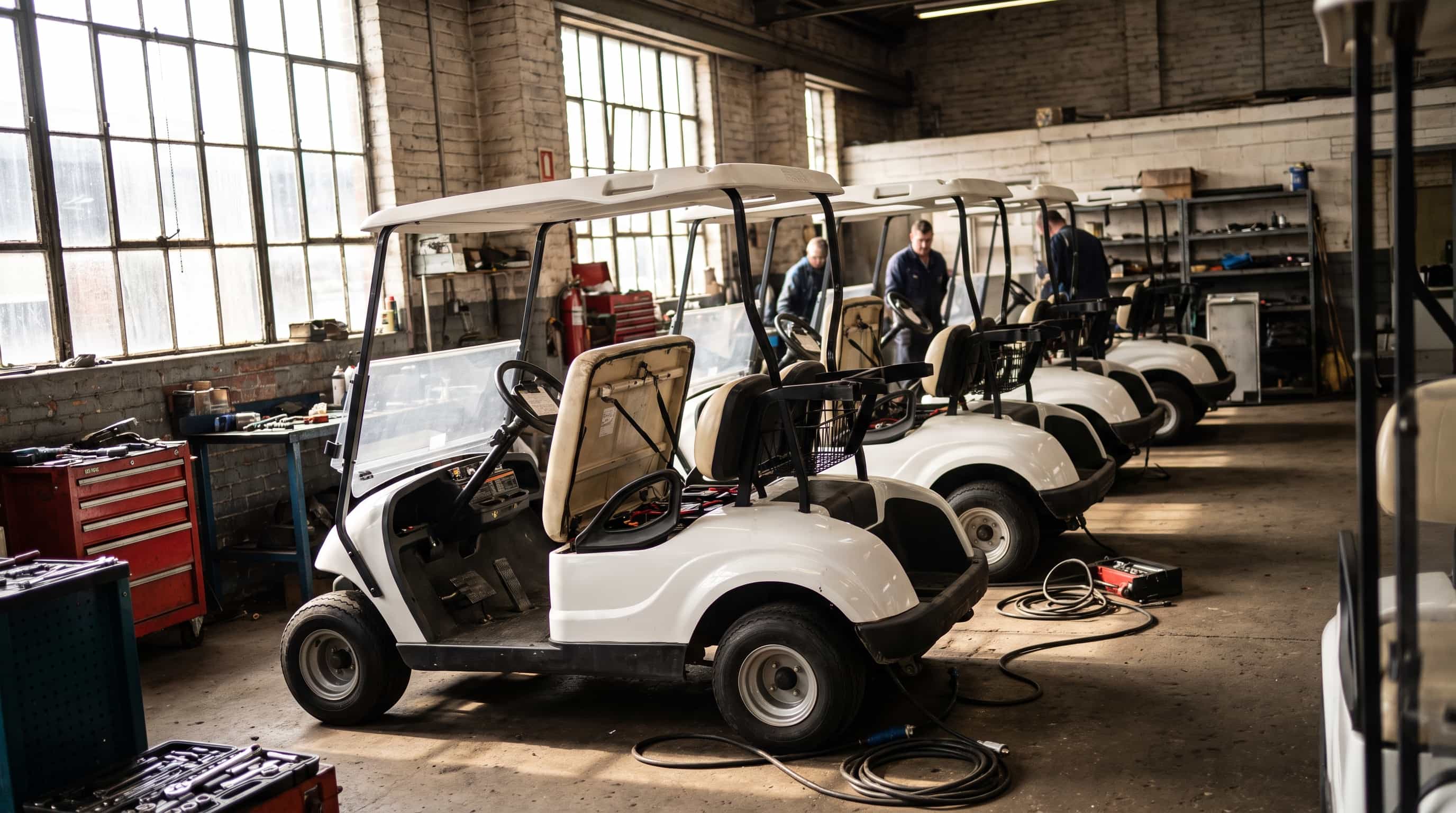
If yours is doing this and the checks here have not settled it, we diagnose and repair buggies, including a callout to wherever it is.
Do not ignore it
The trap with this fault is that it recovers, so it is easy to keep driving and hope. That is a mistake, because an intermittent fault is a permanent fault in waiting: the connection that breaks over a bump today eventually breaks for good, usually at the least convenient moment, and often in a way that is harder to trace once it is total. So treat a die-then-restart as a fault to find now, while the clues, the timing, the bump or the heat that triggers it, are available to help. Cleaning terminals and connections and checking the safety switches are owner jobs that cure many of these; a heat-linked controller cut-out points at load and battery health; and anything you cannot resolve is worth an engineer while it is still intermittent rather than after it fails completely.
Common questions
- My buggy cuts out then starts again by itself
- That is an intermittent fault, which points at a connection or switch losing and regaining contact, or a controller cutting out on heat and resetting when it cools. The timing helps: cutting out over bumps points at a loose or corroded connection, while cutting out after a long hard climb on a hot day points at controller protection.
- Why does it fix itself
- Because the fault is intermittent, not permanent. A loose connection remakes contact when movement shifts it back, a worn switch makes again, and a hot controller restarts once it cools and its protection releases. Nothing has been repaired; the condition that caused the cut-out has simply passed, which is exactly why it will happen again.
- Can I keep using it since it comes back
- It is not wise. An intermittent fault becomes a permanent one, usually at a bad moment, and often harder to trace once total. Find it while the triggers are available: clean and tighten terminals and connections, check the seat and pedal switches, and address heat and load if it is controller cut-out. Get an engineer for anything you cannot resolve while it is still intermittent.
Still not right
We diagnose and repair golf buggies, service them on a plan, and send an engineer out to where the buggy is. Tell us the symptom and we will say what it usually means.