Golf buggy battery equalisation charging (lead-acid)
By James Brown · Updated 21 July 2026 · 4 minute read
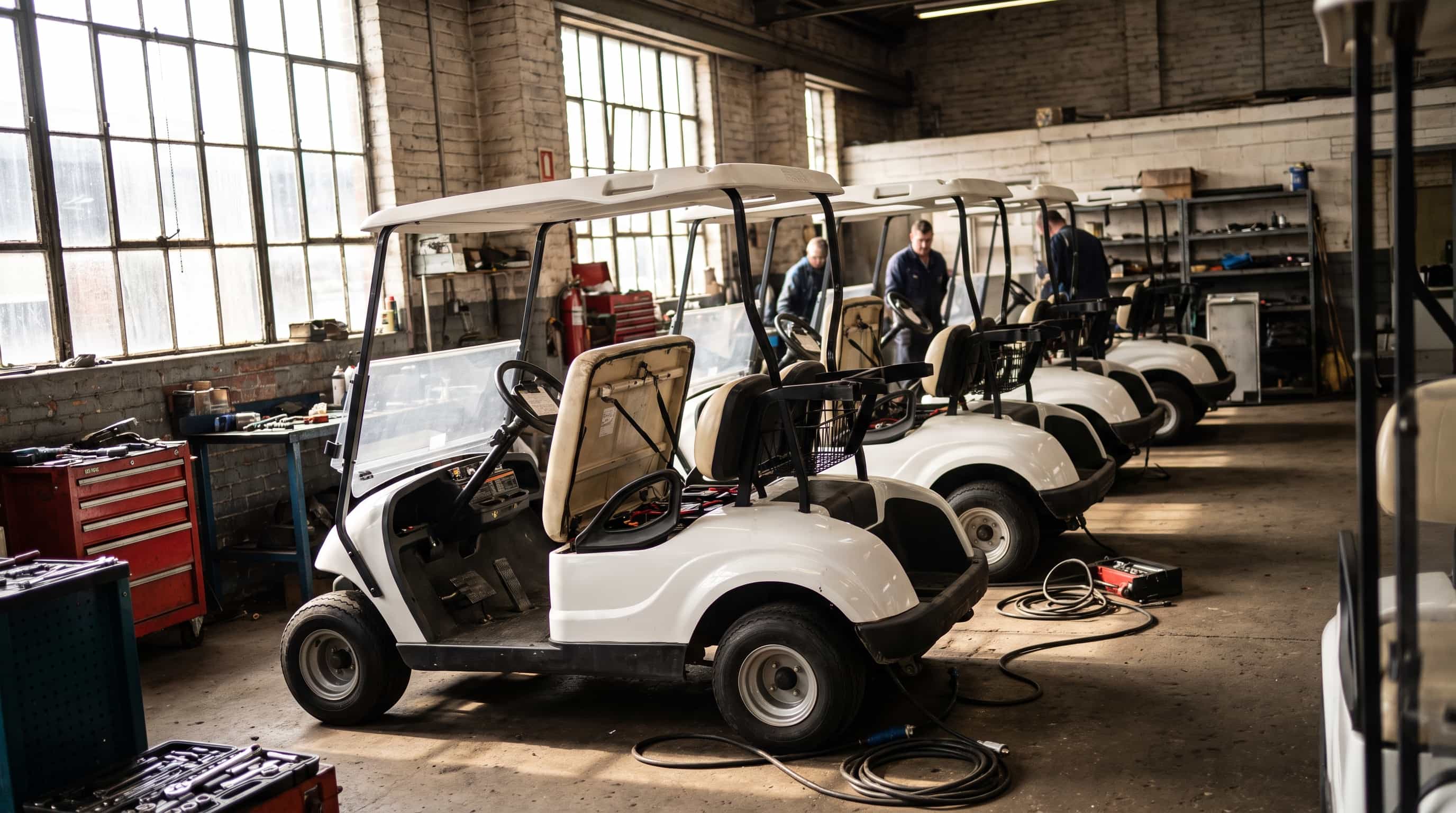
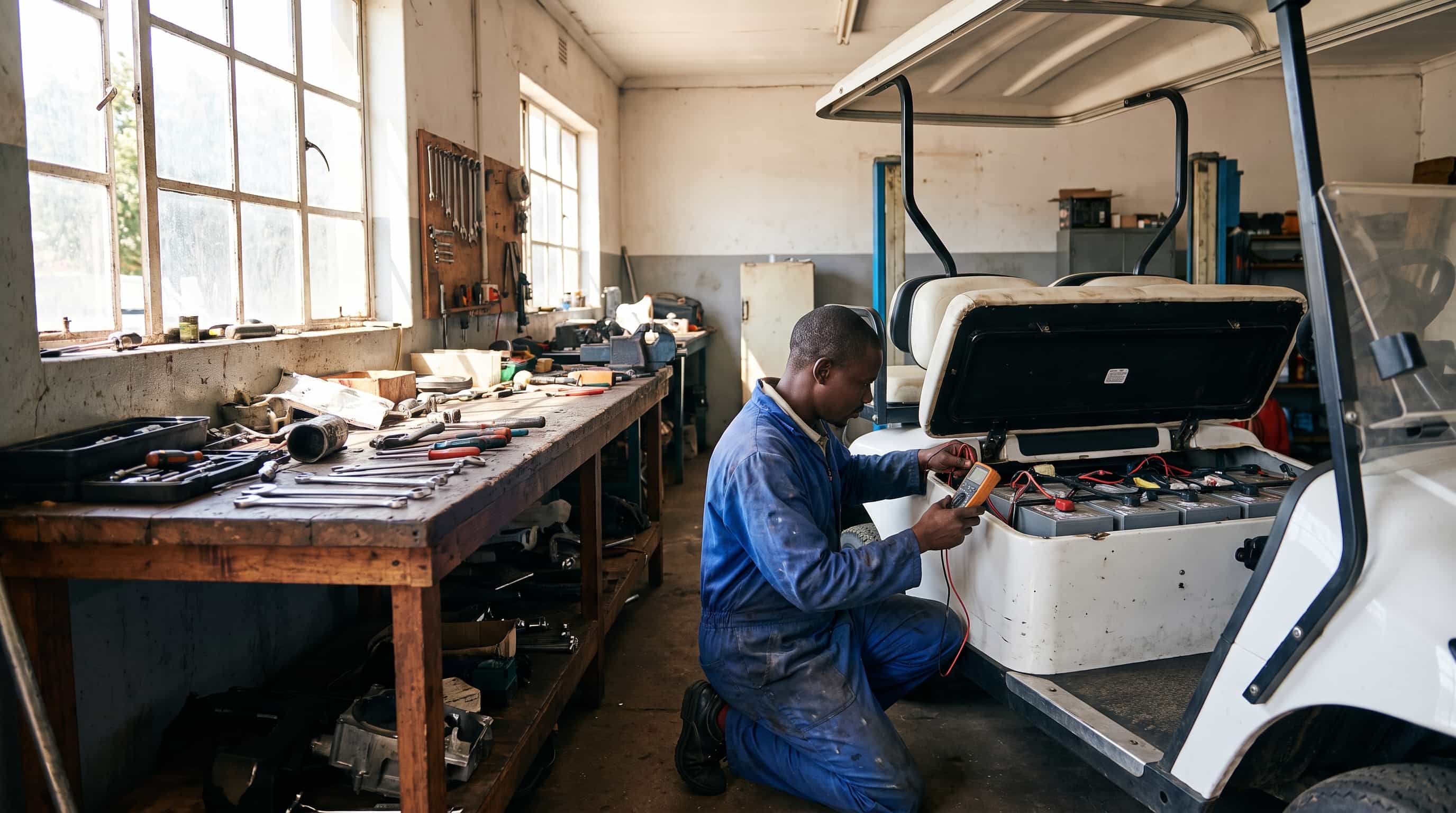
Equalisation is a controlled, deliberate overcharge of a flooded lead-acid set that balances the cells and helps clear light sulphation, keeping the set healthy. It applies only to flooded lead-acid, never sealed or lithium, and it must be done with a charger that supports it and full battery safety, because it gasses the batteries. Follow the charger and battery maker's guidance rather than improvising.
Key takeaways
- Equalisation is a controlled overcharge that balances flooded lead-acid cells.
- It helps bring weak cells up and clear light sulphation, prolonging a set's life.
- It applies only to flooded lead-acid, never to sealed or lithium batteries.
- It gasses the batteries, so full battery safety and ventilation are essential.
- Use a charger designed for it and follow the maker's guidance, not guesswork.
What it is for
Over time, the cells in a flooded lead-acid set drift slightly out of balance, some ending up weaker or less fully charged than others, and light sulphation can build on the plates. Left unchecked, that imbalance and sulphation reduce the set's capacity and shorten its life. Equalisation is the maintenance step that addresses it: a controlled, deliberate overcharge, held for a period, that brings the lagging cells up to match the rest and helps break down light sulphation. Done appropriately, it is a genuine way to keep a flooded set healthy and get the most life from it, which is why chargers designed for these batteries often include an equalisation mode.
Only for flooded lead-acid
The single most important boundary is what it applies to. Equalisation is for flooded, that is fillable, lead-acid batteries only. It must not be used on sealed or maintenance-free lead-acid, and never on lithium, because deliberately overcharging those types is damaging and, with lithium, unsafe. So before considering equalisation, be certain your set is flooded lead-acid, from the maker's plate or manual, exactly as you would before watering it. If you have sealed or lithium batteries, equalisation is simply not part of your maintenance, and the health of those sets is looked after differently.
How and when
Equalisation is not something to do casually or often. It is done with a charger that supports it, following the charger's and the battery maker's guidance on how and how frequently, rather than by improvising a manual overcharge, which risks damage. It also involves the practical steps that come with charging lead-acid: because it deliberately overcharges, it drives off water, so the cells need checking and topping up with distilled water afterwards as the watering guide describes, and it produces more gas than a normal charge. The right frequency depends on the set and its use, so rather than invent a schedule, follow the maker's guidance and treat it as periodic maintenance for a set that is worked and watered, not a fix to reach for every week.
If yours is doing this and the checks here have not settled it, we diagnose and repair buggies, including a callout to wherever it is.
The safety it needs
Equalisation deserves the battery safety rules in full, and then some, because it gasses the batteries harder than a normal charge. That means doing it in a well-ventilated space away from any flames or sparks, since the hydrogen given off is flammable, with eye protection and care around the acid, and with the cells checked and topped afterwards. It is within the reach of an owner who maintains a flooded set properly and follows the maker's guidance, but it is not a step to guess at, and if you are unsure whether your set needs it or how to do it safely, that is a reasonable thing to have an engineer or a knowledgeable supplier advise on. As always, a damaged battery is never equalised or charged; it is kept clear of and dealt with by someone competent.
Common questions
- What is equalisation charging
- A controlled, deliberate overcharge of a flooded lead-acid set that balances the cells and helps clear light sulphation, keeping the set healthy and prolonging its life. Chargers designed for these batteries often include an equalisation mode. It brings weak cells up to match the rest, addressing the drift and sulphation that otherwise reduce capacity over time.
- Can I equalise any battery
- No. Equalisation is for flooded, fillable lead-acid batteries only. It must not be used on sealed or maintenance-free lead-acid, and never on lithium, because deliberately overcharging those is damaging and, with lithium, unsafe. Confirm your set is flooded lead-acid from the maker's plate before considering it, and look after other types differently.
- Is it safe to do myself
- It is within reach for an owner who maintains a flooded set and follows the charger and battery maker's guidance, using a charger that supports it. It gasses the batteries hard, so it needs a well-ventilated space away from sparks, eye protection, and topping up the cells afterwards. If unsure whether your set needs it or how to do it safely, have an engineer or knowledgeable supplier advise.
Still not right
We diagnose and repair golf buggies, service them on a plan, and send an engineer out to where the buggy is. Tell us the symptom and we will say what it usually means.
Related pages
Related guides
 Golf buggy troubleshooting, a complete guide9 minute read
 Golf buggy throttle and potentiometer faults5 minute read
 Golf buggy pedal sticks or does not return4 minute read
 Battery watering and maintenance (lead-acid)6 minute read
- Golf buggy battery sulphation explained4 minute read
- Golf buggy battery state of charge, reading it properly4 minute read