E-Z-GO Freedom and Express: the passenger lines
By James Brown · Updated 29 August 2026 · 10 minute read
Freedom and Express answer two different questions. Freedom is a specification applied to E-Z-GO golf platforms sold to private buyers rather than to club fleets, so the machine arrives equipped for general running about instead of stripped for a hire fleet. Express is a separate line built around carrying more people, or a load, across a site. If the job is a round of golf or an estate runabout, look at Freedom. If it is moving groups or kit, look at Express.
Key takeaways
- Freedom is an equipment specification applied to a golf platform, not a separate model line.
- Express is a separate line built for carrying passengers or a load across a site.
- A trim name on a used advert describes how a machine left the factory, not what is fitted to it now.
- The tightest gateway and the sharpest turn on your site rule out more machines than budget does.
- One long machine means one driver and one point of failure; two short ones halve you rather than stop you.
- Gradient limits and seat counts belong to the maker's specification sheet for the exact model.
- On an electric machine the battery pack is a large share of what you are buying, so ask its age.
What the Freedom name actually denotes
Freedom is a specification, not a separate chassis. E-Z-GO applies it to golf platforms sold to private buyers rather than to club fleets, and what changes is the equipment rather than the underlying machine. A fleet car is built plain, because a club wants a row of identical machines and does not want extras to break. A privately owned machine is expected to carry lighting, a screen, storage and the small comforts that make it usable for something other than a round of golf.
That matters when you read an advert. Freedom on a listing tells you the equipment level a machine left the factory with, and nothing at all about its age, its hours, its battery pack or how it was looked after. Nor does the kit survive a hard life: things get removed, broken or swapped. Check what is actually fitted to the machine in front of you against the maker's own option list for that model, rather than treating the name as a guarantee of anything.
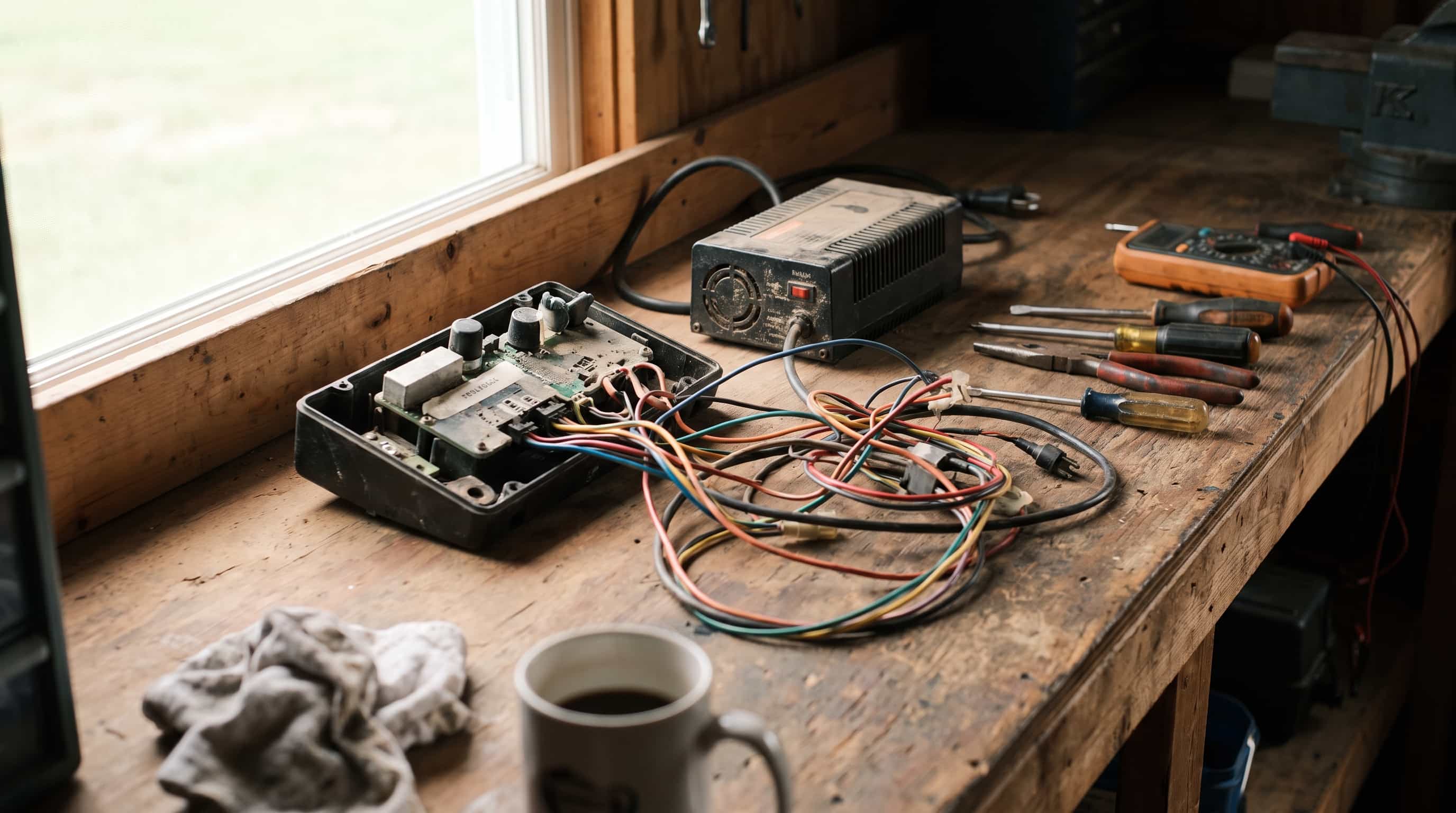
The reverse happens too. A plain fleet car can be equipped afterwards with lights, mirrors and a screen, and a good job of it is hard to tell from a factory build until you look at the wiring. That is not a problem in itself, but it changes who is responsible if something fitted later fails, and it is worth knowing before you agree a price.
Where the Express line sits
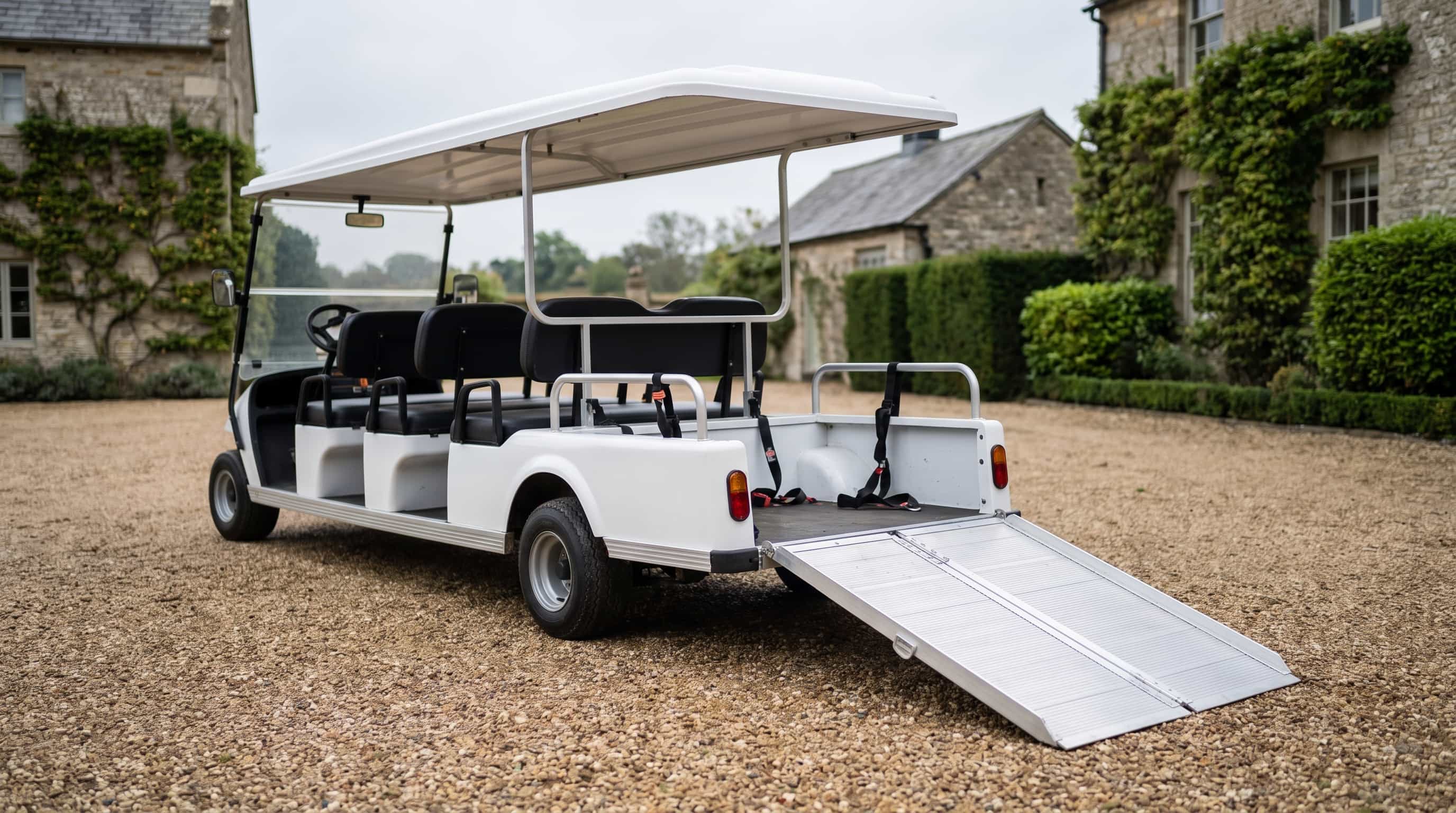
Express is a different proposition: a line built around carrying people or a load across a site, rather than a golf car with more seats added to it. The frame is longer, the seating is arranged for passengers and their bags, and the range takes in cargo bodies as well as passenger arrangements. The duty it is designed for is a resort path, an estate track or a works yard rather than eighteen holes.
Within the line, the names distinguish the passenger arrangements from the load-carrying ones. Which variants are current, and how each is laid out, is the maker's to publish and it changes over time. Take the seat count, the bed size and the option list from the E-Z-GO specification sheet for the model you are looking at, not from an old brochure or a reseller's summary of one.
The practical difference from a golf platform shows up in the running gear rather than the badge. A machine designed to carry a full load of adults over a long day has different springs, brakes and tyres from one designed to carry two golfers and their clubs, and it is those differences, not the seat count, that decide how it copes on your ground.
One longer machine or two shorter ones
The question that decides most purchases is not which line but how many machines. One longer machine carries a group in a single trip and needs one driver. Two shorter ones carry the same group in two trips, or in one trip if you can staff two drivers, and they reach places the long machine cannot. Both answers are defensible, and the site usually settles it long before the spreadsheet does.
Redundancy is the argument people forget. When a single long machine is off the road for a fault, a flat pack or a service, your whole capacity is gone for the day. With two smaller machines you are halved rather than stopped, and you can keep the tattier one for staff runs while the better one carries guests. Against that, two machines mean two chargers, two sockets, two sets of tyres and two things to check every morning.
- One long machine: fewer drivers, one charging bay, one set of daily checks, and a single point of failure.
- Two short machines: half capacity when one is down, more places they fit, twice the upkeep.
- Path width and the tightest turn on your site usually rule one option out before cost does.
- Count the people who need to move at the same moment, not the total who will ride across a day.
How a longer machine behaves on a UK site
Long machines are designed around wide resort paths, and a great many British sites are not that. The measurements that catch people out are the tightest gateway, the turning circle at the end of a path with a wall down one side, and the break-over point where a ramp meets level ground. A longer wheelbase grounds in the middle where a short one rides through without comment.
Weight is the other half of it. A loaded passenger machine puts more through each wheel than a golf buggy does, and wet British turf in autumn is unforgiving about that. Turning under power on soft ground is what tears a surface, so the route matters as much as the tyre. If the machine will cross grass at all, walk that route after rain before you commit to anything.
Gradients deserve the same treatment. A machine that climbs a slope empty is not the same machine fully loaded, and braking down the same slope with a full load is the harder half of the job. The maker sets a gradient limit for each model and it is in the manual. Get that limit for the exact machine, then test your own worst slope, wet, with the load you actually expect to carry.
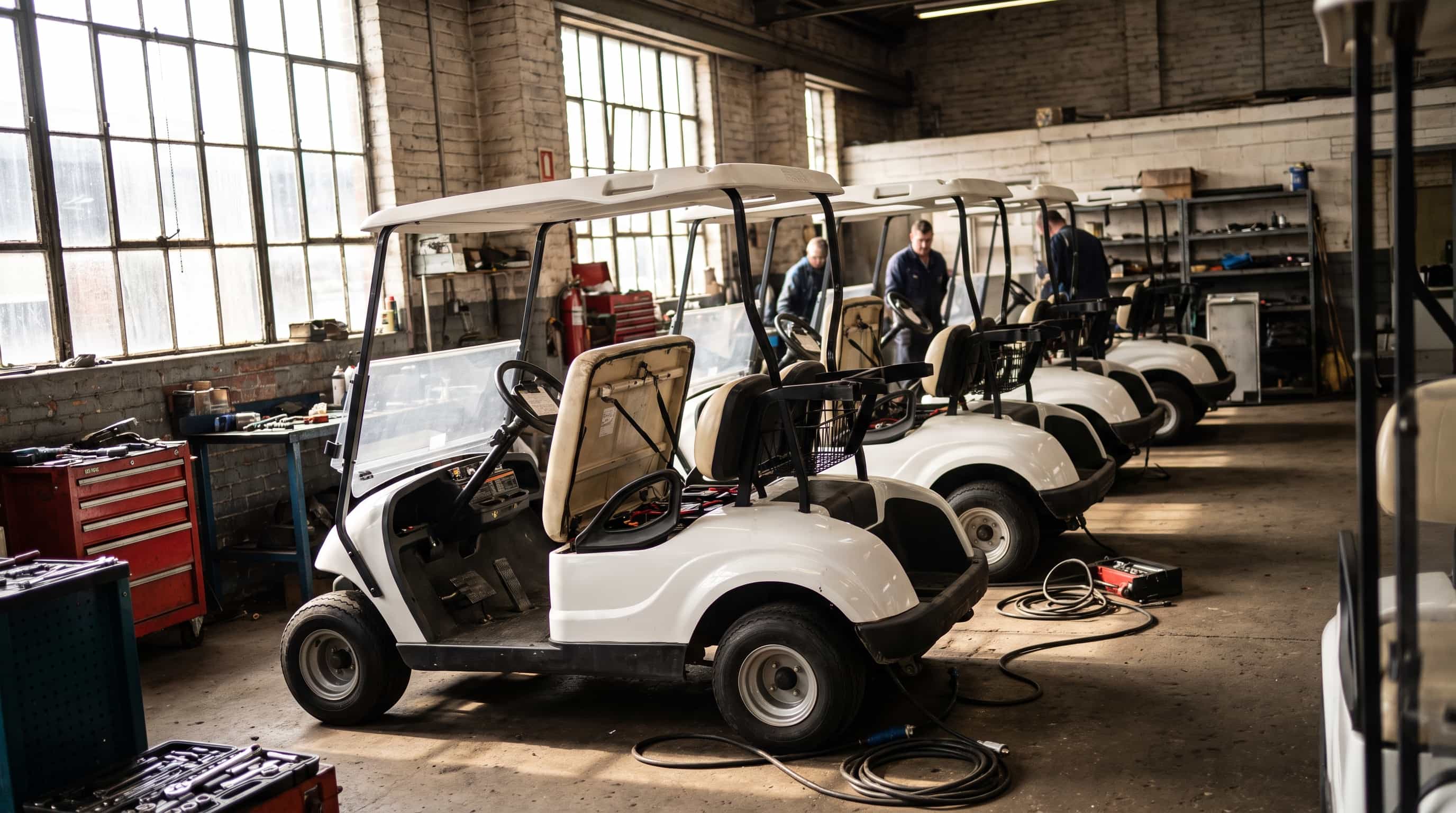
If yours is doing this and the checks here have not settled it, we diagnose and repair buggies, including a callout to wherever it is.
Charging, storage and the practical footprint
A longer machine needs a longer bay, which is a duller constraint than it sounds and a more common one. The store has to take the machine with its roof on, the door has to admit it, and the charging socket has to be reachable without running a lead across a walkway. Two machines need two sockets, and depending on the supply that is a conversation with an electrician rather than a trip to buy an extension lead.
Where the charger lives also decides how the day runs. A shuttle that returns to one point can charge there between runs. A machine that finishes wherever the last job ended needs a plan, or it starts the next morning already short. Lead-acid packs want ventilation while charging and topping up on a schedule, and lithium packs want neither, which changes what the store itself has to be.
Specifying a machine for private or estate use
Start from the weather and the ground rather than from the options list. A roof and a screen change a machine from fine-weather transport into something that gets used in February. Doors and a rear curtain go further and cost more space in the store. Tyres are the other decision that changes the machine outright: a turf pattern protects a surface and gives up grip on wet slopes, and a more aggressive pattern does the reverse.
After that, the additions worth having are the dull ones. A hitch if anything will be towed. Work lighting if the machine runs after dark. A rack or a box so tools are not riding on a seat. Somewhere for a bag that is not the footwell. Whether a given option exists for the model you are buying is on the maker's current sheet, and fitting one that is not on it is a decision you own rather than the maker.
Seat belts are worth raising early, because they are not a simple retrofit. If your site or your insurer expects belts, settle it before you buy: belts need anchorages designed into the machine, and the seating arrangement and the site policy that go with them are the venue's call and the insurer's rather than something to bolt on afterwards. Ask the supplier whether the model can be had with belts from the factory, and ask what changes if it cannot.
Buying used in the UK
Used stock here is a mixture of ex-fleet machines, private sales and imported units, and trim names travel badly across all three. Sellers use Freedom and Express loosely, and a machine described as one may be a plain platform with parts added later. The serial plate is the thing that identifies it, and a dealer for the marque can decode that plate for you in a couple of minutes.
Beyond identity, the useful questions are about the life it has had. What did it do, on what ground, and across how long a day. A machine that shuttled guests over tarmac has aged differently from one that spent winters on a wet estate track. Ask for the charger it has been used with, and ask when the pack was last replaced, because on an electric machine the pack is a large share of what you are paying for.
Then check parts before you commit rather than after. Availability in the UK varies by line and by generation, and a machine that is cheap to buy and slow to fix costs more across a season than the other way round. A UK parts supplier will tell you plainly, given the serial number, whether the wearing items are on a shelf in this country.
Common questions
- Is an E-Z-GO Freedom a different vehicle from a fleet golf car?
- Not underneath. Freedom describes how a golf platform is specified for a private buyer rather than for a club fleet, so the equipment differs while the basic machine does not. In practice that means lighting, a screen, mirrors and storage where a fleet car is left plain. Check what is actually fitted to the machine in front of you, because kit gets removed and added across a working life.
- How many people does an E-Z-GO Express carry?
- The line covers more than one passenger arrangement, and the seat count sits in the maker's designation for each variant. Take it from the E-Z-GO specification sheet for the model in front of you rather than from an advert. Then check it against your site, because the number a machine seats and the number it can safely carry up your worst slope are two different questions.
- Can I add a rear seat to turn a two-seater into a four-seater?
- Sometimes, and it is not a decision to take lightly. Extra seats add weight behind the rear axle, change braking and change how the machine sits on a slope. Whether an approved kit exists for your model is in the maker's own literature, and whether your site will let you run it afterwards is between you and your insurer. Get both answers before buying the kit.
- Are these machines road legal in the UK?
- Not as supplied. Both lines are built for use on private land, and taking one onto a public road is a separate matter with its own requirements around construction, lighting, registration and insurance. DVLA is the authority on what applies to a particular vehicle. Ask before you plan a route that crosses a public road, rather than assuming a short hop is fine.
- Which suits a hotel shuttle, one longer machine or two smaller ones?
- Count the people who need to move at the same moment, then count the drivers you can actually staff. One longer machine wins where the route is wide, the group arrives together and one driver is all you have. Two smaller machines win where paths are tight, where a breakdown must not stop the service, and where arrivals trickle in rather than land all at once.
- Do the two lines share parts?
- Some items carry across and many do not, because the running gear differs where the duty differs. Brakes, springs and tyres on a load-carrying machine are not the golf platform's parts. Before you buy, give a UK parts supplier the serial number and ask which wearing items they hold for that exact model, because availability is what decides how long a machine sits off the road.
Still not right
We diagnose and repair golf buggies, service them on a plan, and send an engineer out to where the buggy is. Tell us the symptom and we will say what it usually means.