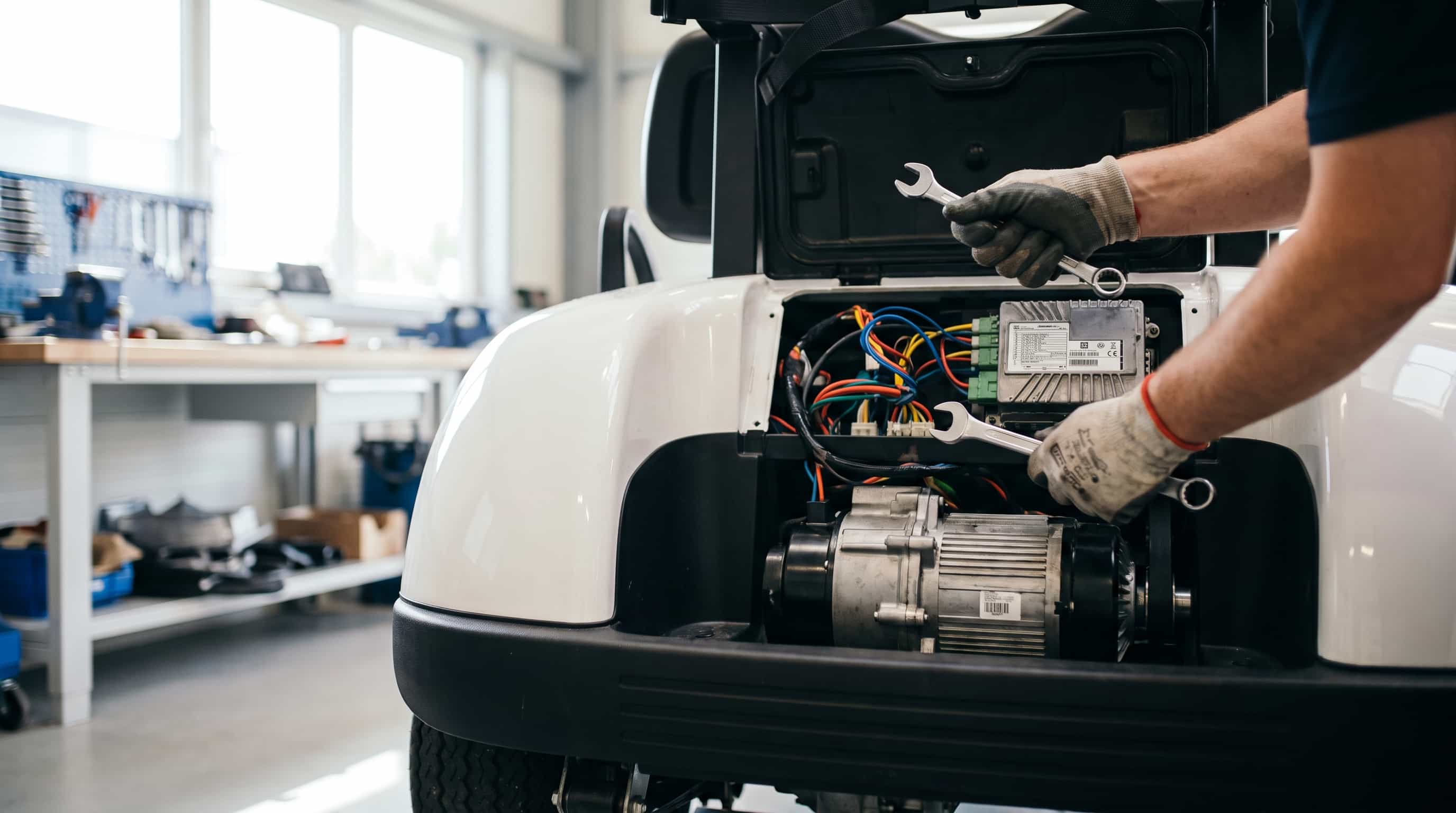
Running costs of electric golf buggies explained
By James Brown · Updated 21 July 2026 · 5 minute read

The running cost of an electric golf buggy is charging, maintenance, and, over time, replacing the battery set. Charging is modest, maintenance is routine, and batteries are the periodic big item. It compares well with a petrol buggy, which adds fuel and more engine upkeep. We will not put figures on your situation, but the shape is clear, and hiring turns all of it into one transparent price.
Key takeaways
- Running costs are charging, routine maintenance, and periodic battery replacement.
- Charging is modest and maintenance is routine; batteries are the periodic big item.
- Electric compares well with petrol, which adds fuel and more engine upkeep.
- Good maintenance lowers running costs by making the buggy and batteries last.
- Hiring turns the running costs into one transparent hire price rather than separate bills.
The three parts of running cost
It helps to see the running cost of an electric buggy as three things rather than one figure. There is charging, the electricity to keep it moving, which as the charging-cost guide explains is modest and depends on your rate and pack. There is maintenance, the routine upkeep, checks, servicing, tyres, the occasional part, that keeps the buggy working. And there is the battery set, which lasts a long time if cared for but is eventually replaced, making it the periodic big-ticket item rather than a running trickle. Add those three and you have the running cost. None of them is dramatic for a well-kept buggy, which is part of the appeal of electric.
Charging and maintenance
The day-to-day running cost is charging and maintenance, and both are manageable. Charging is inexpensive, a small cost against the value of the transport, and for typical venue use it stays low. Maintenance is routine rather than heavy: the daily and seasonal checks, servicing matched to how hard the buggy works, tyres and the occasional wear part, as the servicing guide sets out. Electric drive keeps this lighter than petrol, since there is no engine to fuel, oil or service in the same way, so a good share of a petrol buggy's upkeep simply does not apply. Kept up, this ongoing cost is modest and predictable.
The battery set over time
The one larger cost is the battery set, and being honest about it matters. Batteries last a long time when watered, charged and cared for, but they do not last forever, so at some point a set is replaced, and because a set is replaced together rather than one at a time, that is a cost that lands at once, as the battery guides explain. This is the main periodic outlay in owning an electric buggy, and the way to keep it as low as possible is care: the maintenance that makes a set last is directly the thing that spreads that cost over more years. So running costs and maintenance are linked, a well-maintained buggy costs less to run because its batteries and parts last.
If yours is doing this and the checks here have not settled it, we diagnose and repair buggies, including a callout to wherever it is.
Why we will not quote, and how hiring changes it
We will not put figures on your running costs, because charging depends on your electricity rate and pack, maintenance depends on use, and battery life depends on care, and any number we invented would be wrong for most people, which is exactly the kind of fabricated figure this brand avoids. What we can say honestly is the shape: charging modest, maintenance routine and lighter than petrol, batteries the periodic big item, and the whole comparing well with a petrol buggy that adds fuel and engine upkeep. And for anyone hiring rather than owning, running costs stop being a set of separate bills to track: they are built into one transparent hire price, so you pay for the transport you use and the running costs sit with us. That simplicity is one of the quiet advantages of hiring over owning for an occasional need.
Common questions
- What are the running costs of an electric golf buggy
- Charging, routine maintenance, and periodic battery replacement. Charging is modest, maintenance is routine and lighter than a petrol buggy's, and the battery set is the periodic big-ticket item since it is replaced as a whole. We will not quote figures, since they depend on your rate, use and care, but the shape is clear and compares well with petrol.
- Are they cheaper to run than petrol buggies
- Generally the running cost compares well with petrol, because electric adds no fuel and less engine upkeep, though it has the periodic battery cost. We will not attach a figure or percentage, since that depends on your rates and use, but the direction is consistent: modest charging and lighter maintenance are real advantages of electric for regular use.
- How do I keep running costs down
- Maintenance is the biggest lever, because the care that makes a battery set and the parts last is directly what spreads the largest costs over more years. Charging after use, watering lead-acid, keeping to the servicing rhythm, and not overloading the buggy all help. For an occasional need, hiring turns the running costs into one transparent price and removes the upkeep from you entirely.
Still not right
We diagnose and repair golf buggies, service them on a plan, and send an engineer out to where the buggy is. Tell us the symptom and we will say what it usually means.