Speed limiters on a golf buggy and how they are set
By James Brown · Updated 29 August 2026 · 9 minute read

On most modern buggies the maximum speed is a setting held in the motor controller rather than a mechanical stop, and it is changed with the maker's tool by somebody who has one. Petrol machines are governed instead. Hire and club fleets are limited because the vehicles share ground with people on foot, and because venues and insurers expect it. Raising a limit is a liability decision rather than a technical one, and whoever authorises it owns what follows from it.
Key takeaways
- On an electric buggy the limit usually lives in the controller as a parameter, not as a physical stop under the pedal.
- The method of setting it is specific to the model, and the maker's manual is the only reliable source for a given machine.
- Petrol machines are governed mechanically, which makes their limit coarser and harder to vary by zone.
- Fleets are limited for consistency as much as for safety, because machines that behave alike are easier to brief.
- Raising a limit can touch the warranty, the insurer's view of the risk and the venue's own rules at the same time.
- A limit does nothing about stopping distance, and little about a loaded machine running downhill.
- A buggy that has become slow is more often a tired battery or a dragging brake than a limiter, but the limiter is the cheapest cause to rule out.
What limiting means on a modern machine
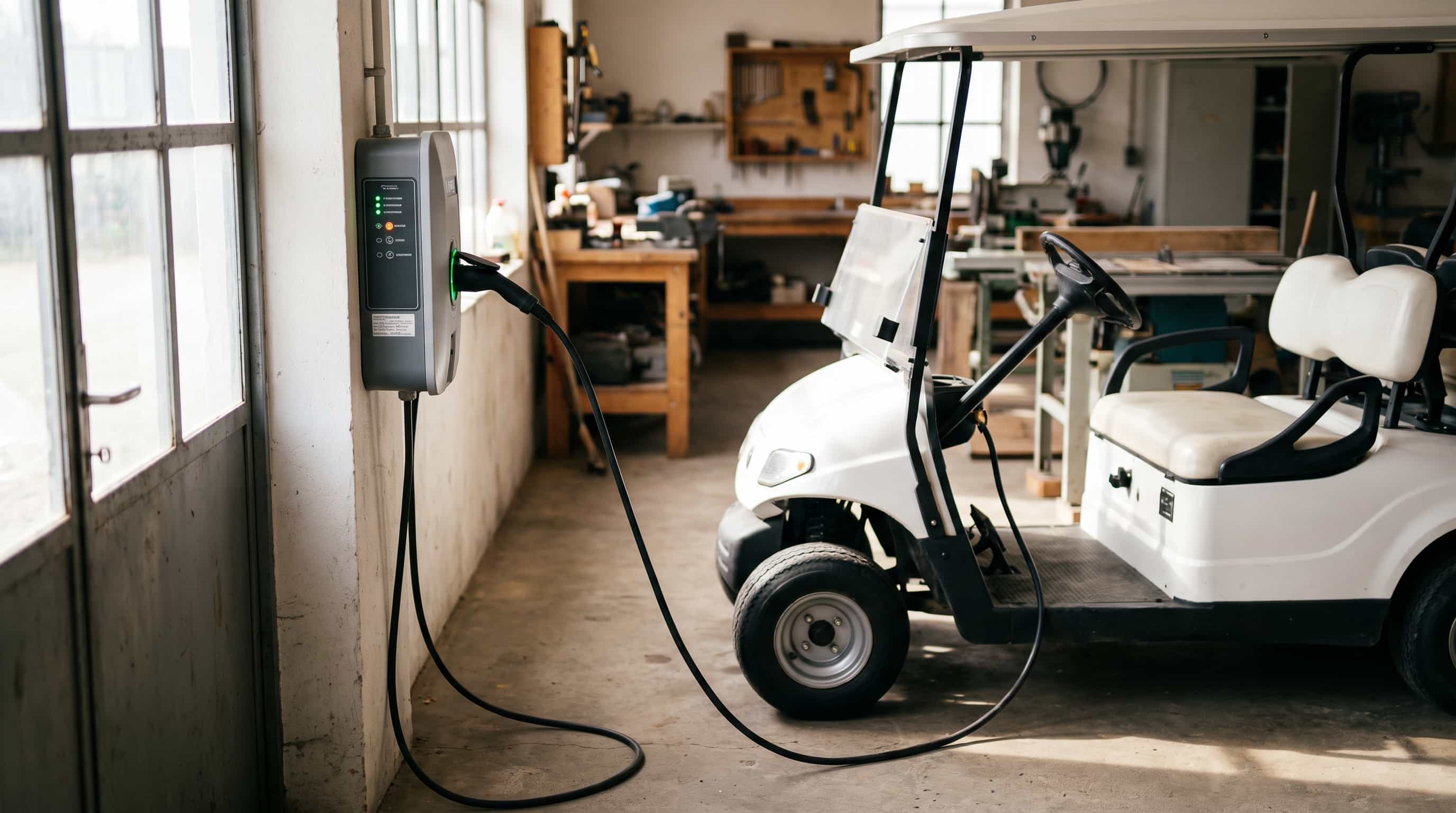
On an electric buggy the maximum speed is normally a number held in the motor controller. The controller decides how much it will let the motor do, and the ceiling is a parameter inside it rather than a stop on the pedal. Changing it means changing the parameter, which is done with the maker's programmer, a dealer tool, or on some machines a switch or a plug that selects between preset modes.
Older and simpler machines do it more crudely. A physical stop under the pedal, a resistor arrangement, or a mode key on the dash all still exist, and on a mixed fleet you can easily have more than one method in the same shed. What is common to all of them is that the method belongs to the model, and the maker's own manual is the only source worth trusting on how a particular machine is set. Guesswork here damages controllers.
It is also worth knowing that a limit is not always a single number. Some machines allow different ceilings for different modes, and some hold a lower one in reverse. What is available depends entirely on the machine in front of you, which is why the question to ask is about your vehicle rather than about buggies in general.
Why hire and club fleets are limited
The obvious reason is that buggies work in places full of people on foot. Golfers, guests, children, staff carrying things and not looking where they are going, all sharing ground with a vehicle heavy enough to hurt somebody. A lower ceiling narrows the gap between a mistake and a recoverable mistake, and that is the whole of the safety argument.
The less obvious reason is consistency. A fleet where every machine behaves the same way can be briefed in one sentence, and drivers moving between vehicles are not recalibrating each time they change. It protects the ground and the machines too: a lower ceiling means less heat, gentler cornering and slower wear on brakes and tyres, which shows up in the service bill across a season.
Then there is what other people require. Venues frequently set a maximum as a condition of allowing vehicles on their ground, insurers ask about it, and event organisers write it into their risk assessments. A supplier who cannot say what their machines are set to is a supplier who has not been asked the question often enough.
Who can change the setting
In most cases it is not a user adjustment. The tool needed to reach the controller parameters belongs to the dealer or the service engineer, and on many machines the setting sits behind a code precisely so that it cannot be altered casually. That is deliberate design rather than an inconvenience, and it is a good thing on a shared fleet.
So the route to a change is a request to whoever services the vehicles, and the request is worth making in writing with the reason attached. That single habit turns an adjustment into a decision with an owner, which matters more than it sounds when somebody asks later why the machines run the way they do and nobody can remember.
Raising a limit is a liability decision
The technical question, can this be raised, is usually easy and usually yes within whatever the machine allows. The question that actually matters is different: who decided, on what basis, and what did they weigh before saying yes.
Several things move when a limit goes up. The maker's position, because a machine running outside the configuration it was supplied in may sit differently with a warranty. The insurer's position, because the risk they described and priced has changed. The venue's rules, if the machine works somewhere with a maximum of its own. And the risk assessment, which was written against a vehicle behaving one way and now describes a vehicle behaving another.
None of that is a reason never to change a setting. Some sites genuinely need a machine to cover open ground with nobody about, and a ceiling chosen for a crowded lawn is the wrong setting there. The point is that the change should be a recorded decision by somebody entitled to make it, with the insurer told, rather than an afternoon's tinkering that nobody writes down.
What a venue should specify
A venue that hosts vehicles regularly gets far more from a short written specification than from a fresh conversation each time. It also gives a supplier something definite to work to, which is easier for everybody than a discussion on the delivery lorry's tailgate.
The last line below is the useful one. Fleets get mixed, machines get swapped, and a vehicle arriving on the wrong setting is not unusual. Deciding in advance that it goes back, rather than being used until somebody gets round to it, is what turns a specification into something real.
- The maximum required, stated in the maker's own units and recorded against each vehicle.
- Who is authorised to change it, and that nobody else may.
- That the setting is verified at each service and noted on the vehicle file.
- A lower setting for named zones or particular events, where the machine allows it.
- Confirmation of the setting at handover for any hired vehicle.
- What happens if a machine arrives set differently from the specification.
The rules around buggies rarely stop at one question. The rest of them, including registration, insurance and where you may drive, are answered together.
Telling a limiter from a fault
A machine that has become slow is one of the commonest complaints, and a low setting is genuinely one of the causes, particularly on a vehicle that has passed between owners, courses or venues and picked up somebody else's preference along the way. It is also the cheapest cause to rule out, which is why it goes first rather than last.
The other candidates behave differently, and the pattern tells you which one you have. A limiter caps the speed the same way every time, from full charge to flat, uphill and down. A tiring battery set is fine early in the charge and fades later. A dragging brake runs a wheel warm and drains range as well as speed. A controller protecting itself from heat cuts back under load and recovers once things cool.
So the useful thing to record before calling anybody is when the speed is down: always, only when warm, only late in a charge, only with a full load. Our guides on lost top speed take that diagnosis further. On a hire, ask the supplier at handover what the machine is set to and the question stops arising.
What limiting does not fix
A limit sets the top speed on the flat under power, and that is all it does. It does not shorten a stopping distance, and a loaded buggy takes longer to stop than an empty one whatever the ceiling. It does nothing about a machine gathering pace down a slope, where gravity is doing the work and the controller's ceiling may or may not hold the vehicle back, depending on how the machine is built.
It also does nothing about the things that actually hurt people: a blind exit onto a path, a corner taken with passengers leaning out of the side, reversing without looking, a driver who has never been in one before. Route design and a short briefing do more for safety on a busy site than a lower number in the controller, and the sites with the fewest incidents tend to have both rather than one.
Take the limit as the floor of a safety case rather than the whole of it. It is easy to specify and easy to verify, which is why it appears in every risk assessment, but it is the least of the controls that matter on the day itself.
Petrol machines, and where they differ
Petrol buggies are governed rather than programmed. The mechanism restricts the engine instead of instructing a controller, which makes the limit coarser to adjust, harder to vary by zone and generally a job for an engineer rather than a menu option. There is no equivalent of switching a machine into a slower mode for one event and back afterwards.
Downhill behaviour differs too. Some electric machines hold speed on a descent through the motor, which feels a little like engine braking and keeps the vehicle near its set ceiling. Others coast, and a petrol machine's behaviour depends on its transmission. Find out which you have by driving the specific machine on the specific slope rather than assuming, because a descent is exactly where a set limit is least likely to be the speed you actually reach.
Common questions
- Can a golf buggy speed limiter be removed?
- On most machines the ceiling can be raised within what the controller allows, though it needs the maker's tool and often a code, so it is a job for a dealer or service engineer. The harder question is whether it should be. Raising a limit touches the warranty, the insurer's view of the risk and the venue's own rules, so treat it as a recorded decision rather than an adjustment.
- How do I find out what my buggy is limited to?
- Ask whoever services it, or the supplier at handover, and get the answer against the specific vehicle rather than the model. The maker's manual explains how the setting works on that machine, and a service engineer with the tool can read what is actually set. Judging it by feel is unreliable, because load, ground and battery condition all change what you experience.
- Why is a hire buggy slower than the one at my club?
- Almost certainly a different setting, chosen for a different site. Fleets are set to suit the ground they work on and the people around them, so a machine going to a busy event will usually be set lower than one working open ground. If the setting will not suit your site, raise it with the supplier before delivery rather than on the day.
- Does changing the speed setting affect insurance?
- It can, because the insurer priced a vehicle described one way and you have changed it. Tell them before rather than after, and get the reply in writing. The same applies to the venue if it sets a maximum of its own, and to the maker if the machine is under warranty. None of that prevents a sensible change; it records who made it.
- Can a buggy be set to a lower speed in some parts of a site?
- Only if the machine supports selectable modes, which some do and many do not. Where it is not available, the control has to come from the route and the briefing instead: marked zones, a walking pace rule near people, and somebody who owns the vehicles for the day. Ask what your specific machines allow before designing a plan around it.
- Is a slow buggy a faulty buggy?
- Often not. A low setting left behind by a previous owner or venue is a common and cheap explanation, so rule it out first. After that the pattern tells you the cause: a fading battery is fine early in a charge, a dragging brake runs a wheel warm, and a controller protecting itself cuts back under load and recovers as it cools.
The rest of the rules
Licences, age, road use, registration and insurance are separate questions with separate answers. They are all here, in one place.
Related pages
Related guides
 Are golf buggies road legal in the UK6 minute read
- Number plates, tax and MOT for a buggy10 minute read
- Type approval and what it means for small electric vehicles9 minute read
 Golf buggy controller settings and programming4 minute read
- How fast does a golf buggy go5 minute read
 Golf buggy top speed has dropped4 minute read