Parts availability by make: what to check before you buy
By James Brown · Updated 29 August 2026 · 11 minute read
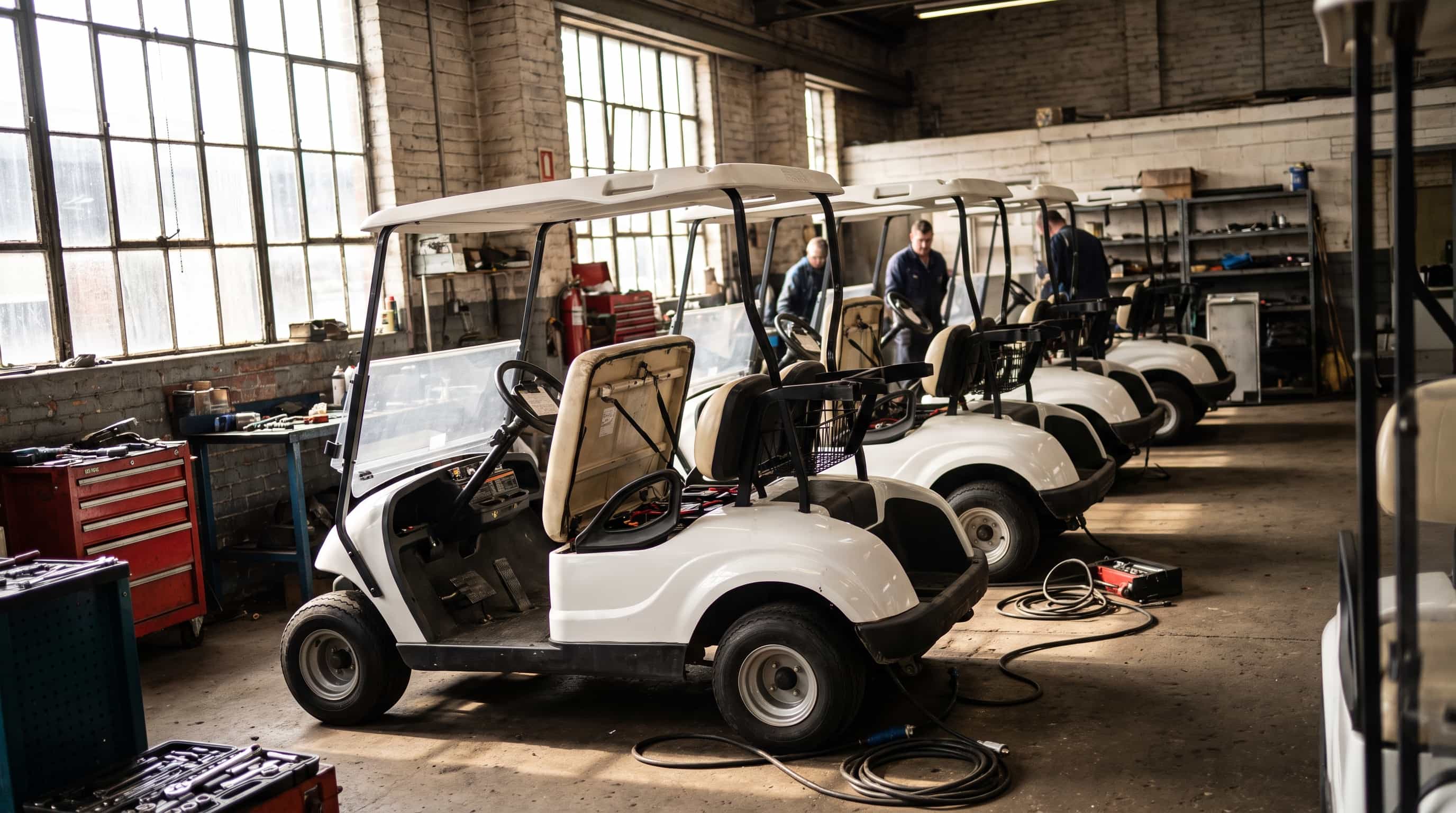
Used buggies more often fail on parts than on mechanics. Wear items such as tyres, bearings, cables, fuses and switches usually cross between makes, because they are sized rather than branded and can be matched by measurement. Body panels, seat frames, wiring looms, dash mouldings, chargers with proprietary connectors and controllers matched to a specific motor do not. Before committing, pick three parts for the actual machine in front of you, ask two suppliers about availability and lead time, and treat a vague reply as the answer.
Key takeaways
- The bad used purchase is usually a sound machine standing still for want of one unobtainable part.
- Sized parts such as tyres, bearings, cables and fuses are matched by measurement, not by badge.
- Bodywork, looms, dash mouldings and matched electronics are the parts that tie you to one supply route.
- Motors, controllers and chargers often carry another firm's name, and that label is more useful than the badge.
- Test three parts from different categories with two suppliers who have no interest in the sale.
- Get a written quote for the battery pack, charger, controller and main panels before you commit, not after.
The way a used purchase actually goes wrong
The bad outcome is rarely a dramatic failure. It is a sound machine standing still because one item nobody stocks has failed, and an owner discovering that the badge on the body no longer has a supply chain behind it. Mechanically the buggy is fine. It is simply not usable, and it is not easily sellable either, because the next buyer runs the check that the current owner did not.
This is worth taking seriously in the used market specifically, because used machines are older, and age is what separates a part sitting on a shelf from a part that was discontinued. It also affects machines that came in small numbers, which is a different problem from age: a well-built vehicle that few people bought is a vehicle that few people stock parts for, however good it is to drive.
The check is neither difficult nor long. It is simply one that most buyers skip, because the machine in front of them is working, and a working machine does not feel like a parts question. By the time it becomes one, the answer is already fixed, and it was fixed on the day the money changed hands. Doing the check early is the whole of the trick.
Parts that are sized rather than branded
A good deal of a buggy is not really specific to the buggy. Items made to a standard size, or bought in from general suppliers, can usually be matched by measurement rather than by badge, which means several possible sources instead of one. These are the parts you should not worry much about. The caution is that matching is done on the dimensions and the fitting, not on an assumption that two similar-looking machines share a part.
Matching by measurement is a practical skill and worth being deliberate about. Take the old part off where you safely can, measure it, photograph the fitting from more than one angle, and take that to a supplier rather than asking for the part that fits a named model. Cables want a length and a description of both ends. Bearings want dimensions rather than a guess at a number, and that approach works even on a machine nobody recognises.
- Tyres and inner tubes, matched by size and rim rather than by make.
- Wheel bearings, seals, split pins and general fasteners.
- Brake and throttle cables, where the length and the end fittings are what matter.
- Fuses, relays, switches, lamps and bulbs of common types.
- Batteries in widely used case formats, provided the tray and terminals match.
- Mirrors, grab handles, cup holders and general accessories.
Parts that do not cross between makes
The other end of the scale is the parts designed around one body or one drivetrain, which were never intended to fit anything else. These are where a purchase gets stuck, and they are worth thinking about before you own the machine rather than afterwards. They divide roughly into bodywork, wiring and matched electronics, and each of the three fails you in a different way.
The consequence is not that these parts are unobtainable, it is that there is usually one route to them and that route can close. A panel from the maker, from a specialist breaker or from an aftermarket moulder is the whole of the market, and if none of the three has it, there is no fourth option to fall back on.
- Body panels, tubs, bonnets and rear mouldings, which are specific to the shape.
- Windscreens and roofs, which are specific to the frame and its mounting points.
- Seat frames, bases and cushions built around a particular tub.
- Wiring looms and dash mouldings, which follow the model rather than the family.
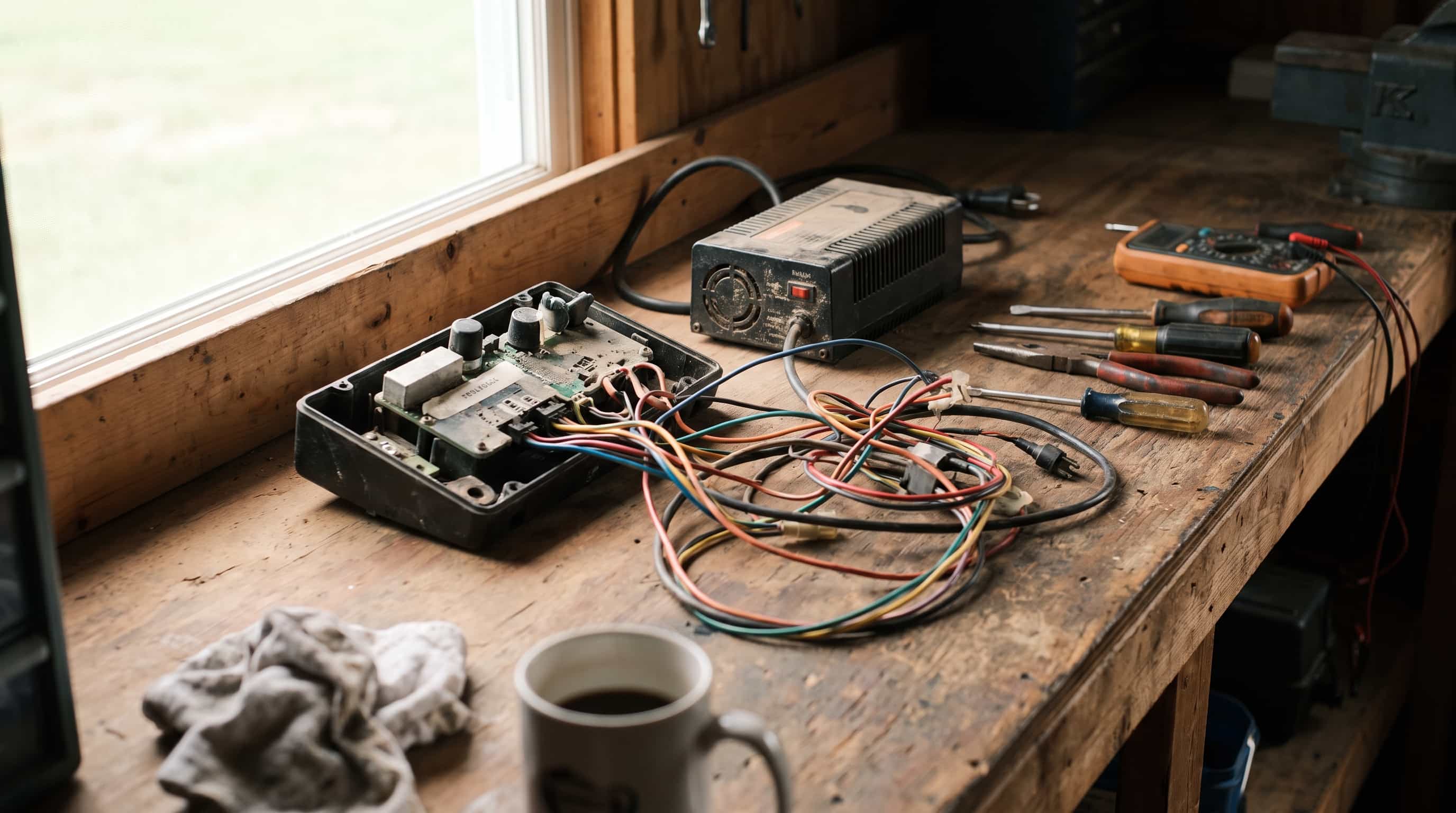
- Controllers matched and set up for a specific motor and machine.
- Chargers with a proprietary connector or a pack-specific charging profile.
The components that carry another firm's name
Between the two extremes sits the part of the vehicle most buyers never look at. Motors, controllers, chargers, axles and gearboxes are frequently bought in from specialist suppliers and fitted across several buggy brands, sometimes across several generations of them. The label on the component is therefore more useful to you than the badge on the body, because it names who actually made the thing, and it is what a supplier will ask for.
This is a genuinely good reason to lift the seat and photograph labels during a viewing. If the drivetrain components carry names an engineer recognises, the machine is considerably more supportable than an unfamiliar badge suggests, because those parts can be sourced and serviced on their own account. If nothing under the body carries a recognisable name, you are relying on a single supply chain and should price that into the decision.
It cuts both ways. A well-known badge on the body does not help if the loom, the dash and the panels are unique to a model that was built for a short period and then dropped. Look under the body rather than at it. The badge is marketing, and the components are the parts list you will one day be working from.
Testing availability for one specific machine
Do this with the serial in hand, because a model name alone often covers several builds with different fittings. Pick three parts rather than one, and pick them from different categories so the test covers the range: something that wears out, something electrical and matched to the drivetrain, and a piece of bodywork. Then ask two suppliers who are not the seller, because the seller has an interest in the answer being yes.
What you are measuring is not the price. It is whether the machine is known: whether the supplier recognises it, asks the right question back, and can say what fits. A supplier who identifies the part from the serial while you are still on the phone is telling you the buggy is supportable. Three suppliers who all need to look into it are telling you something else.
- A wear item the machine will certainly need in time, such as a brake component or a bearing.
- An electrical item matched to the drivetrain, such as the controller or the charger.
- A cosmetic panel, because bodywork is the hardest category and therefore the truest test.
- Ask each supplier for availability, lead time, and whether they need the serial to be certain.
- Ask whether they supply private owners or only trade accounts.
- Note who answers confidently and who has to go away and look, because that is the real result.
If yours is doing this and the checks here have not settled it, we diagnose and repair buggies, including a callout to wherever it is.
The parts worth quoting before you commit
Get a written quote for the items that decide whether a future repair is worth doing at all. That means the battery pack, the charger, the controller, the front and rear body mouldings, the seat and the windscreen. You are not buying any of them today. You are finding out what the machine costs to keep when something substantial goes, and a quote in writing gives you something solid to hold the seller's optimism against.
The battery is the one with a certain future, so treat it as a cost you will meet rather than a risk you might. Ask how old the current pack is, ask what a replacement in the same format involves, and ask who supplies it. The charger belongs in the same conversation, because the two are matched to one another and replacing one sometimes means revisiting the other.
If a quote cannot be obtained at all for one of those items, that is a result rather than an inconvenience. It means the part has no routine supply route, and a machine whose main body panel cannot be quoted is one careless reverse away from being cosmetically finished. That may still be acceptable to you. It should be a decision you made rather than a surprise you met.
Bodywork, the sleeper problem
Panels cause more grief than motors. They are bulky to ship, expensive to mould in small numbers, specific to one shape, and they are the parts most likely to be dropped from supply once a model goes out of production. They are also the parts most likely to be damaged, because bodywork is what meets gateposts, trailer ramps and the corner of a machinery shed.
Colour is a second layer. A replacement panel is often supplied in a base colour or a current shade rather than the original one, and matching an aged panel is not straightforward. Owners frequently end up painting a whole set rather than a single piece, which is a bigger job than the original damage suggested. None of that is a reason to reject a machine, but it is a reason to look hard at the panels during a viewing.
Aftermarket body kits exist for the more common shapes, and they solve the problem wherever they exist. Their existence is itself a useful signal: a shape somebody has tooled up to make panels for is a shape with enough machines behind it to keep a supply going. A shape nobody has bothered with is telling you something about the size of that fleet.
What a good answer from a supplier sounds like
Confidence and specificity, in that order. The supplier asks for the serial before answering. They name the part rather than describing it vaguely. They say what is in stock and what is on order, and they tell you plainly when something is no longer made instead of promising to source it somehow. That last one is the most valuable answer you will get all afternoon, because it is the only one that lets you plan.
A poor answer is not rude or unhelpful, which is exactly what makes it easy to miss. It is friendly and non-committal: they can probably get something, there are options, send a photograph over and they will see what they can do. That is a supplier who does not stock the machine, and the same conversation will repeat itself on the day you need the part urgently.
Keep the notes either way. If you buy, they become the start of your own parts list and the beginning of a relationship with two suppliers who know the make. If you do not buy, they save the next check from starting at nothing. Two suppliers who recognise your machine are worth more than any paperwork once a buggy is no longer new.
Common questions
- Are golf buggy parts interchangeable between makes?
- Some are, and the split is fairly clean. Items made to a standard size, tyres, bearings, cables, fuses, lamps and many batteries, are matched by measurement and cross between makes readily. Bodywork, looms, dash mouldings, seat frames, controllers and chargers are matched to one design and generally do not. Measure rather than assume, particularly with anything that bolts to the frame or carries load.
- Which golf buggy parts are hardest to get hold of?
- Bodywork, consistently. Panels are bulky, specific to one shape and expensive to make in small numbers, so they leave supply first once a model goes out of production. After that come wiring looms, dash mouldings and any electronics matched to a particular drivetrain. Mechanical wear items are usually the easiest of all, because most of them are sized rather than branded.
- Can I fit pattern parts instead of original ones?
- Often, and for many wear items it is routine practice. The judgement is about what the part does. On brakes, steering and anything carrying load, quality matters more than the saving, and an engineer's view is worth having before fitting. On electronics matched to a drivetrain, a substitute needs to be genuinely equivalent rather than merely similar, and that is not always obvious from a listing.
- How long do parts stay available for a discontinued golf buggy?
- There is no fixed period and no maker is obliged to publish one. It depends on how many were built, whether the components were used across other machines, and whether anyone has tooled up to make replacements. Ask the maker or the UK distributor what their position is on the specific model rather than relying on a general answer picked up elsewhere.
- Should I buy a buggy that already needs a part I cannot find?
- Only with your eyes open. Value the machine as though the part will never arrive, because it may not, and decide whether it is still worth having on that basis. A missing part is also a warning about the wider supply position: if one item cannot be found while you are still choosing, the next one will not be easier once you own it.
- Do I need the serial number to order golf buggy parts?
- Usually, yes. Most suppliers resolve which variant you have from the serial, because a single model name can cover several builds with different fittings. Send a photograph of the plate rather than typing the number out, and include a picture of the old part and its fitting if you have it off the machine already. It saves a return.
Still not right
We diagnose and repair golf buggies, service them on a plan, and send an engineer out to where the buggy is. Tell us the symptom and we will say what it usually means.
Related pages
Related guides
 Golf buggy makes explained: who builds what10 minute read
 AC or DC drive: what the difference means to an owner11 minute read
 Golf buggy model years and generations: why they matter11 minute read
 Finding parts, original versus pattern5 minute read
 Buying a used golf buggy, what to inspect5 minute read
 Which golf buggy makes are well supported in the UK11 minute read