AC or DC drive: what the difference means to an owner
By James Brown · Updated 29 August 2026 · 11 minute read

The battery pack is direct current either way, so the real question is what the controller does with it. A brushed DC drive is simple, tolerant and straightforward to diagnose with basic tools, and its brushes are a wearing part that eventually needs attention. An inverter-driven AC motor has no brushes, usually gives regenerative braking and controlled descent, and reports faults as codes that often need the right tool to read. On flat ground and short runs the practical difference is small.
Key takeaways
- The pack is direct current in both cases; the difference is what the controller sends to the motor.
- Brushes are a consumable on a brushed DC motor and have no equivalent on an AC one.
- Regenerative braking and hill holding are common on AC systems and on separately excited DC ones.
- Simple DC systems suit diagnosis with a multimeter; inverter systems report codes but may need a specific tool.
- Motor and controller are a matched pair, and a replacement controller usually has to be set up correctly.
- The maker's handbook, not general advice, governs how to tow or freewheel a particular machine.
What the two arrangements are
The battery pack is direct current in both cases, so the difference is not what the batteries do. It is what the controller does with them. A DC drive feeds the motor directly, varying how much current reaches it. An AC drive uses an inverter to turn the pack's direct current into alternating current, and controls the motor by changing the frequency and the shape of what it sends, which is a more capable arrangement and a more complicated one.
The motors that follow are different in kind. A brushed DC motor carries current to the rotating part through carbon brushes bearing on a commutator, which is a simple and long-proven arrangement with one wearing contact built into it by design. An AC induction motor has no brushes and no commutator: the rotating part is driven by the changing field in the windings around it, and nothing inside rubs on anything except the bearings.
Neither is new and neither is exotic. Brushed DC drives are the older arrangement and remain widely in service, doing exactly what they were built to do. Inverter-driven AC systems became common later and are what a good many newer machines use. You will meet both in the used market, sometimes within the same model line across different years, which is one reason the badge tells you so little.
On a hill and under braking
This is where an owner notices the difference first. Many AC systems hold the vehicle against roll-back when you come off the pedal on a slope, and limit speed on the way down rather than letting the buggy run on and asking the brakes to catch it. The effect is that the machine feels controlled on gradients in a way that does not depend on the driver having thought about it in advance.
Regenerative braking usually comes with that. When the wheels drive the motor rather than the motor driving the wheels, it can act as a generator and put a little charge back into the pack, and that resistance is what produces the controlled descent. It is common on inverter-driven AC systems and on separately excited DC systems. A plain series-wound DC drive does not normally do it, so a descent is managed on the brake pedal.
How much this matters is a question about your ground rather than about the technology. On a steep or undulating site with drivers who are not experienced, it matters a great deal, both for control and for how often the brakes need attention. On a flat site with short runs, it is close to irrelevant, and a simpler drive is one fewer thing to go wrong.
Wear, and what each asks for
The brushes are the honest difference in maintenance. They are a consumable: carbon in contact with a spinning commutator wears away, and eventually they need inspecting and replacing. That is a known job rather than a fault, and on a hard-working machine it comes round in the ordinary way. The commutator surface wants checking at the same time, because a scored or glazed one will shorten the life of the next set fitted.
An AC motor has no equivalent internal consumable. Its bearings wear, its seals age, and it can be damaged by water or heat like anything else on the vehicle, but there is no routine service item inside it. That is a real advantage on a machine that works hard every day, and a much smaller one on a machine that does a few hours a week and spends the rest of its life under a cover.
Everything else is unaffected by the choice. Brakes, tyres, steering, the axle, the battery pack and the charger wear and fail the same way regardless of which drive is fitted, and between them they account for most of the maintenance a buggy actually needs. The drive type changes one item on the list. It does not change the list, and it does not change the bulk of the bill.
Diagnosing a fault on each
A brushed DC system yields to basic equipment and a methodical order. Battery state, connections, key switch, seat switch, solenoid, controller, motor: each stage can be checked with a multimeter and a wiring diagram, and the failures tend to be things a competent person can see or measure. That is a real advantage if the help available to you is a good general engineer rather than a specialist in one particular marque.
Inverter systems generally report faults as codes, which sounds better and sometimes is. A code points at an area quickly instead of leaving you to work through everything in turn. The catch is access: reading the code may need a handheld tool or software, and on some systems that tool is issued to the maker's own network rather than sold openly. Ask what is needed before you need it.
Neither situation is hopeless on its own. A closed system with a local dealer who can read it is perfectly workable. An open system with nobody nearby who understands it is not much better than a closed one. The question worth asking is always what help exists near the machine, rather than what the technology permits in principle, and that is a question about people rather than about parts.
Parts, matching and substitution
Motor and controller are a matched pair on any modern drive, and more so on an inverter system, where the controller generates the waveform the motor was built for. You do not mix them across makes or generations on a hunch, and a replacement controller usually has to be set up correctly before the machine will behave properly. That is an engineer's job with the right tool, not something to attempt by fitting and hoping.
In parts terms, a brushed DC drive is generally simpler and its pieces are more widely understood. Brushes, a solenoid, a contactor, a resistor pack: these are recognisable items an engineer can price and fit. An inverter controller is a single sealed assembly, and replacing it is a larger event. That is not an argument against it, only a reason to find out who supplies one before you need it.
The rest of the drivetrain does not care what is driving it. The axle, the gearbox and the brakes inside it are sourced the same way for both arrangements. That is worth remembering when a drive fault is diagnosed, because the expensive-sounding word does not always point at the expensive part, and a noise from that end of the machine is often mechanical rather than electrical.
If yours is doing this and the checks here have not settled it, we diagnose and repair buggies, including a callout to wherever it is.
Moving a buggy that will not drive
Every buggy needs a way of being moved when it will not move itself, and the arrangements differ between machines. Most have a tow or freewheel provision that disconnects the drive or releases the parking brake, and the correct procedure for using it is set out in the maker's own handbook. Find it before the day you need it, because the day you need it is usually a wet one.
On an inverter-driven machine there is an added consideration: towing turns the motor, and a motor being turned can generate. Makers set out their own instructions for this, sometimes involving a switch to move or a connection to break first, and those instructions exist for a reason rather than for form. Follow the handbook for your particular machine rather than general advice, this page included.
If the handbook went with the previous owner, ask the maker or the UK distributor for a copy. Most will supply one, and it is the single most useful document to have for a machine you did not buy new. It also settles the questions a guide like this deliberately does not answer, which are the ones specific to your model rather than common to all of them.
Telling which one you have
The reliable answer is on the labels. The motor usually carries a plate naming its type, and the controller carries its own maker and model. Photograph both, and if the names mean nothing to you, an engineer or a parts desk will recognise them at a glance. Everything else is inference, and inference is perfectly good as a first pass so long as you treat it as a first pass.
One caution before you conclude anything. A machine that has been rebuilt or upgraded may not match what its age or its badge suggests, because drive conversions and controller upgrades do happen, particularly on fleet machines that have been through a refurbishment. The labels on the parts actually fitted are the truth. That is the same principle as identifying the vehicle itself, and it holds for the same reason.
- Look for brush inspection covers or a removable band around the motor housing, which indicate a brushed motor.
- A sealed motor with no access covers at the commutator end suggests there is nothing inside to inspect.
- Notice whether the buggy holds itself on a slope and slows itself on a descent, which points at a regenerative system.
- Compare the controller: a small unit working alongside a separate solenoid is a different arrangement from a large finned assembly.
- Read the labels on both, photograph them, and ask somebody who knows rather than guessing.
Where the difference stops mattering
For a great many owners it barely registers. A buggy doing short runs on level ground, driven gently, with a healthy battery pack and decent tyres, does the job on either drive and will not tell you which one it has. The things that decide whether an owner is happy are almost always the pack, the brakes, the tyres and how the machine was treated by the person who had it before.
So do not let the drive type override the checks that matter more. A DC machine with a good pack and a service history is a better buy than an AC machine with a tired pack and no paperwork, and the reverse holds just as firmly. The drive is one attribute among several, and on most sites it is not the one that decides anything.
It becomes decisive in two situations. Hilly ground is the first, where controlled descent and regeneration earn their keep every day and the brakes last longer for it. Heavy daily use is the second, where a motor with no wearing contacts inside it means fewer interruptions. If your site is neither, buy on condition and on local support instead. That is a duller conclusion than the question invites, and it is the true one.
Common questions
- Is an AC golf buggy better than a DC one?
- Neither is better in general terms. An inverter-driven AC system usually gives better control on gradients, offers regenerative braking and has no brushes to replace. A brushed DC system is simpler, more tolerant of basic diagnosis and cheaper to put right in small ways. Your site, your workload and the help available locally decide which suits you, rather than the technology considered in the abstract.
- How can I tell if my golf buggy has an AC or DC motor?
- Read the labels on the motor and the controller and photograph them, because that settles it properly. As a first pass, brush inspection covers on the motor housing point at a brushed DC motor, and a machine that holds itself on a slope and slows itself downhill points at a regenerative system. If a machine has been rebuilt, trust the labels rather than its apparent age.
- Do AC golf buggies have regenerative braking?
- Usually, and it is one of the practical reasons owners notice the difference at all. The motor acts as a generator when the wheels drive it, which slows the vehicle on a descent and returns a little charge to the pack. Separately excited DC systems can do the same thing. A plain series-wound DC drive normally cannot, so descents there are managed on the brake.
- Do golf buggy motor brushes need replacing?
- On a brushed DC motor, yes, eventually. Brushes are a consumable in contact with a spinning commutator and they wear down in normal use. The interval depends on hours, load and how the machine is driven rather than on a fixed schedule, so treat it as an inspection item at service rather than a date in the diary. An AC motor has no brushes and no equivalent job.
- Can a DC golf buggy be converted to AC drive?
- Technically it is possible, and it is rarely a sensible purchase. A conversion means the motor, the controller, the wiring and the throttle at the very least, plus setting the system up afterwards, and the result is a machine no single supplier stands behind. If the reason is hill performance, have an engineer look at the existing system first and price the alternatives honestly.
- Does an AC drive give more range than a DC one?
- It can help, though the pack matters far more than the drive does. An efficient drive and a little energy returned on descents both count in your favour. The size of the pack, its condition, the terrain, the load carried and the way the buggy is driven dominate the result, and a tired pack will flatten any advantage the drive type might have offered.
Still not right
We diagnose and repair golf buggies, service them on a plan, and send an engineer out to where the buggy is. Tell us the symptom and we will say what it usually means.
Related pages
Related guides
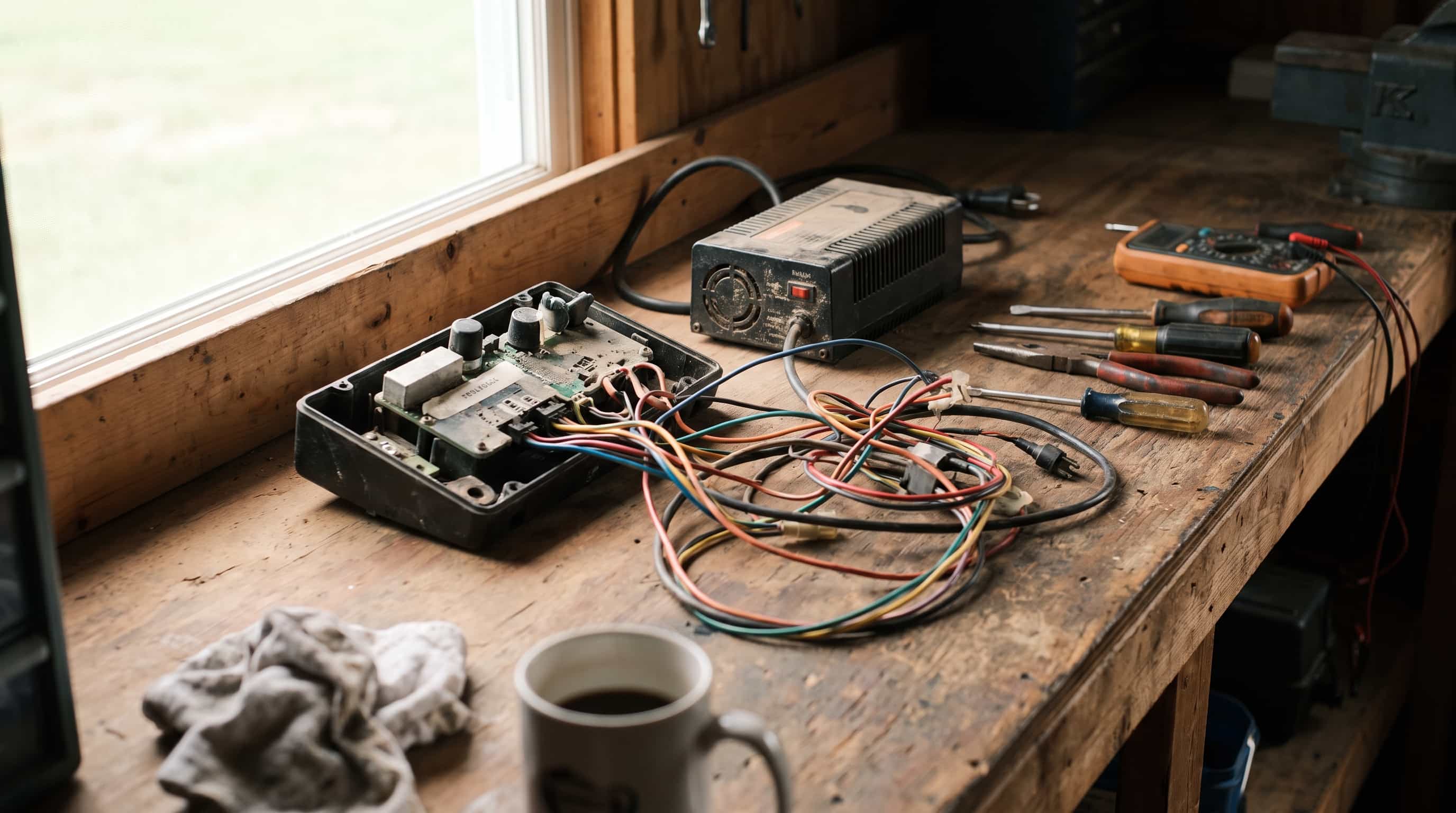 Golf buggy makes explained: who builds what10 minute read
 Golf buggy model years and generations: why they matter11 minute read
- Buying a used Club Car: what to check11 minute read
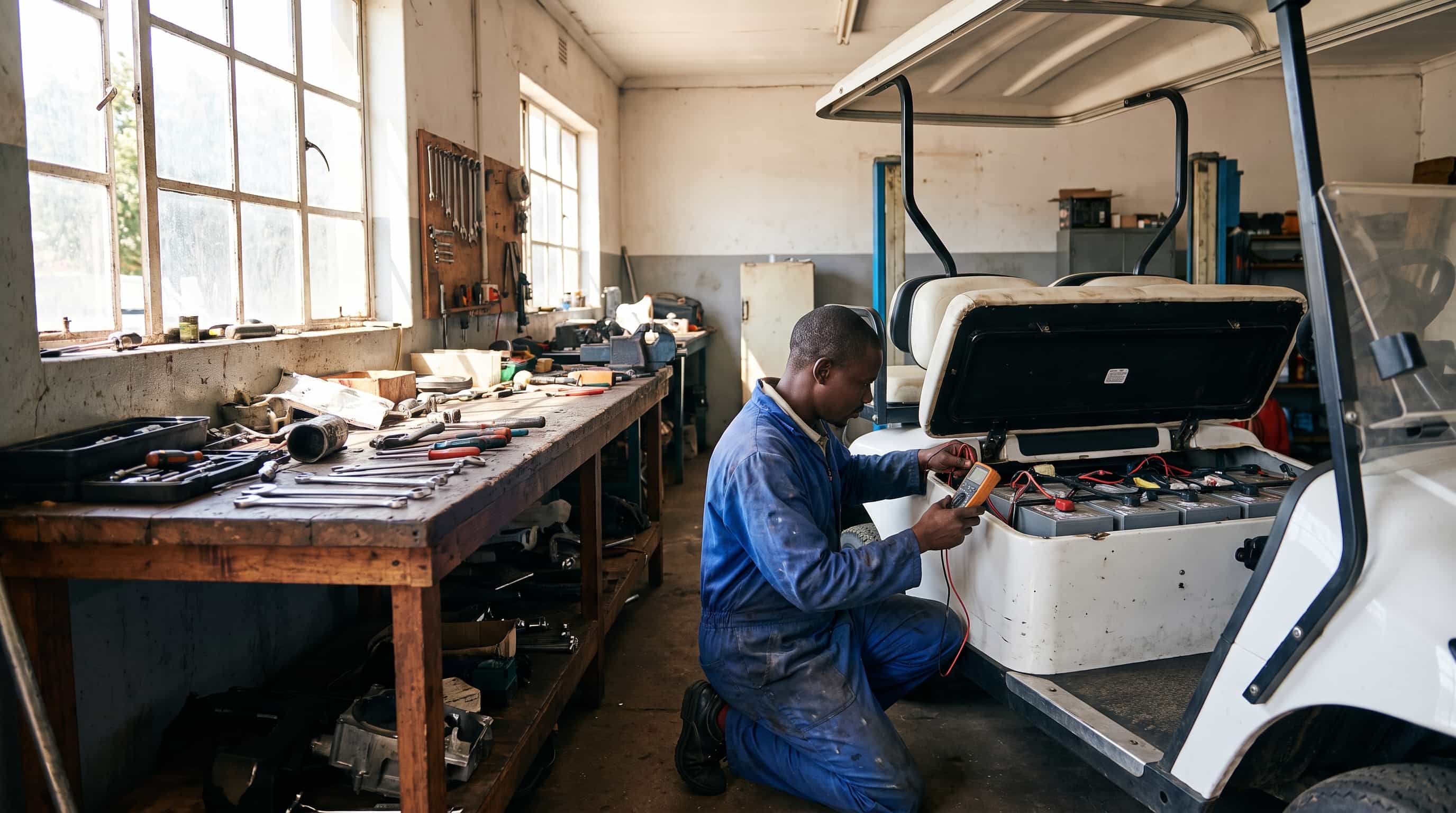 Golf buggy motor brushes explained4 minute read
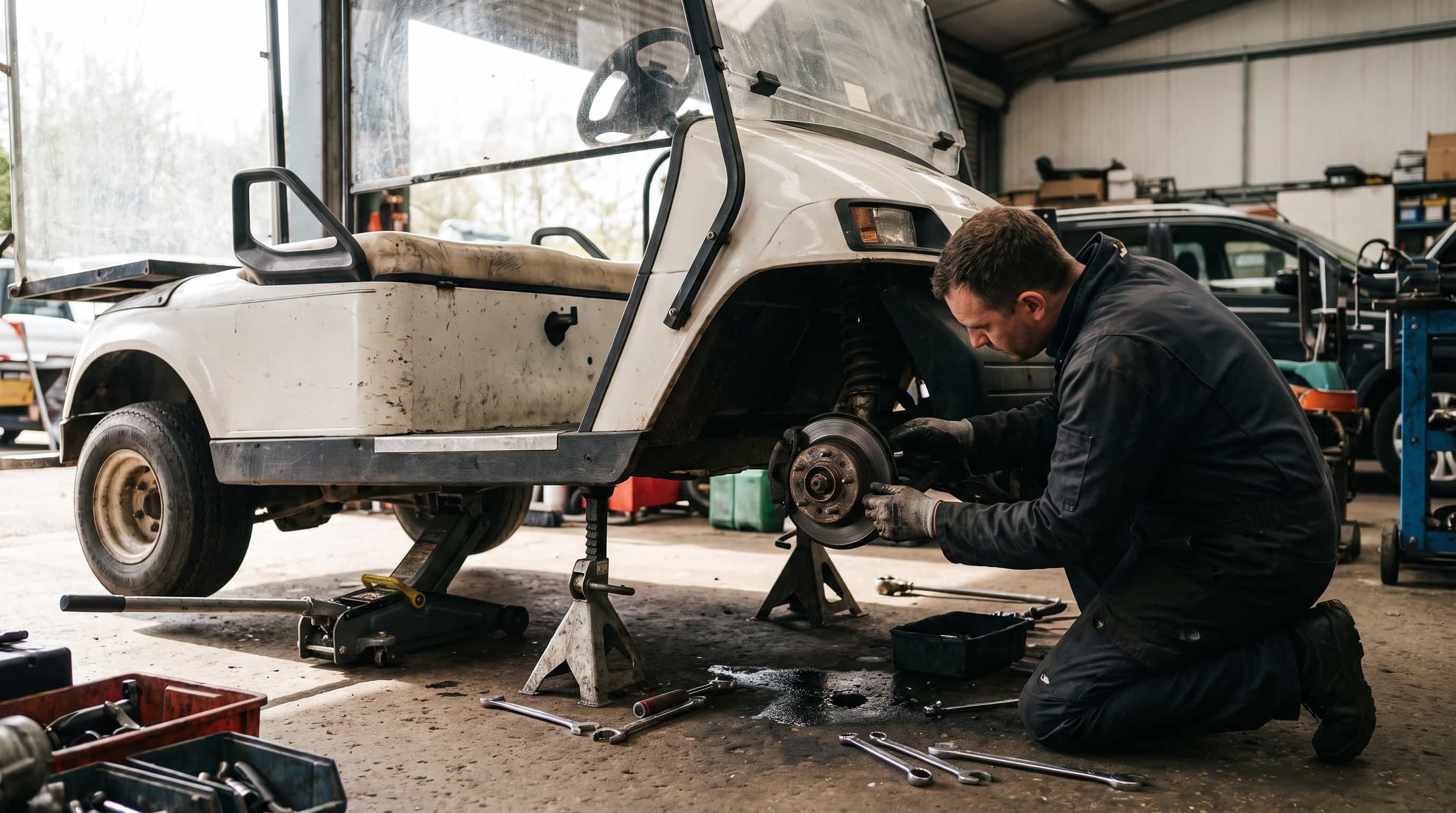 Golf buggy regenerative braking explained4 minute read
- Golf buggy voltage systems, 36V and 48V explained4 minute read