Buying a utility buggy for a farm or smallholding
By James Brown · Updated 11 August 2026 · 6 minute read

A farm or smallholding wants the utility end of the buggy market: a load bed rated for real weight, a tow hitch, ground clearance and tyres for wet ruts, and a drivetrain matched to where power is. Electric suits holdings whose rounds return near a socket; petrol still earns its place at the far end of long land. Buy on the working checks, chassis, load gear and battery or engine health, and treat cosmetics as irrelevant, because on a working vehicle they are.
Key takeaways
- Load rating, bed size and hitch are the real specification; seats are secondary.
- Tyres and clearance for your worst ground in your worst month, not your best.
- Off-grid distances are where petrol keeps its case; otherwise electric serves well.
- On used working vehicles, inspect the chassis and load gear hardest; that is where the life went.
Speccing for work rather than passengers
The working questions are blunt: what must it carry, what must it tow, over what ground, how far from power. Feed, fencing kit, water, a passenger and the dog, over rutted tracks in February, sets a very different specification from summer paths, and the February version is the one to buy for.
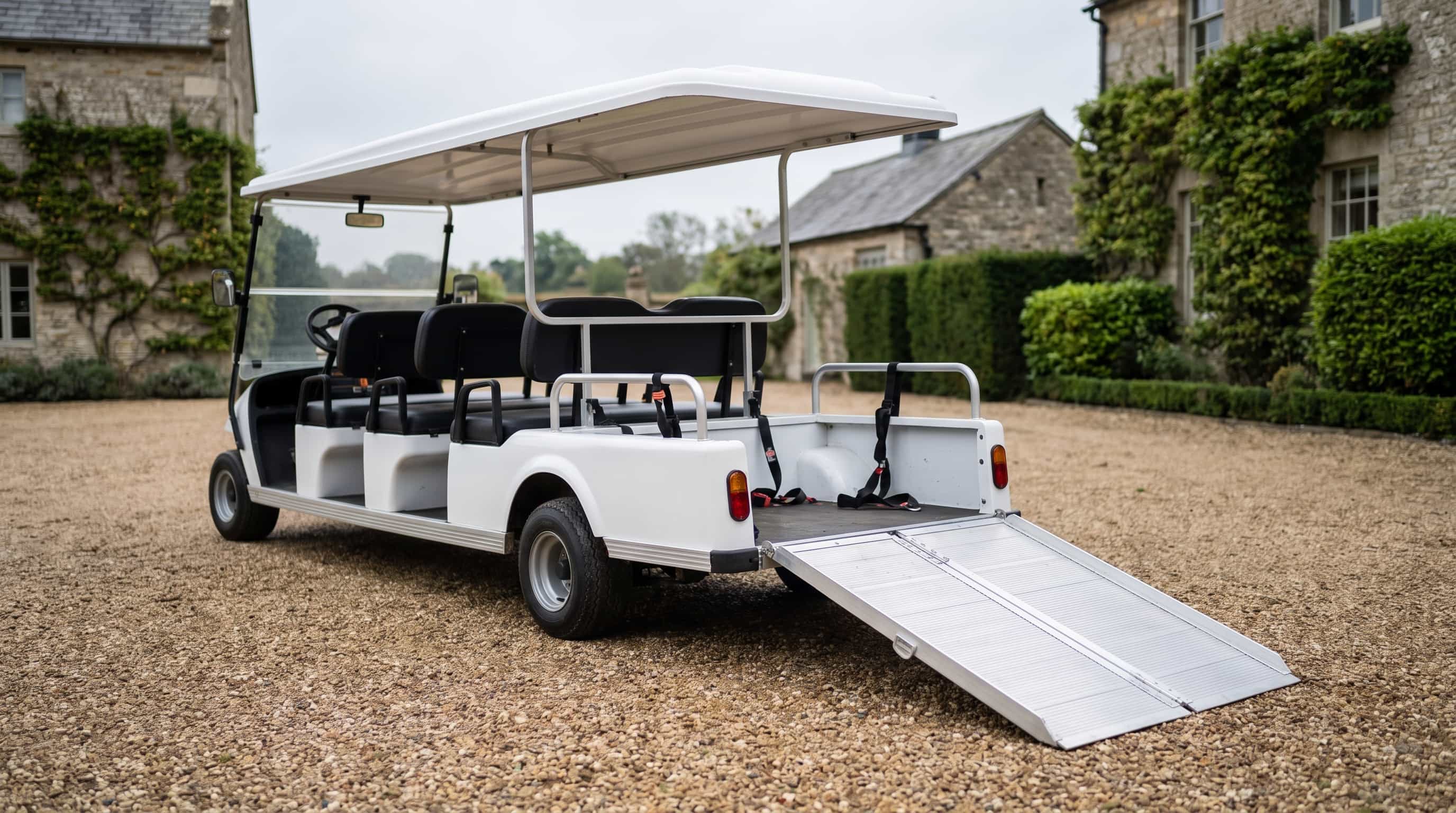
That means reading the load bed's rating and dimensions against your actual loads, checking the hitch and the vehicle's rated towing, and preferring the models sold for grounds work, with their taller stance and grippier tyres, over course buggies pressed into service. A course buggy manages a dry paddock; it is not built for a winter yard.
Electric or petrol off the beaten path
Our buying guide on the fuel question applies with the volume turned up. Electric utility models handle serious daily work and their quietness is worth more around stock than people expect; the constraint is purely geographic, whether the day's rounds fit a charge and end near a socket. A holding compact enough for that is better served electric, on running cost and on maintenance.
Long land changes it: all-day ranging far from buildings, heavy towing that runs consumption up, cold outdoor parking. There petrol remains the practical choice, maintained like the small engine it is. Some holdings sensibly run one of each, the electric for the near work and the petrol for the far.
Looking for one of your own? Every buggy we list carries its specification and the checks this guide describes, so you can compare them on the same terms.
Buying used working vehicles
A used utility buggy has usually worked for its living, so inspect where work accumulates: the chassis and bed mounts for cracks and bends, the hitch area for abuse, the suspension for slop, the underside for the history of every rock it met. The battery or engine checks from our other guides apply unchanged.
Ex-fleet vehicles from estates and venues are worth seeking, hard-worked but often maintained on schedule with records to show. As ever the evidence outranks the paint, and on this class of vehicle honest scruffiness with a sound chassis is precisely what good value looks like.
Common questions
- Is a utility buggy an alternative to a quad or small tractor
- For carrying and light towing over reasonable ground, often yes, and more comfortably with a passenger. For heavy draft work, front loaders or extreme terrain it is not the tool; the honest boundary is the load bed and hitch ratings.
- Can stock trailers be towed
- Small trailers within the vehicle's rating, yes. Match the trailer to the rated capacity with a margin for wet ground, and our hire guide on towing covers the practice that keeps it safe.
- What about carrying sprayers or spreading kit
- Bed-mounted kit within the load rating is routine. Anything powered from the vehicle needs matching to it specifically, which is a conversation for whoever sells you the kit rather than a general rule.
See what is for sale
New and used buggies, each listed with its specification and history, so you can apply what this guide covers before you go and see one.
Related pages
Related guides
 How to buy a golf buggy: a complete guide8 minute read
 Dealer or private seller for a used golf buggy5 minute read
 Hire purchase, lease or contract hire for a buggy10 minute read
- What size golf buggy to buy5 minute read
 Electric or petrol when buying a golf buggy9 minute read
- The running costs of owning a golf buggy5 minute read