Hire purchase, lease or contract hire for a buggy
By James Brown · Updated 29 August 2026 · 10 minute read
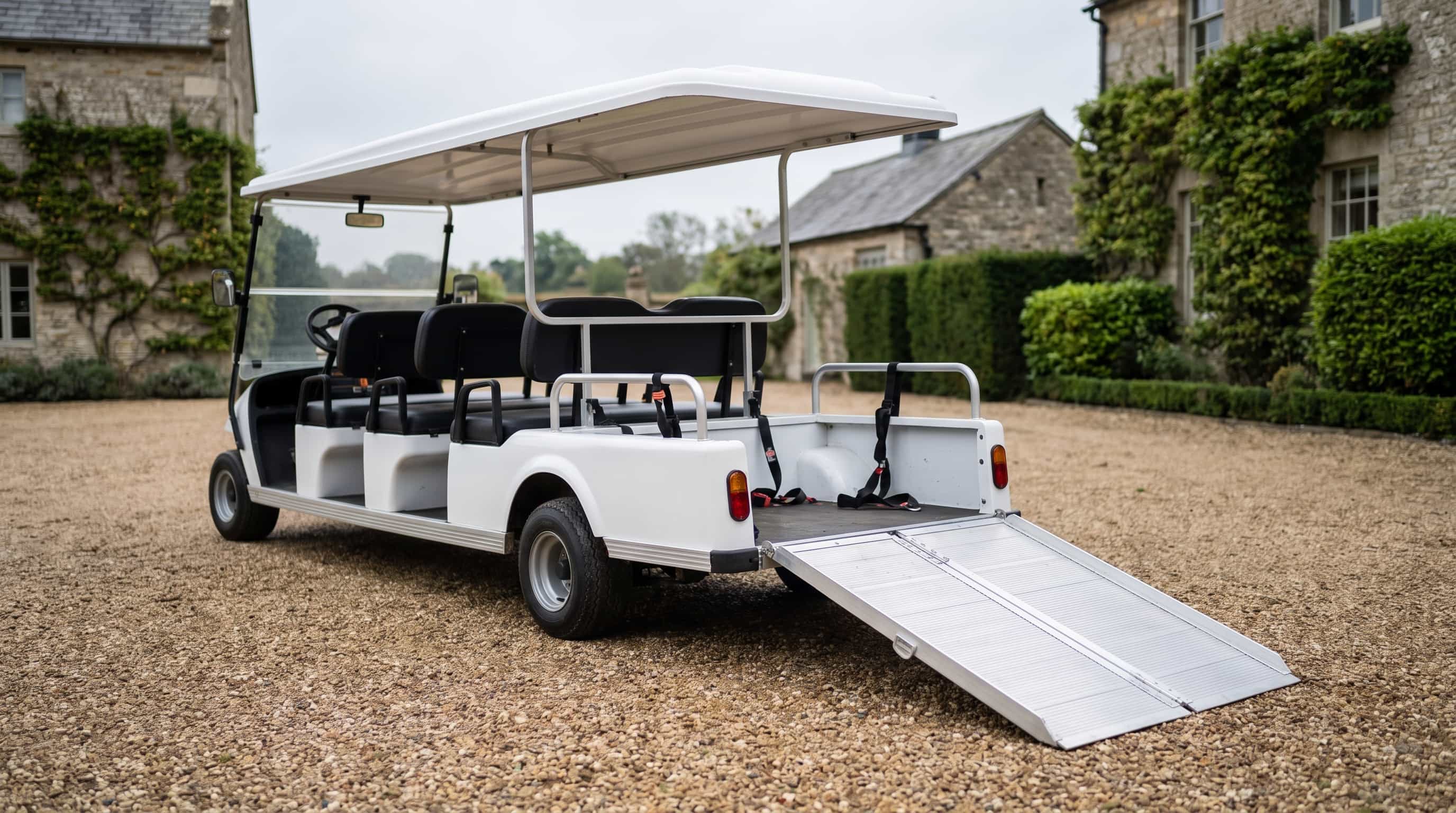
Hire purchase ends with the machine yours: you pay for it over a term and own it once the last instalment clears. A lease or contract hire pays for the use of the buggy and ends with a handback, often with maintenance folded into the rental. The differences that matter are ownership, what happens at the end of the term, who carries the repairs, and how each one lands in your accounts. Outright purchase still wins for a buggy you intend to keep for years.
Key takeaways
- Hire purchase buys the machine over time and leaves you owning it; a lease pays for its use and ends with the buggy going back.
- Contract hire wraps maintenance into the rental, which is why its headline figure is not comparable with a bare finance payment.
- The end of the term is where the money is, so read the return condition standard before you read the rate.
- Who owns the asset decides how the cost appears in the accounts and how relief is taken, and that answer belongs to your accountant.
- Funders underwrite the business and the machine separately, so age, condition and how readily a buggy resells all bear on the terms.
- Outright purchase is usually the cheaper total for a machine that will still be working long after a finance term would have ended.
- A seasonal need is often answered better by hire than by any finance agreement, and that is worth pricing before you sign anything.
What each route actually is
Hire purchase is a purchase paid for over time. The funder buys the machine, you pay an agreed series of instalments against it, and ownership passes to you when the last one clears and any option fee is settled. A lease is different in kind rather than in degree. You are paying for the use of the buggy across a fixed period, the funder keeps ownership throughout, and the machine goes back at the end unless a separate arrangement is made and written down.
Contract hire is a lease with a service wrapper around it. The rental covers the use of the machine and, usually, an agreed level of maintenance, and the funder takes the risk on what the buggy is worth when it comes back. Between them the routes answer three different questions: do I want to own this eventually, do I want the cost flat and predictable, and do I want somebody else worrying about the servicing on a Tuesday in July.
Ownership, and who carries the risk
Ownership is not a technicality here, because it decides who loses if the machine turns out to be worth less than anybody expected. On hire purchase the residual risk becomes yours the moment the agreement finishes. The buggy is your asset, and if the battery pack is tired or the used market has softened, that is your problem to solve. In exchange you keep an asset with value in it, no return inspection to pass and no argument about a scratch.
Under a lease or contract hire the funder has priced the machine's value at the end of the term into the rental, and they carry the risk of getting that judgement wrong. That comfort is not free, and it is exactly why return conditions exist. A funder who has assumed a machine comes back in a particular state has a direct financial interest in the condition it arrives in, and that interest shows up as charges when it does not.
The end of the term is where the money is
Most buyers compare the monthly figure and stop there. The end of the agreement is where the routes genuinely differ and where the surprises live. On hire purchase there is usually a nominal option fee and then the machine is yours, with no inspection and no penalty for how it looks after a hard life. On a lease there is a handback, a written condition standard, and a set of charges for anything that falls outside it.
Ask for that condition standard in writing before you sign, and read it against the life your buggies will actually have. Fleet machines get scuffed, and a standard drafted around a lightly used private vehicle applied to a course fleet is a bill waiting to happen. Ask as well what the position is if you want to keep a machine at the end, and get that answer as a mechanism rather than as a friendly assurance from somebody who may have moved on by then.
The other end-of-term question is what happens if the need changes before the term does. Early termination is normally possible and normally expensive, and the calculation varies between funders. Ask how it is worked out rather than what it would cost today, because the formula is the part that stays true. A seasonal business signing a long agreement on the strength of one good summer should understand that mechanism before it needs it.
Maintenance, and who is holding the spanner
Maintenance is the single reason two quotes that look alike are not comparable. A bare finance agreement, hire purchase or a straight lease, leaves servicing, tyres, brakes and batteries entirely with you. A contract hire rental with maintenance included moves some of that across, and the word some is doing real work in that sentence. Read what is in and what is out, because battery replacement, tyres and accident damage are the three items most often carved out of a package.
Then ask the practical question sitting behind the contract: who turns up, how quickly, and where does the machine go while it waits. A maintenance package supported by an engineer two counties away is worth less to a club in July than an arrangement with somebody local, whatever the paperwork promises. Ask about response times, about loan machines during a repair, and about what happens when the same fault comes back for the third time.
How each route lands in your accounts
The broad shape is easy to describe and easy to get wrong in the detail. An asset you own, bought outright or on hire purchase, generally goes onto the balance sheet, and relief on the cost comes through the capital allowances system rather than as a straight deduction. Rentals under a lease are generally a cost of the period instead, although how a lease is presented in the accounts depends on the accounting framework the business follows and on the wording of the agreement.
VAT sits differently again. A single purchase brings a single invoice and a single recovery question. A rental brings VAT with each invoice across the term, so the same question is asked repeatedly on smaller amounts. None of this is a reason to choose one route over another on its own, and none of it should be decided from a guide. Put the actual agreements in front of your accountant before signature, because the treatment follows the wording rather than the name on the front page.
Looking for one of your own? Every buggy we list carries its specification and the checks this guide describes, so you can compare them on the same terms.
What a funder will want to know
Funders underwrite two things: the business and the asset. On the business side, expect questions about trading history, filed accounts, the pattern of income across the year and any agreements you already carry. Seasonal income is not a barrier, but it is a conversation, and a club or a hire operator is far better off explaining the shape of its year at the outset than having it discovered halfway through an application.
On the asset side the funder is asking a single question: how easily could this be sold if the agreement failed. New fleet machines from makes with wide support in Britain are straightforward. Older or unusual ones are less so, and finance on used equipment often carries shorter terms as a result. None of that is personal, and the sensible way to approach it is with a clear description of what you are buying and why it suits the work.
- How long the business has traded, and what the filed accounts show.
- The shape of income across the year, which matters for anything seasonal.
- What the machines are, how old they are and how readily they resell.
- What other finance agreements the business already carries.
- Who is signing, and whether a personal guarantee is being asked for.
Where outright purchase still wins
If a buggy will still be working for the business long past the point at which a finance term would have finished, buying it outright is usually the cheaper total. There is no funder to pay, no return condition to satisfy and no agreement to unwind if the plan changes. For an estate or a farm buying one or two machines to keep for years, that is often the whole answer, and no amount of structuring improves on it.
The case weakens as the fleet grows and as replacement becomes a cycle rather than an event. A club renewing part of its fleet every few years is managing a rolling process, and a rolling process is what leasing was built for. Cash is the other half of the decision. Money spent on buggies is money not spent elsewhere, and a business with better uses for it may rationally pay more in total to keep it available.
The clauses worth reading twice
Finance documents are readable, and the parts that catch people out are rarely hidden. They are simply skipped in the week the machines are wanted. Take the agreement somewhere quiet before delivery rather than after, and ask the funder to explain anything that reads two ways. A clear written answer from them before signature is worth a great deal more than a reasonable-sounding argument with a different member of staff eighteen months later.
Two items on the list below deserve particular attention on a hire fleet. Insurance requirements written into a finance agreement can be stricter than the cover a business already holds, and a mismatch tends to be discovered at the point of claim. Restrictions on use are the other, because an agreement drafted around machines living on one site does not automatically permit loading them onto a trailer and taking them to an event somewhere else.
- The return condition standard, in writing, and what counts as fair wear.
- What maintenance covers and what it excludes, batteries and tyres in particular.
- How early termination is calculated, expressed as a method rather than a figure.
- Who insures the machines, and what level of cover the funder requires.
- What happens if a machine is stolen or written off part way through the term.
- Any restriction on where the machines may be used and who may drive them.
Common questions
- Is hire purchase or leasing better for a golf buggy?
- It turns on how long you intend to keep the machine. Hire purchase suits a buggy you will still be running years after the payments stop, because the cost ends and the asset carries on working. Leasing suits a fleet on a renewal cycle, where predictable rentals and a planned handback matter more than owning anything at the end. Run both against the number of years you honestly expect to keep it.
- Can I lease used golf buggies?
- Often yes, though the market is narrower than for new machines and terms tend to be shorter. The funder is judging how readily the buggy could be sold if the agreement failed, so age, make, condition and service history all bear on the answer. Ex-fleet machines from makes with wide support here are the easiest case. Expect more questions and a firmer view on the term.
- What happens if I want to end a buggy lease early?
- You usually can, and it usually costs. The settlement is calculated from what is left to pay and what the funder expects to recover from the machine, and the method varies between agreements. Ask for the calculation in writing before you sign rather than at the point you need it. A business with a seasonal or uncertain need should know that mechanism is waiting.
- Does contract hire include the batteries?
- Not automatically, and this is the exclusion that catches buyers out on electric fleets. Battery replacement is the largest single maintenance cost on an electric buggy, so a package that quietly excludes it is a much smaller package than it appears. Get the position in writing, including what happens where a pack fails early and who decides that it has failed.
- Who insures a leased golf buggy?
- You do, in almost every case, and the agreement will set out the cover the funder requires. That requirement can be stricter than the policy the business already holds, so send the wording to your broker before signature rather than assuming existing cover satisfies it. The funder normally has to be noted on the policy as owner, and that step is the one most often forgotten.
- Can a golf club lease buggies and hire them out to members?
- Usually, but the agreement has to permit it, so check rather than assume. Some finance wording restricts use to the business itself or limits who may drive, and a fleet hired to members and visitors sits outside a narrow reading of that. Raise it before signing. Your insurer needs to be told the same thing for the same reason.
See what is for sale
New and used buggies, each listed with its specification and history, so you can apply what this guide covers before you go and see one.


