Polaris and GEM electric vehicles explained
By James Brown · Updated 29 August 2026 · 9 minute read
These are two different kinds of vehicle that get searched together. Polaris is known for off-road machines, including side-by-side utility vehicles built for rough ground, load beds and towing. GEM is a line of small electric passenger and load vehicles designed for made-up surfaces at low speed, the sort that shuttles people round a campus or a resort. Neither is a golf buggy: both are heavier, faster and harder on turf, and the support route in Britain is the thing to check first.
Key takeaways
- One is a work vehicle for terrain and the other is a people mover for paths, and the badge does not tell you which you need.
- Side-by-sides bring ground clearance, suspension travel, a load bed and towing, and they bring speed and weight with them.
- The GEM line is built for tarmac, concrete and gravel at low speed, not for crossing wet grass.
- Weight on a small contact patch is what tears British turf, and it is the practical limit on both.
- Ownership of brands in this part of the market has changed over the years, so confirm who supports it here today.
- Road use in Britain follows approval and registration for the individual vehicle, not the category it belongs to abroad.
- Work back from the heaviest load, the worst ground and the steepest gradient, and the vehicle usually picks itself.
Two different kinds of vehicle under one heading
People search for these together, and they are not the same thing. Polaris is known for off-road vehicles: quad bikes and side-by-side utility machines built for rough ground, with a load bed, a towing point and real suspension travel. GEM is a line of small electric passenger and load vehicles designed for made-up surfaces at low speed, the sort of machine that shuttles people around a campus or a resort. The GEM line has been sold under the Polaris name, which is why the two get grouped.
For a British buyer the distinction is the whole decision. One is a work vehicle for terrain. The other is a people mover for paths, car parks and service roads. Choosing between them by badge rather than by purpose is how sites end up with something too rough and too fast for guests, or something too fragile for the ground it is being asked to cross twice a day in February.
What a side-by-side is built to do
A side-by-side is a work and recreation vehicle for rough ground. Ground clearance, suspension travel, all-wheel drive on many versions, a tipping load bed and a towing point are the defining features, and they exist because the vehicle is expected to cross ruts, mud, farm tracks and slopes with a load aboard. Petrol and electric versions both exist, and the choice between them usually turns on run time, refuelling and noise rather than on capability.
It is also faster and heavier than a buggy, and that changes how it must be used. Roll protection, seat belts and proper operator training stop being optional the moment a machine can carry speed across uneven ground. On a farm, a forestry block, a shoot or a large working estate that is exactly the right tool for the job. On a golf course it is usually far more vehicle than the ground wants to see.
What the GEM line is built to do
The GEM side is close to the opposite specification. Small electric vehicles designed to move people and light loads at low speed on tarmac, concrete and gravel: enclosed cabs on some versions, several seats on others, a flat or box body on the utility variants. The natural home is a campus, a hospital site, a municipal depot, a large resort or an industrial estate with real distance between the buildings.
In the American market this type of vehicle sits in a recognised road category and is often used on local streets, and much of the material written about it assumes that setting. That category does not exist here in the same form, and the road equipment that goes with it does not by itself confer anything in Britain. Treat one as a private-site vehicle unless and until you have approval and registration evidence for the specific machine in front of you.
How both differ from a golf buggy
A golf buggy is a light vehicle on soft tyres, designed to cross turf without marking it, at a speed comfortable alongside people walking. Both of these alternatives depart from that in the same direction: more weight, more speed, harder tyres and more structure. That buys capability and it costs delicacy. A machine that will tow a trailer up a wet track is not one you want repeatedly crossing a green in the middle of a British winter.
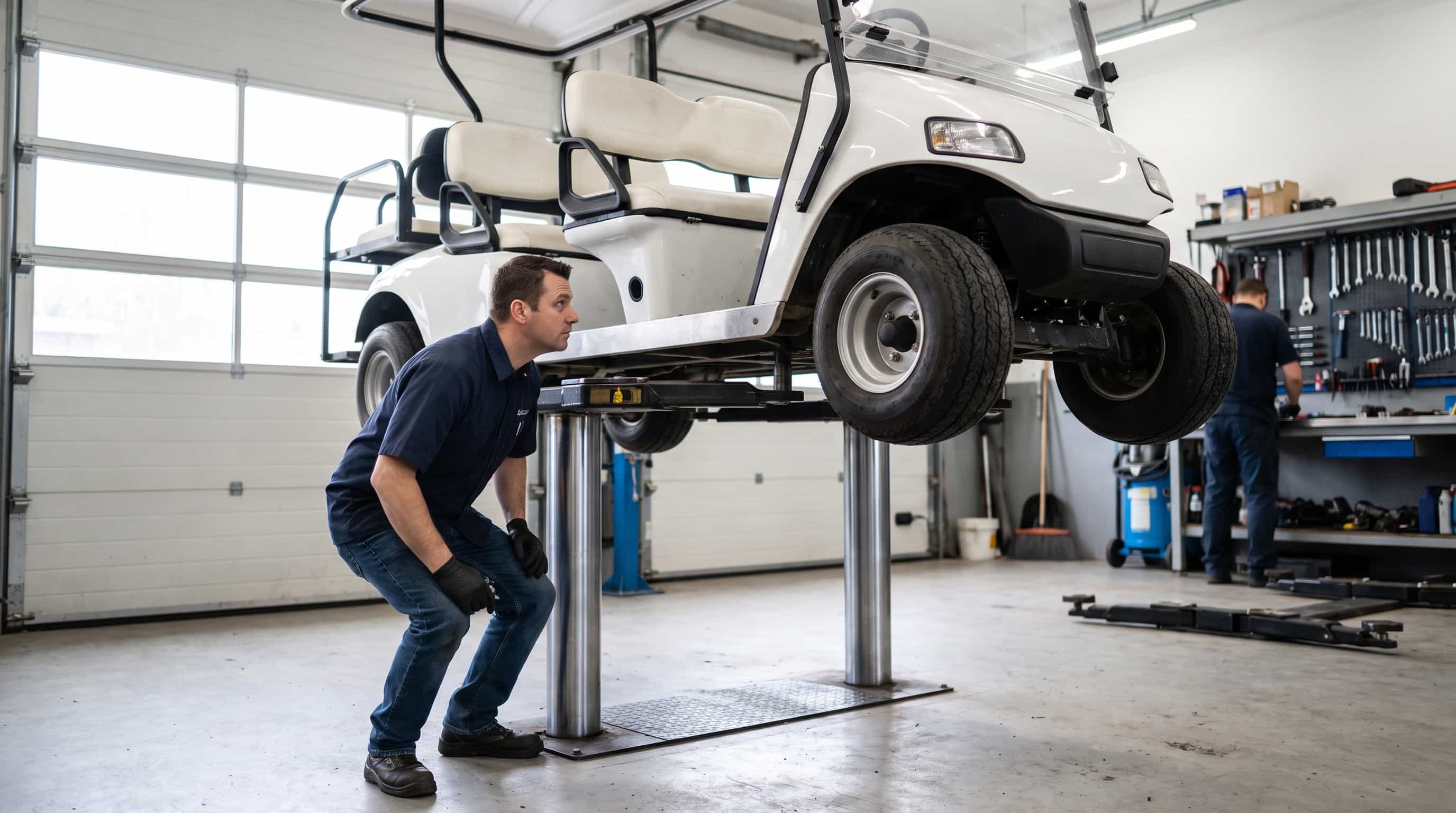
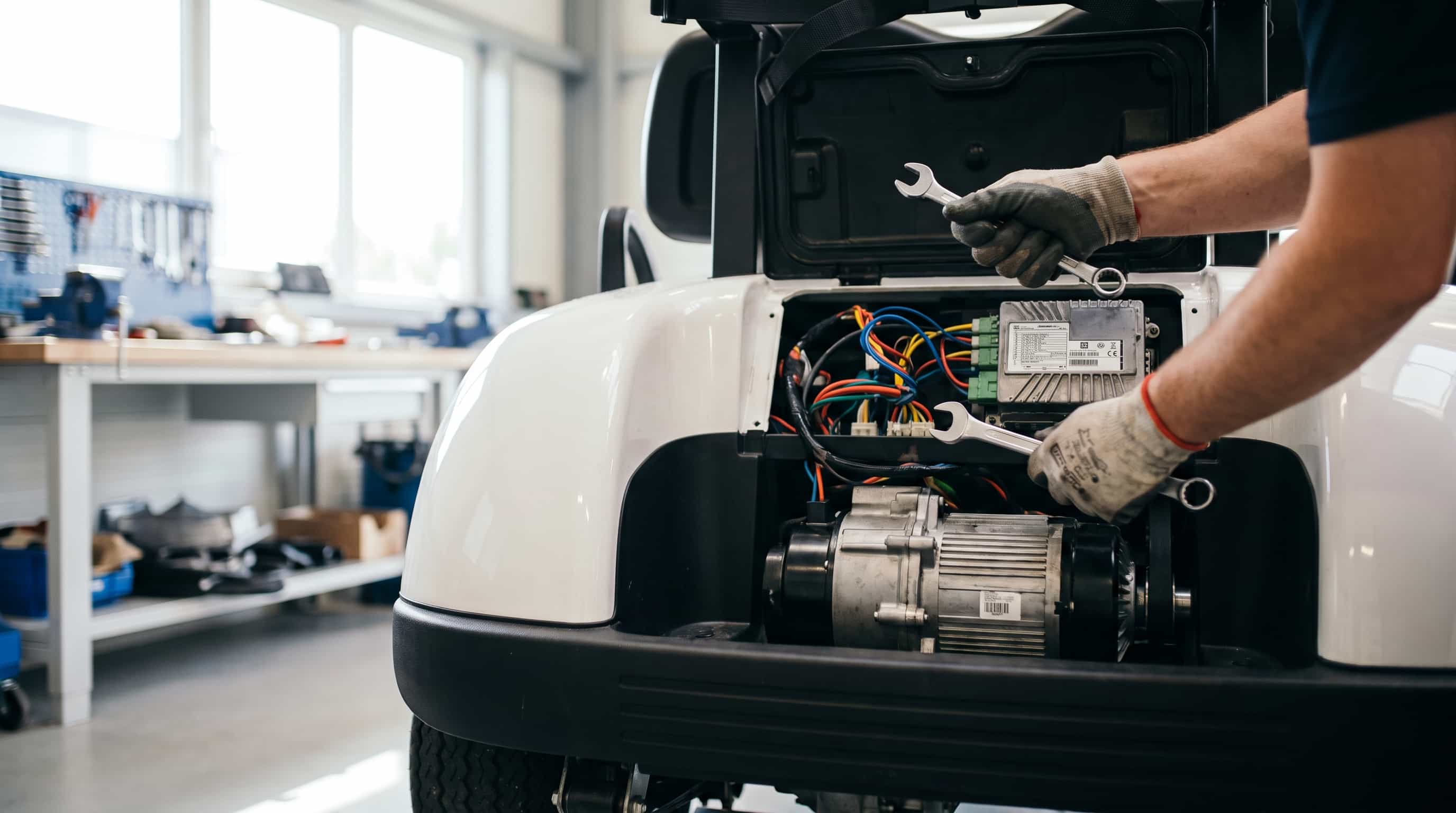
The parts and service picture differs too. A buggy is a simple machine that most independent engineers will happily handle. A side-by-side is closer to a small vehicle in complexity, often with an engine, a gearbox, a driveline and a suspension system that all need proper attention. A GEM is electrically straightforward but depends on a support network that in Britain is thinner than the one behind the common buggy makes.
- Turf that must not be marked, guests aboard, short distances: a golf buggy.
- Loads, tracks, mud and gradients on a farm or working estate: a side-by-side.
- People and light loads on made-up surfaces across a large site: a GEM-style vehicle.
- Public road use anywhere in the picture: a separate question to settle before any of the above.
Ground damage, which decides more than people expect
Weight on a small contact patch is what tears turf, and it is the practical limit on both of these vehicles in a British climate. The ground here is wet for a long stretch of the year, and a heavier machine on harder tyres will rut a path, scar a bank and churn a gateway in conditions where a buggy on turf tyres leaves almost nothing behind. Groundstaff will tell you where the damage happens long before any supplier does.
If a heavier vehicle is genuinely needed, the mitigations are real enough: turf-friendly tyres where they are offered for that machine, pressures kept within the maker's stated limits, route discipline, and simply not using it on the worst days. What does not work is buying the capable machine and hoping. Decide in advance which parts of the site it is allowed on, write it down, and tell whoever will be driving it.
If yours is doing this and the checks here have not settled it, we diagnose and repair buggies, including a callout to wherever it is.
The ownership and support question
Brands in this part of the market move between owners, and the GEM line in particular has sat under more than one parent over the years. That is not a criticism of the vehicles, it is a reason to check rather than assume. Before you buy, establish who owns and supports the brand today, who represents it in Britain, where parts are ordered from, and what a realistic wait looks like for something that is not a consumable.
The same applies to a used machine bought privately or brought in from abroad. Warranty terms may not transfer, the specification may differ from anything sold here, and the charger may not suit a British supply without attention. All of those are solvable and all of them are cheaper to solve before money changes hands. Take the answers from the brand's current representative here rather than from the wording of a listing.
Road use in Britain
None of these vehicles is road legal here simply by virtue of what it is. Use on a public road requires approval appropriate to the vehicle, registration, tax, insurance, and compliance with construction and lighting requirements, and the route to that differs depending on the machine and how it will be used. Some working vehicles follow a different path from a passenger vehicle because of how they are classified and used, which is exactly why a general answer helps nobody.
The authority is DVLA, with DVSA for approval, and your own insurer for cover. Ask them about the specific machine and keep the answers in writing. If a seller offers road legality as a feature, ask to see the registration document and the approval paperwork before treating it as true. On private land none of this applies, and the landowner sets the rules along with any conditions their insurer imposes.
Choosing for a British site
Work from the job backwards rather than from the machine forwards. Write down the heaviest thing that will be carried or towed, the worst ground it must cross, the steepest gradient on the route, who will be driving it, and what time of year it has to work. Those answers usually pick the vehicle without much argument, and they often expose the case where two simpler machines beat one capable one.
Then check the support before you fall for the specification. A vehicle that suits the job perfectly and cannot be serviced within a sensible distance will end up standing in a shed. Across this whole part of the market the pattern is consistent: the machine is rarely the problem and the parts route usually is. We name marques factually here to be useful, and imply no affiliation with any of them.
- The heaviest regular load, including anything towed behind.
- The worst ground and the steepest gradient on the actual route.
- Who drives it, and what training they will be given.
- Where it gets serviced, and how far away that is.
Common questions
- Is a GEM the same as a golf buggy?
- No. A GEM is designed to move people and light loads at low speed on made-up surfaces, and it is heavier and more substantially built than a course buggy. A golf buggy is a light machine on soft tyres intended to cross turf without damaging it. They overlap in speed and in seating, and they diverge on weight, tyres and the ground they suit.
- Can a side-by-side be used on a golf course?
- Some courses use one for maintenance work, on defined routes and with appropriate tyres. It is not a machine for carrying players, because the weight and the tyres mark turf and the speed is more than a course wants near people. If it is going on grass, agree the routes first and check the tyre options with the supplier before ordering.
- Are GEM vehicles road legal in the UK?
- Not by default. The road category they are often built around belongs to another country, and it grants nothing here. British road use depends on approval, registration, tax, insurance and compliance with construction and lighting requirements for the individual vehicle. Ask DVLA about the specific machine, ask your insurer about cover, and ask the seller for documents rather than assurances.
- Who supports these vehicles in Britain?
- That is worth confirming rather than assuming, because ownership of brands in this market has changed over the years and the representative here can change with it. Find the brand's current representative, ask where parts are ordered from and what the wait looks like for non-consumables, and ask a local engineer what they will and will not take on.
- Should I choose a utility buggy or a side-by-side for grounds work?
- It depends on the ground and the load. A utility buggy is lighter, kinder to turf, cheaper to run and simpler to service, and it covers most estate and course work. A side-by-side earns its place once there is mud, real gradient, towing or rough track involved. If the worst conditions are occasional, the lighter machine plus a plan for those days often wins.
- Do these vehicles use lead-acid or lithium batteries?
- It varies by model and by year, and it is a question about the machine in front of you rather than about the brand. Establish the chemistry, the age of the pack, how it has been charged and which charger belongs with it. Lead-acid packs need topping up and dislike standing discharged, while lithium packs bring their own management electronics and service record.
Still not right
We diagnose and repair golf buggies, service them on a plan, and send an engineer out to where the buggy is. Tell us the symptom and we will say what it usually means.