Columbia ParCar vehicles explained
By James Brown · Updated 29 August 2026 · 10 minute read
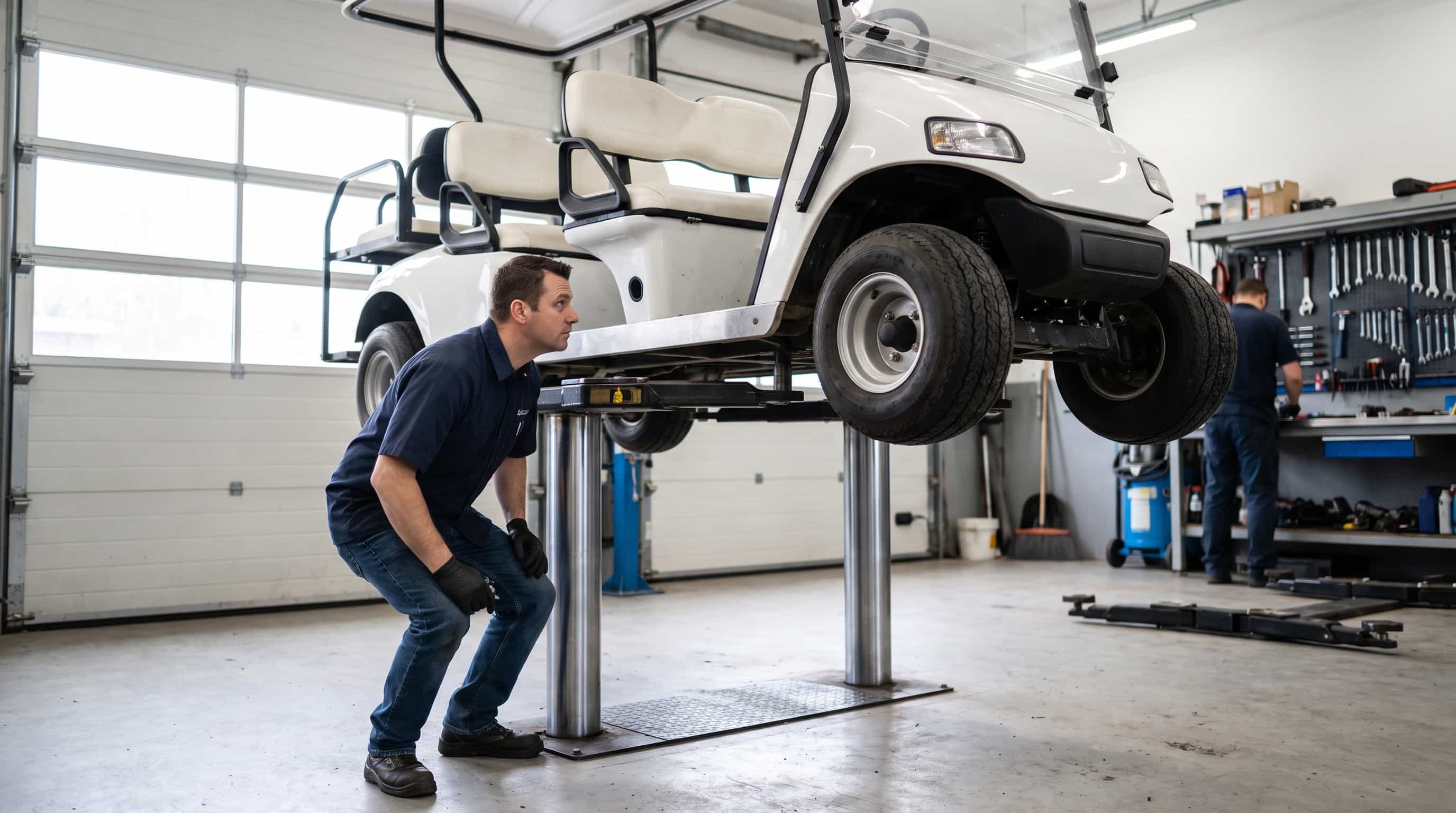
Columbia ParCar is a marque of small electric vehicles built around work rather than golf: burden carriers with a flat load deck, personnel carriers that move a crew across a site, and shuttle vehicles for visitors. In Britain it is far less common than the mainstream golf makes, which changes nothing about the machines and a great deal about the buying decision. Settle who supplies parts, who attends a breakdown, and what happens when the controller or the charger fails.
Key takeaways
- The ranges are grouped by job, load carrying, crew movement and shuttling, rather than by trim.
- A burden carrier is designed around a rated deck, which a golf buggy with a box bolted on is not.
- Underneath it is ordinary electric vehicle engineering, so battery practice and most wear items carry across.
- In the UK the purchase turns on support: the parts route, who attends it, and charger compatibility.
- Ask for those answers in writing before you agree anything, not after the vehicle has stopped.
- Used examples usually come out of working fleets, so inspect the deck, the frame and the brakes first.
- Where support cannot be named, a common make in good order will keep a site moving better.
What the marque actually covers
Columbia is not a golf name in the way the large fleet marques are, and reading it as one leads a buyer to the wrong questions. The ranges are organised around work: carrying loads on a flat deck, carrying crews across a site, and shuttling visitors along a route. A vehicle is chosen from the job it has to do rather than from trim or seat colour, and the literature reads closer to plant than to leisure equipment. That framing matters from the first enquiry, because it changes what you should be asking the seller.
Model designations and figures move over time, and the honest source for the machine in front of you is the maker's own documentation together with the identification plate on the vehicle. We do not print specifications we cannot verify against a specific serial, because a confident wrong number is worse than no number at all to somebody about to hand over money. What does travel between machines is the thinking, and that is what the rest of this covers.
Burden carriers and a buggy with a box on the back
A burden carrier is designed around its deck. The frame, the axle, the springs and the brakes are chosen for a load sitting behind the driver, and the maker rates the vehicle for a payload it has been tested to carry. A golf buggy with a cargo box bolted where the rear seat used to be looks similar at a glance and is not the same vehicle. It was drawn to carry two people and their clubs, and a conversion does not change the components underneath it.
The difference shows in the parts that get punished. Brakes fade sooner, springs settle, steering wears and the frame takes stresses nobody designed for. If the real work is carrying weight most days, a purpose-built machine pays for itself in components not being asked to work outside their design. If the load is occasional and light, a converted buggy is a reasonable answer and there is no need to make it complicated.
The reverse trap catches people just as often. Where the actual requirement is a few passengers and the odd bag, a burden carrier is more vehicle than the job needs, and it rides, turns and parks accordingly. It draws more from the battery for the same journey, it takes more room to store, and its tyres and brakes cost more to renew when they come round. Buying heavier than the work justifies is a cost that keeps arriving in small instalments.
Personnel carriers and shuttle vehicles
A personnel carrier moves a crew. It carries bench seating, often facing both ways, with steps and grab rails placed for people getting on and off many times a shift. A shuttle vehicle moves visitors along a route, and it tends to gain higher seat backs, weather protection and a canopy that clears the doorway properly. Neither is a golf buggy with extra seats added, and treating them that way misses what the design is doing.
The differences concentrate on boarding rather than travelling. Step height, the position of a handhold, the height of the seat cushion and where the roof edge sits decide whether a vehicle is comfortable to use repeatedly through a shift or merely possible to use once. On a site where the same people board again and again, those details do more for the working day than anything on the drive side.
In Britain these turn up on manufacturing sites, distribution centres, university and hospital estates, ports and large visitor attractions. In each case the vehicle is site equipment on a maintenance schedule with a named person responsible for it, which is a useful frame for a buyer used to thinking of buggies as leisure items. It implies a service interval somebody enforces, a place the machine is kept and charged, a check before a shift starts, and a driver briefing that is written down rather than assumed.
The support question, and how to settle it
The genuine risk with a marque you rarely meet in Britain is not build quality. It is what happens on the morning the vehicle will not move. Common makes have a dealer network, an independent trade that has worked on them for years, and parts sitting on shelves. A less common marque may have all three, one, or none, and the only person who can tell you which is the seller. Ask before agreeing anything, and take the answers in writing rather than over the phone.
None of that is specific to this marque. It is the question to put to anybody selling a vehicle you do not see every week, us included. A seller who answers plainly and can name the parts route is telling you something worth having. A seller who cannot is also telling you something, and the courteous version of that answer is still a no.
- Who holds parts for this machine in the UK, and what the route is when they do not.
- Which dealer or engineer will attend it, and whether they have worked on the marque before.
- Whether the controller, motor and charger are proprietary items or trade-standard ones.
- What documentation comes with it: operator manual, service schedule and parts list.
- How the battery set is configured, and whether a standard replacement fits the tray.
If yours is doing this and the checks here have not settled it, we diagnose and repair buggies, including a callout to wherever it is.
What is generic underneath, and what is not
Most of a small electric work vehicle is ordinary engineering. Batteries, cable, contactors, wheel bearings, brake shoes, tyres, bushes, switches and fuses are trade items or have trade equivalents, and a competent auto electrician can work with all of them. Charging practice, battery care and the way a lead-acid set ages are identical here to any other buggy in the yard, which is why the general guidance in this library applies without modification.
The proprietary parts are the ones that cost you time: body panels, the deck and its mountings, seat frames, the wiring loom, and the controller along with whatever tool talks to it. Those are where a thin UK presence hurts, because no aftermarket stands behind them and a wait is simply a wait. A cracked panel on a common make is an order placed and then forgotten about. The same panel on a marque nobody stocks may be a special order, and until it arrives the vehicle either works with a hole in it or does not work at all.
So a fair way to size up the risk is to sort the vehicle into those two piles before buying. If everything you expect to replace in the first few years sits in the generic pile, an uncommon marque is a much smaller gamble than it appears. If the likely failures sit in the proprietary pile, be honest with yourself about how long the site can stand still.
Buying one out of a working fleet
Most of these that reach the used market here come out of a fleet that used them properly, and that is a different history from a golf car doing a few gentle rounds a week. Expect hours on the machine, knocks along the deck edges and the panel corners, and evidence that it has carried things nobody intended. None of that is a reason to walk away. It does decide what you look at first.
The service record is the quiet advantage of a fleet machine. Sites that run vehicles under a maintenance regime keep paperwork, because somebody has to sign for it. Ask for the record, and ask what was actually done at disposal, because a vehicle tidied up for sale and a vehicle genuinely serviced look identical in a photograph. If the paperwork names the engineer who worked on it, that is a telephone call worth making before you decide anything.
- The deck and its mounting points, checked for cracks, distortion and earlier repair.
- The frame, subframe and brackets, particularly where steel fixings pass through.
- Brakes, steering play and tyre condition, on the ground rather than in a listing.
- Battery age, whether the set was replaced together, and which charger comes with it.
Where the marque fits, and where a common make fits better
The case for a Columbia is strongest where the work is genuinely industrial and the support question has a clear answer: a load deck in daily use, a crew to move across a plant, a shuttle on a fixed route, and a dealer or engineer who has said yes in writing. In that situation a purpose-built work vehicle outlasts a converted golf car and keeps outlasting it.
The case is weakest where the actual requirement is a handful of seats on soft ground and the nearest person who has seen one is a long way off. There, a common make in good order and supported locally will keep running while a rarer machine waits for a part. That is not a judgement about the vehicles. It is arithmetic about downtime.
So the test is not which badge is stronger. It is which machine your site can keep in service on the days that matter, with the people and the parts you can actually reach. Answer that honestly and the decision usually makes itself, whichever way it falls, and you will have asked the questions that would otherwise have caught you out later. That is a better position than owning a vehicle nobody within reach has opened before.
Common questions
- Is a Columbia ParCar a golf buggy?
- Not primarily. It belongs to the same family of small low-speed electric vehicles, but the ranges are built around load carrying, crew movement and shuttling rather than around a round of golf. Some machines will do course work perfectly well. The marque is specified from the job it has to do, which is a different starting point from choosing a fleet car.
- Can I get parts for a Columbia ParCar in the UK?
- Ask the seller to name the supply route before you buy, and take the answer in writing. Much of what wears is generic and available from the trade, so the risk concentrates in body panels, deck fittings, the loom and the controller. Those are the items to ask about specifically, quoting the serial from the identification plate.
- Will a local buggy engineer work on one?
- Many will, because the systems are common to small electric vehicles and the diagnosis follows the same order. The two things to confirm are whether they can talk to the controller and whether they can source parts. Settle both before purchase rather than on the morning the machine will not move.
- What is a burden carrier?
- A work vehicle designed around a flat load deck, with the frame, springs and brakes matched to a load carried behind the driver, and rated by the maker for a payload. It is not the same as a golf buggy with a cargo box fitted. Take the rating from the maker's documentation for that machine rather than assuming it.
- Are these vehicles road legal in the UK?
- Not as supplied. Any low-speed vehicle used on a public road raises separate questions of construction, lighting, registration and insurance, and DVLA is the authority on what is required rather than the seller. On private land the site owner sets the rules, including who may drive and what training they get first.
- How do I know what specification a used one is?
- From the identification plate on the vehicle read against the maker's own documentation for that serial, not from the wording of an advert. Ask for a photograph of the plate before you travel to view. A seller who will not send it has told you something useful about the rest of the transaction.
Still not right
We diagnose and repair golf buggies, service them on a plan, and send an engineer out to where the buggy is. Tell us the symptom and we will say what it usually means.
Related pages
Related guides
 Golf buggy makes explained: who builds what10 minute read
- Club Car Precedent or Tempo: what changed8 minute read
 Club Car DS: what to know about the older platform8 minute read
 Personnel transport on large construction sites4 minute read
 Utility versus passenger golf buggies, which do you need5 minute read