Buggy hire income at a golf club: what drives it
By James Brown · Updated 29 August 2026 · 10 minute read

Income follows availability in the hours golfers actually want to ride, and everything else is a modifier on that. Weather sets the ceiling on any given day and no club controls it. Condition and comfort decide whether a first hire becomes a habit. Friction between wanting a machine and getting one removes hires that never appear in any record. Visitor and society traffic rides more readily than the membership does. Adding machines only helps once the ones you own already go out full.
Key takeaways
- A buggy earns nothing standing in the shed while somebody at the counter is being told there are none left.
- Downtime is a revenue item, not a maintenance item, because it always seems to land at the peak.
- A pack that fades over the closing holes turns a satisfied golfer into somebody who walks next time.
- Booking a buggy at the same moment as the tee time converts a hope into a commitment the club can plan around.
- Wet weather takes hires away, and screens, covers and an early paths only decision recover part of them.
- Refused hires are the figure that decides whether more machines would pay, and almost nobody writes them down.
- Another buggy only earns if the existing fleet is already going out full during the busy hours.
Availability during the hours people want to ride
Buggy income is concentrated. Most of it is earned in a narrow band of hours across a small number of days, and off peak hires are the extra rather than the base. That single fact reorganises how a club should think about the whole operation, because it means the cost of a machine being unavailable depends entirely on when it happens rather than on how long it lasts.
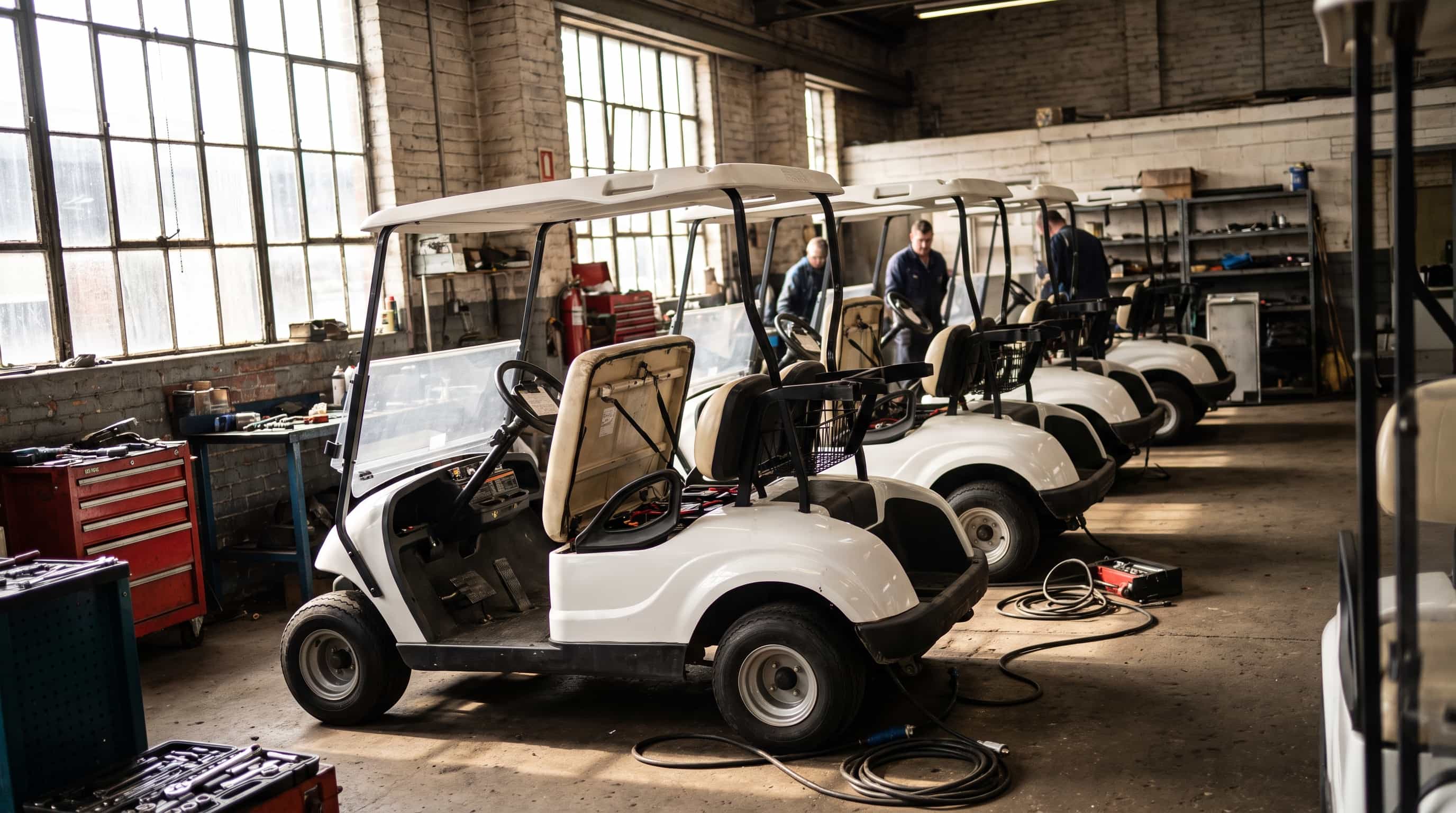
A buggy in the workshop on a Tuesday costs almost nothing. The same buggy off the road on a Saturday morning costs a hire that could not be moved to another day, because the golfer who wanted it was playing then. Clubs that track downtime as a maintenance statistic miss this completely. Tracking it against the tee sheet instead shows what each spell off the road actually took out of the year.
It also sets the test for buying another machine. Extra capacity earns money only where the current fleet is already fully out during the busy hours and people are being turned away. Where machines are standing at the peak, capacity is not the constraint, and a new buggy simply joins the row of idle ones while the real problem carries on unaddressed.
Weather sets the ceiling, and part of it is recoverable
Nothing moves buggy takings like the weather, and it moves them twice: once by deciding how many golfers turn up, and again by deciding whether the course can carry machines at all. A dry season lifts everything. A wet one takes hires away through restrictions as much as through empty car parks, and no amount of planning changes that ceiling.
Some of it is recoverable, and most clubs leave that part on the table. Screens and covers fitted before the season, rather than fetched from a store during a shower, keep a marginal day going. A paths only decision made early and posted where members can see it saves the hires that a vague answer at the counter loses. Cold dry days in the shoulder months are good buggy weather and nobody thinks to offer.
- Screens and covers fitted and checked before the season starts.
- A paths only or suspension decision made early in the morning and published, not improvised at the counter.
- Somebody at the counter offering a buggy rather than waiting to be asked.
- Machines standing ready and charged rather than behind a locked shed door.
- Ground management that keeps buggies on the course for more of the year.
Condition decides whether a first hire becomes a habit
A golfer takes a buggy once out of curiosity, an injury or a long walk on a hot day. What decides the second hire is the experience of the first: whether it pulled away properly on the hill, whether it got round without fading, whether the seat was comfortable, whether the canopy kept the rain off, and whether it smelled of damp when they sat down in it.
The fade point does the most damage. A pack that runs out of energy over the closing holes converts a paying customer into somebody who will walk next time and tell two friends why. That makes battery condition a revenue question at a club rather than only a workshop one, and it is the reason a fleet left uncharged over winter costs far more than the replacement batteries suggest.
Small fittings matter more than they should. A scorecard holder that works, a sand bucket that stays where it is put, a clean windscreen, tyres that do not mark the surrounds. None of it is expensive to keep right, and all of it is what a golfer actually notices during four hours in the machine. A machine that has plainly been washed and checked also tells a member the club takes its fleet seriously, which is the quiet half of the same argument.
Friction between wanting a buggy and getting one
The usual route to a hire is: turn up, ask at the counter, hope. Every step in that chain loses hires that never reach a record, because a golfer who assumes there will be none available simply does not ask. Those losses are invisible, which is exactly why they persist for years and why no amount of looking at the takings will reveal them.
The change with the largest effect at most clubs is allowing a buggy to be booked at the same moment as the tee time, in the same system, with the same confirmation. It turns a hope into a booking and gives the club a forecast of the morning before the morning arrives. Taking payment or a deposit at that point removes the no show, and a no show at the peak is a machine standing while somebody else was refused.
- Buggy offered as an option where the tee time is booked, not as a separate phone call.
- A confirmation that says a machine is held, so nobody arrives hoping.
- Payment or a deposit taken at booking, so a no show costs the golfer rather than the club.
- A published cancellation cut off, so a released machine can be let to somebody else.
- A note against the tee sheet, so the counter knows what is already committed.
Visitors, societies and the mix
Many clubs find that visitor and society play produces buggy hires at a higher rate than the membership does. The reasons are practical rather than surprising. A visitor does not know the course and does not know where the hills are, has often driven a distance to be there, is less likely to have a trolley in the boot, and is spending a day out rather than playing a weekly round with the same four people.
Societies add a second effect: the organiser can commit for the whole party at booking. One conversation with one person, weeks ahead, produces a firm number of machines and a payment, which is worth far more to planning than the same number of individual decisions taken at the counter on the day by people who have just arrived. It also gives the club a reason to say yes or no early rather than improvising an answer on a busy morning.
The mix decides where growth should come from. If member demand is flat and visitor days are rising, the answer is usually flexibility on known dates rather than a permanently larger fleet, because those dates can be covered by machines brought in and returned rather than carried through the winter at the club's expense. Splitting the record by member, visitor and society is the work that makes that judgement possible, and it costs nothing but an extra column.
Working out what this costs for your own event? Tell us the venue and dates and you will have an itemised written quote within one working hour.
The hires that never get recorded
Every club knows what it took. Very few know what they turned away, and the second number is the one that decides whether investment pays. A refusal log costs a line in a book: the time, the request and the reason it could not be met. Nothing about it is difficult, and almost nowhere does it exist. The reason it does not exist at most clubs is that nobody owns it, so name the person who does and give them somewhere to write.
Record the near misses as well. The last machine going out early on a Sunday is not a full house, it is a warning that the fleet is at its limit and that the next golfer would have been refused. A season of those entries, laid alongside the days when machines stood idle, gives a committee something to read instead of something to argue about.
What quietly eats the income
Downtime comes first, and specifically downtime that lands on a busy morning. Batteries are the same thing arriving slowly: a fleet whose packs have been shortened by poor charging discipline loses hires through fade long before anybody condemns a machine, and the loss never appears in a maintenance report because nothing has broken. Schedule the work that can be scheduled into the quiet part of the week, and treat a Saturday breakdown as the expensive event it actually is.
Damage is the next item, and the cure is process rather than argument. Note the condition at issue and at return, photograph anything that matters, and publish what the golfer is responsible for before they take the key rather than discovering the disagreement when they bring it back with a scraped panel. A club that cannot show what a machine looked like at issue usually ends up absorbing the repair and the downtime together.
Staff time is the item nobody costs. Issuing, checking in, washing, charging and chasing keys all land somewhere, usually on the professional's shop at the busiest moment of the week. Where that job has no owner it gets done badly, and the visible result is a fleet that looks tired, a charging routine that slips, and a set of records that were never kept in the first place.
Deciding whether more machines would earn more
The test has two parts and both have to be true. Is the existing fleet going out full during the busy hours, and are you turning golfers away. If yes to both, more capacity converts directly into hires. If either answer is no, the constraint is booking, condition or offer, and another machine simply joins the row while the club congratulates itself on having invested.
Where the answer is yes but only on known dates, the sensible response is machines brought in against those dates rather than owned through the winter. Where it is yes most weeks, the arithmetic points at owning. Make the decision out of season, with a season of records in front of you, rather than in the week after one Saturday when everything happened to go out.
Common questions
- What is the biggest thing holding back buggy income at a golf club?
- Usually availability during the busy hours, and usually for reasons that look small. A machine part way through a charge, one waiting on a part, and a booking process that depends on asking at the counter will between them lose more hires than any pricing decision. Fix availability at the peak before anything else, because that is where the income is concentrated.
- Should members be able to book a buggy when they book a tee time?
- Yes, and it is the change most clubs get the clearest result from. Booking the buggy in the same place, at the same moment, with the same confirmation turns a hope into a commitment. It also gives the club a forecast of the morning, which makes charging, checking and staffing a plan rather than a scramble.
- Does taking payment for a buggy in advance make a difference?
- It removes the no show, which matters more than the cash flow. A machine held for somebody who does not arrive stood idle while another golfer was told there were none. Take payment or a deposit at booking, publish a cancellation cut off, and release unclaimed machines in time for the counter to let them to somebody else.
- Do visitors hire more buggies than members?
- Many clubs find they do. A visitor has usually travelled to be there, does not know where the hills are, is less likely to have a trolley with them and is treating the day differently from a weekly round. If your visitor and society traffic is growing, expect buggy demand to grow faster than membership numbers alone would suggest.
- How do you tell whether another buggy would pay for itself?
- Two conditions have to hold at once: the fleet you have is already going out fully during the busy hours, and you are refusing hires. Both need a season of records, including the refusals. If machines are standing at the peak, capacity is not the constraint and the honest answer is that another buggy will stand with them.
- What can a club do about buggy income on wet days?
- Not much about the rain, quite a lot about the response. Screens and covers fitted before the season keep marginal days going. A paths only decision made early and published lets golfers plan instead of cancelling. And keeping the fleet charged and visible through the shoulder months captures the cold dry days that nobody thinks to offer a buggy on.
Ready to get a price
Tell us about your event and we will send an itemised written quote within one working hour.