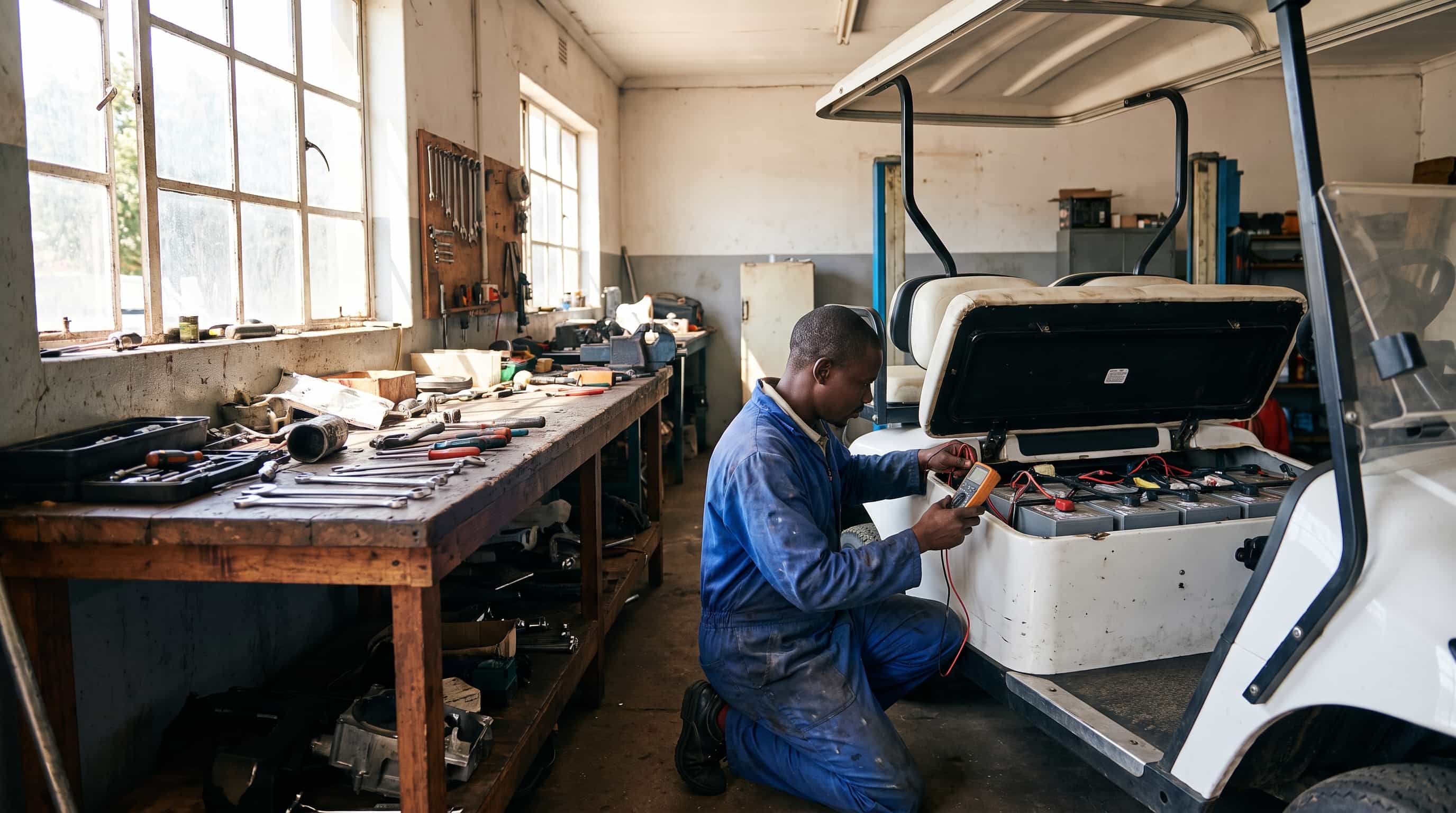
What happens if a hired buggy breaks down
By James Brown · Updated 11 August 2026 · 5 minute read

If a hired buggy stops, the sequence is: make it safe where it stands, try the ninety-second checks that clear most stoppages, then call us on the number from your handover, and we talk it through, guide a fix, or get a solution moving, repair or replacement as the situation needs. Genuine mid-hire failures are rare because vehicles are checked between hires; the plan exists so that a rare event is an inconvenience rather than a crisis.
Key takeaways
- Most stoppages are the simple things: the run-tow switch, a charger left connected, a seat switch.
- Safe first, checks second, phone third; the number is on your handover sheet.
- We resolve by guidance, repair or replacement depending on distance and the day.
- Tell us honestly what happened before it stopped; it changes the diagnosis.
The ninety-second checks
Before anything else, the classics. The run-tow switch, if the model has one, knocked to tow while manoeuvring: back to run. The charger still connected or its interlock latched: unplug fully and try again. The seat occupancy switch on models that have one: sit squarely. A dead-feeling pedal after a pause often just wants the key cycled off and on.
These clear a large share of stops because they are not faults at all, they are the vehicle protecting itself as designed. The handover briefing points them out on your specific model, which is one reason the briefing is worth the five minutes.
When it is genuinely stuck
Park it safe, brake on, key out, off any path where it blocks or invites tampering, and call the number from your handover with three things ready: what it was doing when it stopped, what it does now when you try, and any sounds or smells beforehand. That description usually narrows the cause immediately.
From there we work the options in order of your day: talk you through a fix where one exists, get to you for a repair where distance allows, or move a replacement vehicle where the hire needs wheels more than it needs that vehicle. Which answer, and how fast, depends on geography and the day, and we will be straight about both on the phone rather than optimistic.
Working out what this costs for your own event? Tell us the venue and dates and you will have an itemised written quote within one working hour.
Keeping the event running meanwhile
If the buggy had a critical job, the accessible run, the shuttle loop, borrow the thinking from its plan: shorten the loop to the essential leg, re-time the lifts that matter, and tell the people affected early. Most events absorb an hour's gap gracefully once someone owns the workaround.
Afterwards, the terms are applied honestly: genuine mechanical failure is our problem and we make it right; damage from misuse sits differently, which is why the what-happened conversation matters. Either way the aim is the same, that the story your guests remember is the event, not the vehicle.
Common questions
- How quickly can a replacement arrive
- It depends on where you are relative to us and what the day holds, and we quote it honestly when it matters rather than promising a number here. Nearby events measure it in hours; remote ones are why we check vehicles so carefully before they travel.
- Are we charged for a breakdown
- Not for genuine failure of a sound vehicle doing its job; that risk is ours. Damage from use outside the terms, overloading, kerb strikes, water where vehicles should not be, is the hirer's, and the distinction is usually obvious from the vehicle itself.
- Should we attempt repairs ourselves
- The ninety-second checks, yes. Beyond those, no: call first. Enthusiastic dismantling turns small faults into big ones and clouds the question of what failed.
Ready to get a price
Tell us about your event and we will send an itemised written quote within one working hour.