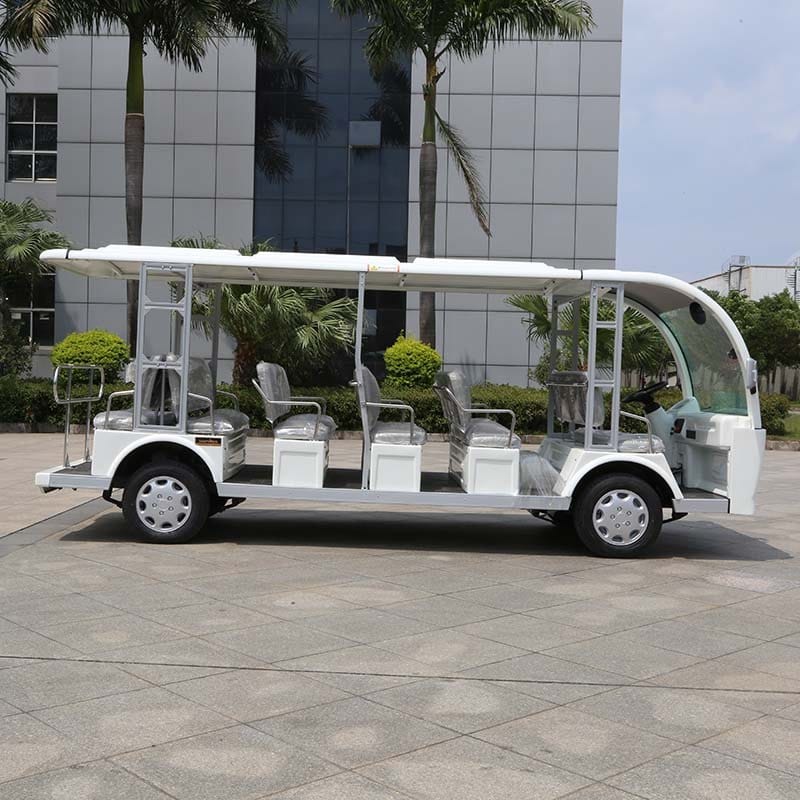
Shuttle buses
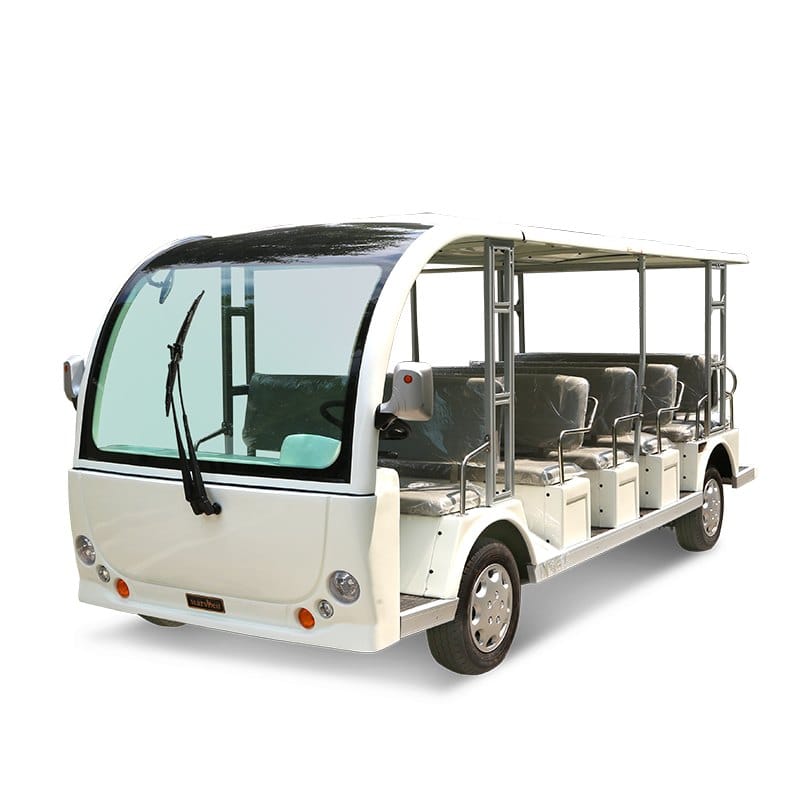
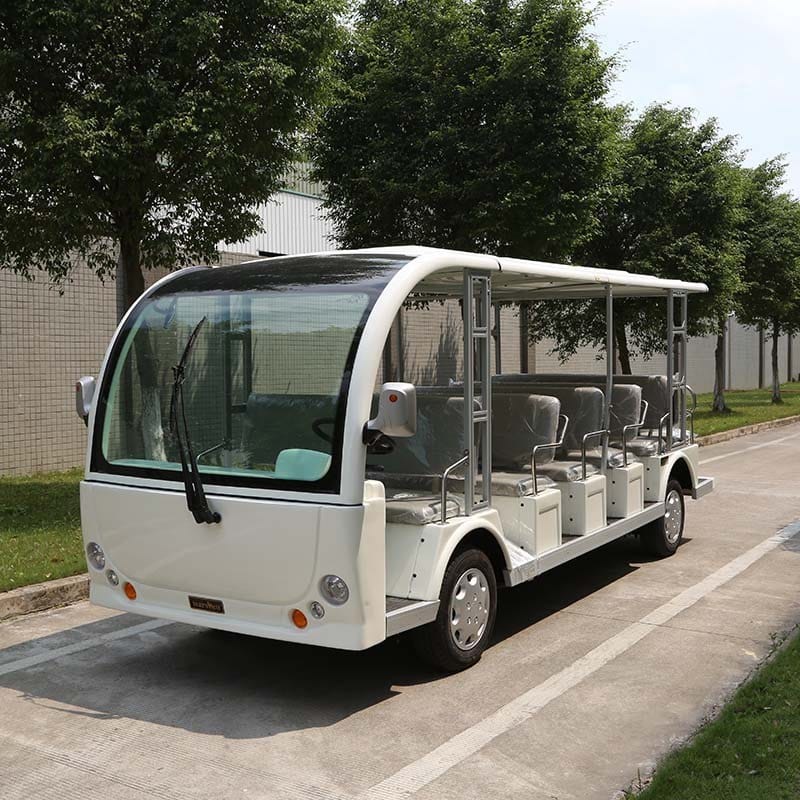
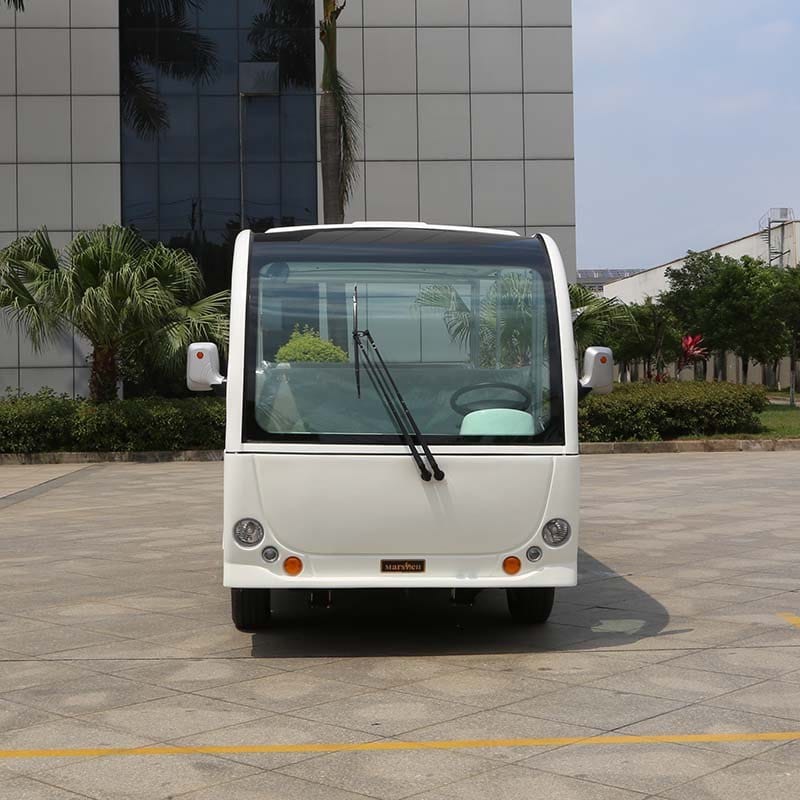
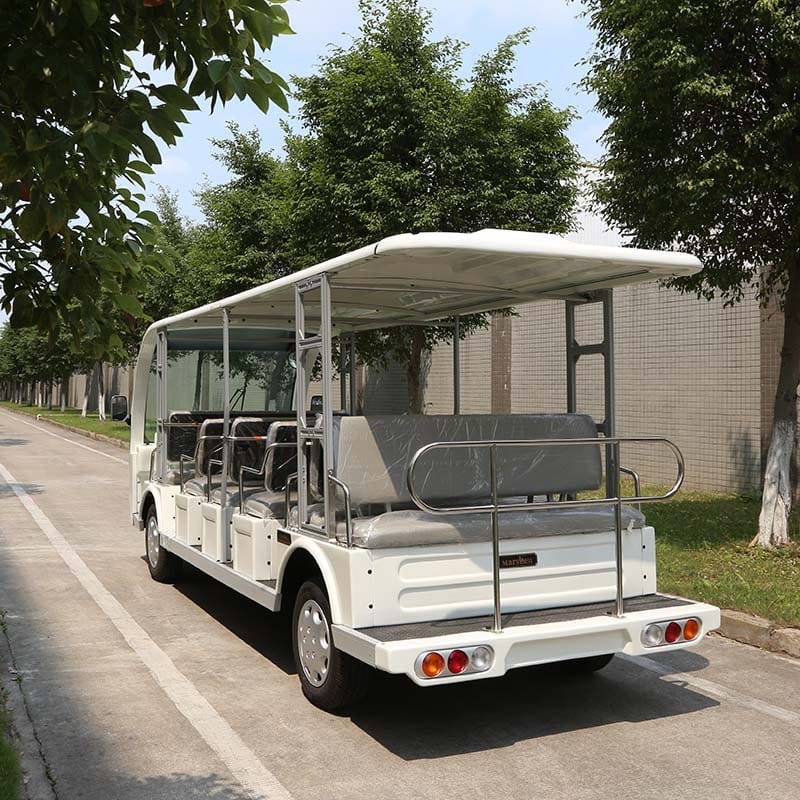
23 Seater Sightseeing Bus
23 seat electric shuttle bus with leaf spring suspension
This is the largest vehicle we sell: twenty-three seats, 5.77 m long, carrying a stated 1955 kg over a 120 km range on a 72V 9 kW motor.
- Seats
- 23
- Range
- 120
- Carries
- 1955
- Top speed
- 30
km, about 75 miles
kg
km/h, about 19 mph
Price
Request a quote
The battery, the wheels and the options change the figure enough that a headline price would be wrong for most buyers, so we price the vehicle you actually want, delivery included.
Get a price for this buggyCall 020 3036 2621Specifications are the manufacturer’s own published figures for this model. Range and climbing figures are measured in level, unladen conditions, so treat them as the ceiling rather than the number to plan a hilly site around.
About the 23 Seater Sightseeing Bus
Twenty-three seats and a 1955 kg payload against a 1600 kg kerb weight, which makes this the only vehicle in the catalogue that carries more than it weighs. It runs a 72V 9 kW motor, leaf spring front suspension and power assisted recirculating ball steering, all of which are lorry solutions rather than buggy ones.
The 120 km range is genuine and stated loaded, which at this size is the figure that decides whether one bus covers a day or two do. It is 5.77 m long and turns in 8 m.
Where twenty-three seats earn their keep
- Large parks, resorts and attractions running a continuous circuit all day
- Park and ride operations on private land
- Sites where a coach cannot go and two smaller vehicles are the alternative
- Long routes where 120 km loaded is the requirement
What it will not do
- 8 m turning radius on a 5.77 m body. This needs a route planned around it, not fitted to one.
- Ground clearance is 100 mm, the lowest in the sightseeing and bus line, because the body sits low over a long wheelbase. Speed bumps and rough ground are a real constraint.
- Climbing capacity is 15% loaded. Fully laden on a gradient it will be working hard.
- Not road legal. At twenty-three seats that bears repeating: this is a private land vehicle whatever it resembles.
23 Seater Sightseeing Bus specification
The full figures for this model, as published by the manufacturer. Where a figure is not published we leave the row out rather than estimate it.
Performance
- Top speed
- 30 km/habout 19 mph
- Range, loaded
- 120 kmabout 75 miles, as stated by the manufacturer
- Climbing capacity, loaded
- 15%
- Brake range
- 6 m or less
- Turning radius
- 8 m
Weights
- Maximum loading weight
- 1955 kg
- Kerb weight
- 1600 kg
- Passenger capacity
- 23
Motor and chassis
- Motor
- AC 72V, 9 kW
- Controller
- 72V, 550A
- Battery
- 2 sets of 12 x 6V
- Charger
- Onboard
- Steering
- Recirculating ball, power assisted
- Braking system
- Four wheel hydraulic
- Suspension
- Front shock absorber and leaf spring
- Chassis
- Steel
Dimensions
- Length, width, height
- 5770 x 1800 x 2205 mm5.77 m long
- Wheelbase
- 3420 mm
- Track, front and rear
- 1535 mm / 1520 mm
- Ground clearance
- 100 mm
Options
Fitted to order. Tell us which you want and they are priced in the quote.
- Enclosed body with doors
- Weather curtains
- Public address system
Questions about the 23 Seater Sightseeing Bus
- How many passengers, and how much can it carry?
- Twenty-three seats and a stated 1955 kg maximum load against a 1600 kg kerb weight. It is the only vehicle in our catalogue rated to carry more than it weighs.
- How far will it go with a full load?
- 120 km, about 75 miles, and the manufacturer states that figure loaded rather than empty, which is unusual and useful.
- What route does it need?
- A generous one. 5.77 m long, 8 m turning radius and only 100 mm of ground clearance, so speed bumps and uneven surfaces matter as much as corners.
- How much does it cost?
- We price to specification rather than publish a figure. Tell us the route, the daily hours and whether you want it enclosed, and we will quote it in full.
Other models to compare
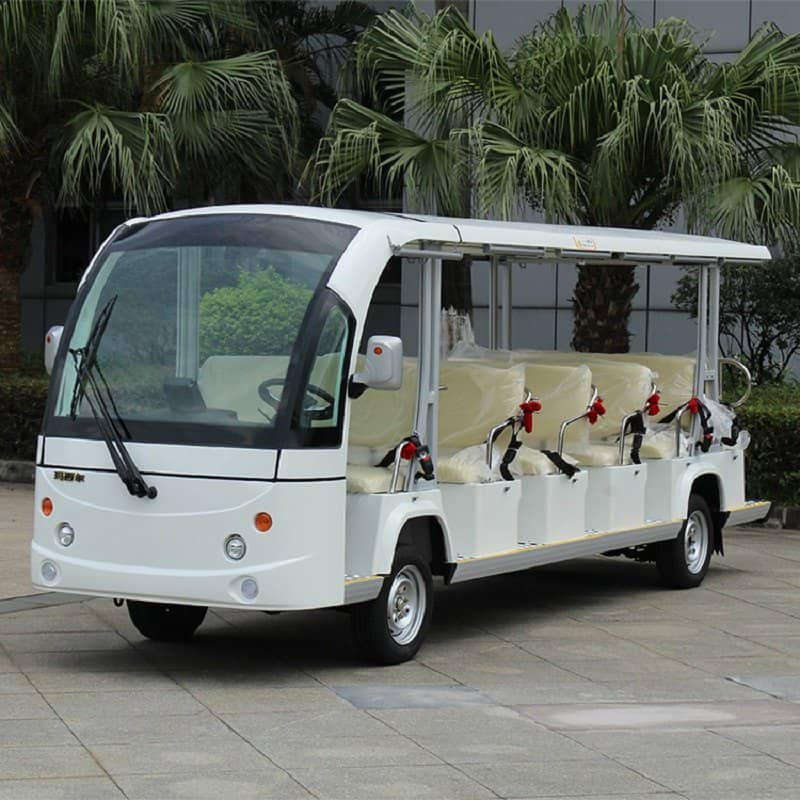
Shuttle buses
17 Seater Sightseeing Bus
17 seat electric sightseeing bus with power assisted steering
- Seats
- 17
Specification and quote
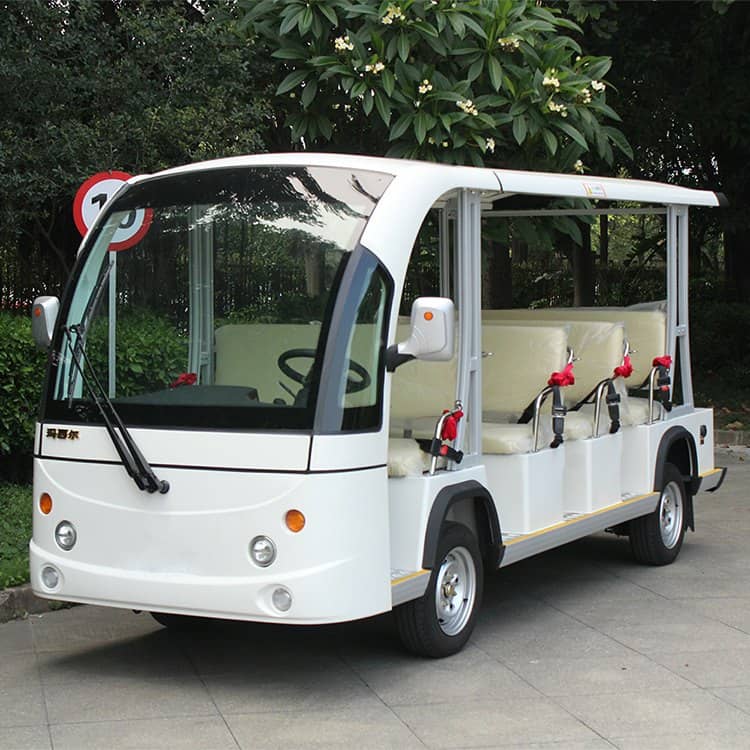
Sightseeing vehicles
11 Seater Sightseeing Buggy
11 seat electric sightseeing vehicle with power assisted steering
- Seats
- 11
- Stated range
- 95-140 km
Specification and quote
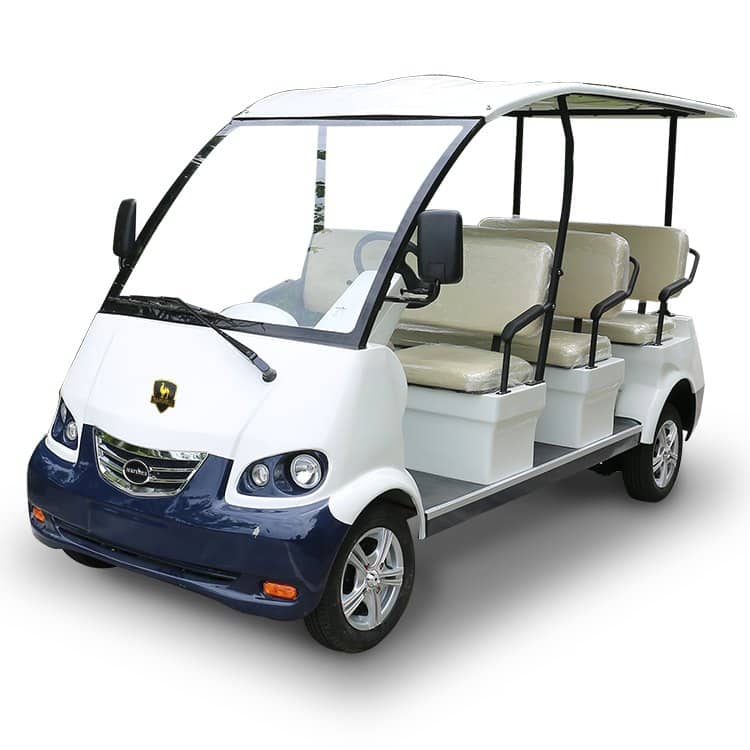
Sightseeing vehicles
8 Seater Sightseeing Buggy
8 seat electric sightseeing vehicle with a hard roof
- Seats
- 8
- Stated range
- 87 km
Specification and quote
Not sure whether to buy or hire
As a rule, buying wins if you would use it more than a few weeks a year or need it available without arranging anything. Below that, hiring usually costs less and takes the maintenance off you. The calculator works it through on your own numbers rather than ours.