Cargo and utility buggies for site work
By James Brown · Updated 21 July 2026 · 5 minute read

A cargo or utility buggy is the right choice when the job is moving kit, tools or materials rather than people: it has a load bed instead of rear seats, so it carries equipment around a site or event efficiently. Choose it over a passenger buggy when the work is transport of things, and size it by the load and the ground rather than by seat count.
Key takeaways
- A cargo or utility buggy carries kit and materials, with a load bed instead of rear seats.
- Choose it over a passenger buggy when the job is moving things, not people.
- Size it by the load and the ground, not by a passenger seat count.
- It suits setup and breakdown, grounds work, and moving supplies around a site.
- Do not overload it, since carrying beyond the rating wears it hard and slows it.
When the job is things, not people
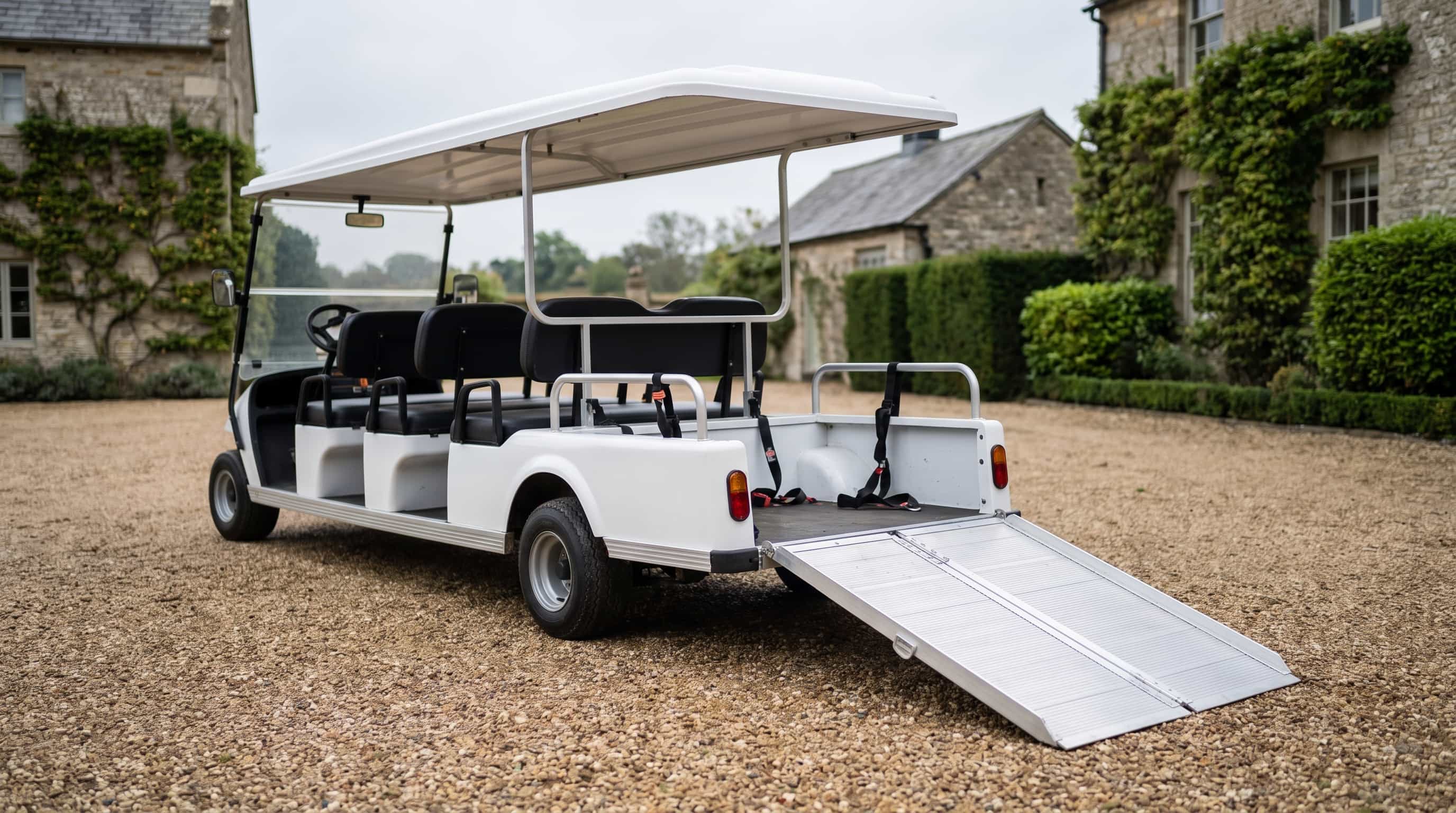
Passenger buggies move guests; cargo and utility buggies move stuff, and knowing which job you actually have is the whole of the choice. A utility buggy typically replaces the rear seats with a load bed, so instead of carrying a group it carries tools, equipment, supplies, staging, and the endless things that need shifting around a site or an event. If your need is getting kit from A to B around a venue, an estate, or a work site, a utility buggy does it far better than a passenger buggy with people trying to balance boxes on their laps. The utility-versus-passenger guide covers the distinction in more depth; the short version is to match the buggy to whether the load is people or things.
What it suits
Cargo and utility buggies earn their place in the unglamorous but essential work around an event or a site. Setup and breakdown, moving staging, furniture, equipment and supplies before and after guests are around. Grounds and maintenance work, carrying tools and materials across a large site. Keeping a venue stocked, moving deliveries from a gate to where they are needed. Anywhere that a lot of things need moving over distances too far to carry and too small or awkward for a van, a utility buggy is the practical answer, and being electric it does this quietly and cleanly, which matters when the work happens around a live event or a guest-facing venue.
Sizing by load and ground
A utility buggy is not sized like a passenger one. Instead of seat count, what matters is the load it needs to carry and the ground it works on. Consider the weight and bulk of what you are moving, since a buggy has a rated load capacity that should not be exceeded, and the terrain, since a site with rough ground, slopes or soft going asks more of a working buggy than a flat yard. As the utility fault guides note, work over rough ground and carrying loads wears the drivetrain, suspension and tyres harder, so a working buggy is chosen and maintained with that in mind. Tell us what you need to move and where, and we can match a utility buggy to the load and the conditions.
Working out what this costs for your own event? Tell us the venue and dates and you will have an itemised written quote within one working hour.
Not overloading it
One honest caution runs through utility buggy use: do not overload it. A load bed invites piling things on, and a buggy carrying more than its rating is slowed, harder on its batteries and drivetrain, and worn faster, as the utility guidance warns. It is a false economy to overload one buggy rather than make two trips or use a larger one, because the wear and the risk outweigh the time saved. So size the buggy to the real load, keep within its rating, and if the job is genuinely heavy, choose a buggy suited to it or plan the trips rather than pile it high. Chosen sensibly and used within its limits, a cargo or utility buggy is the quiet workhorse that keeps a site or an event running behind the scenes, and we help match it to your particular work. For situations that mix carrying people and things, the mixed-needs guide covers the compromise.
Common questions
- What is a cargo or utility buggy for
- Moving kit, tools, materials and supplies rather than people. It has a load bed instead of rear seats, so it carries things efficiently around a site or event. It suits setup and breakdown, grounds work, and keeping a venue stocked, doing quietly and cleanly the behind-the-scenes transport that a passenger buggy is not built for.
- How do I choose the size of a utility buggy
- By the load and the ground, not by a passenger seat count. Consider the weight and bulk of what you are moving, staying within the buggy's rated load capacity, and the terrain, since rough or sloping ground asks more of a working buggy. Tell us what you need to move and where, and we match a utility buggy to the load and conditions.
- Can I overload it to save trips
- No, it is a false economy. Carrying beyond the rating slows the buggy, works its batteries and drivetrain hard, and wears it faster, and the wear and risk outweigh the time saved. Size the buggy to the real load and stay within its rating; if the job is heavy, use a larger buggy or plan more trips rather than piling one high.
Ready to get a price
Tell us about your event and we will send an itemised written quote within one working hour.
Related pages
Related guides
 How to choose the right golf buggy for hire7 minute read
- Golf buggy versus quad bike or ATV for site work4 minute read
 What ground can a golf buggy handle: grass, gravel and slopes6 minute read
 Utility versus passenger golf buggies, which do you need5 minute read
 Mixed guest and cargo needs4 minute read
 2, 4, 6 or 8 seater, which do you need5 minute read