Lifted buggies
2 Seater Lifted Golf Buggy Classic
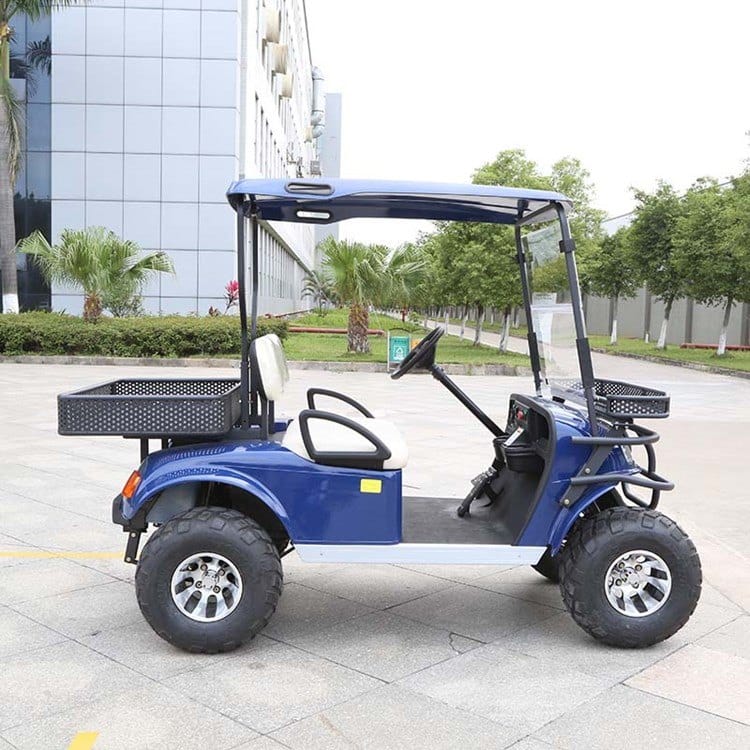
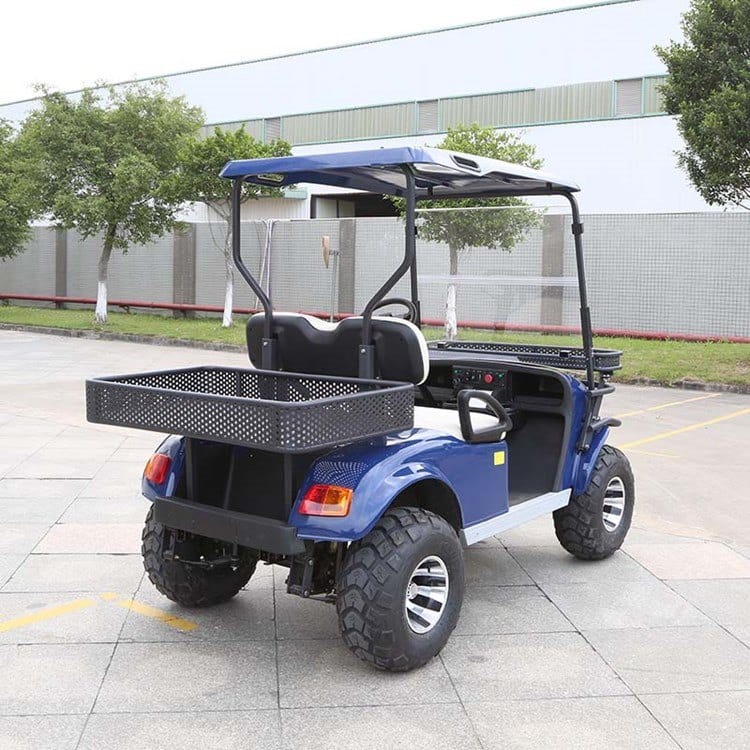
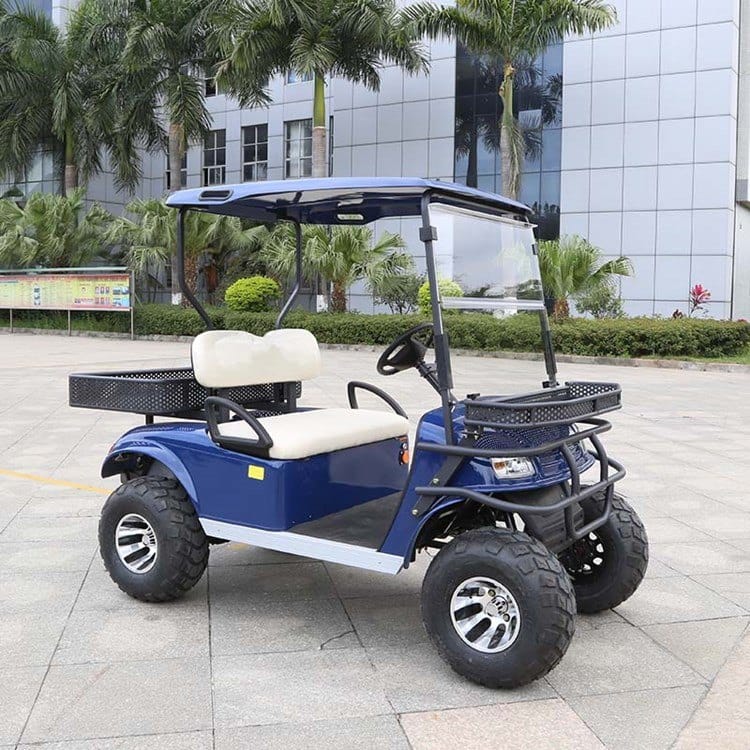
lifted 2 seater buggy in the classic body style
This is the lifted two seater in the classic bodyshell, rated to carry 360 kg against a gross weight of 520 kg. It runs 22 x 10-10 tyres, climbs 30% and covers a stated 70 to 80 km.
- Seats
- 2
- Carries
- 360
- Climbs
- 30
- Top speed
- 30
kg
per cent gradient
km/h, about 19 mph
Price
Request a quote
The battery, the wheels and the options change the figure enough that a headline price would be wrong for most buyers, so we price the vehicle you actually want, delivery included.
Get a price for this buggyCall 020 3036 2621Specifications are the manufacturer’s own published figures for this model. Range and climbing figures are measured in level, unladen conditions, so treat them as the ceiling rather than the number to plan a hilly site around.
About the 2 Seater Lifted Golf Buggy Classic
The classic bodies come from a different part of the range and it shows in the specification: this one publishes a gross weight, a carrying capacity, its steering and its brakes, where the rest of the catalogue publishes none of those. The useful number is the carrying capacity, at 360 kg.
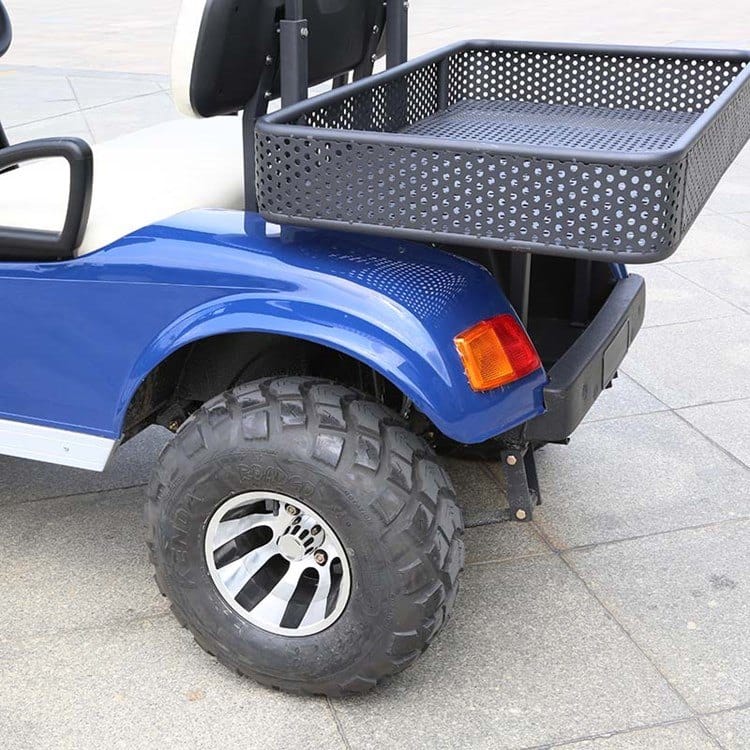
It arrives with front and rear baskets, a front bumper and a full light system as standard rather than as options, on 22 x 10-10 tyres. The look is the older upright shell, which suits estates and shoots where a modern buggy would sit oddly.
Where the classic body earns its keep
- Shoots and country estates where the vehicle is part of the setting
- Sites needing a stated carrying figure rather than an unrated bed
- Owners who want baskets, bumper and lights fitted rather than specified
- Ground where 30% climbing and 150 mm of clearance are the requirement
What it will not do
- Braking is a rear wheel mechanical drum system, not the disc arrangement on the newer bodies. The published brake range is 6 m.
- Ground clearance is 150 mm against 170 mm on the modern lifted models, so it sits slightly lower over a rut.
- The turning radius is 4 m, wider than the 3.1 m the modern lifted two seater manages.
- The stated range is a band, 70 to 80 km, rather than a single figure. Plan on the lower end with a load aboard.
2 Seater Lifted Golf Buggy Classic specification
The full figures for this model, as published by the manufacturer. Where a figure is not published we leave the row out rather than estimate it.
Performance
- Top speed
- 30 km/habout 19 mph
- Range on a charge
- 70 to 80 kmabout 43 to 50 miles, as stated by the manufacturer
- Climbing capacity
- 30%
- Braking range
- 6 m
- Turning radius
- 4 m
Weights
- Carrying capacity
- 360 kg
- Gross weight
- 520 kg
Motor and battery
- Motor
- 48V, 4 kW
- Controller
- 48V, 400A
- Battery
- 6 x 8V, 165Ah
- Charger
- Onboard
- Steering
- Rack and pinion
- Brakes
- Rear wheel mechanical drum
Dimensions
- Length, width, height
- 2600 x 1300 x 1860 mm2.6 m long
- Wheelbase
- 1700 mm
- Ground clearance
- 150 mm
Wheels
- Tyres
- 22 x 10-10, 4 ply
Options
Fitted to order. Tell us which you want and they are priced in the quote.
- Side and interior mirrors
- Seat belts
- Weather enclosure
- Lithium battery in place of lead acid
Questions about the 2 Seater Lifted Golf Buggy Classic
- How much can it carry?
- The manufacturer rates it at 360 kg against a gross weight of 520 kg. That is a published figure for this body, which most of the range does not give, and it is the reason to choose it over a buggy with an unrated bed.
- What is different about the classic body?
- An older upright shell, front and rear baskets, a front bumper and a light system as standard, and a specification sheet that states weights, steering and brakes. Underneath it is a lifted chassis like the rest of the line.
- Is it as capable as the modern lifted buggy?
- On climbing, yes: both are 30%. On clearance it sits 20 mm lower at 150 mm, it turns in 4 m against 3.1 m, and it brakes with drums rather than the newer arrangement. It carries a stated load where the modern one does not.
- How much does it cost?
- We price to specification rather than publish a figure. Tell us what it has to carry and where, and we will quote the vehicle, the delivery and the lead time together.
Other models to compare
Lifted buggies
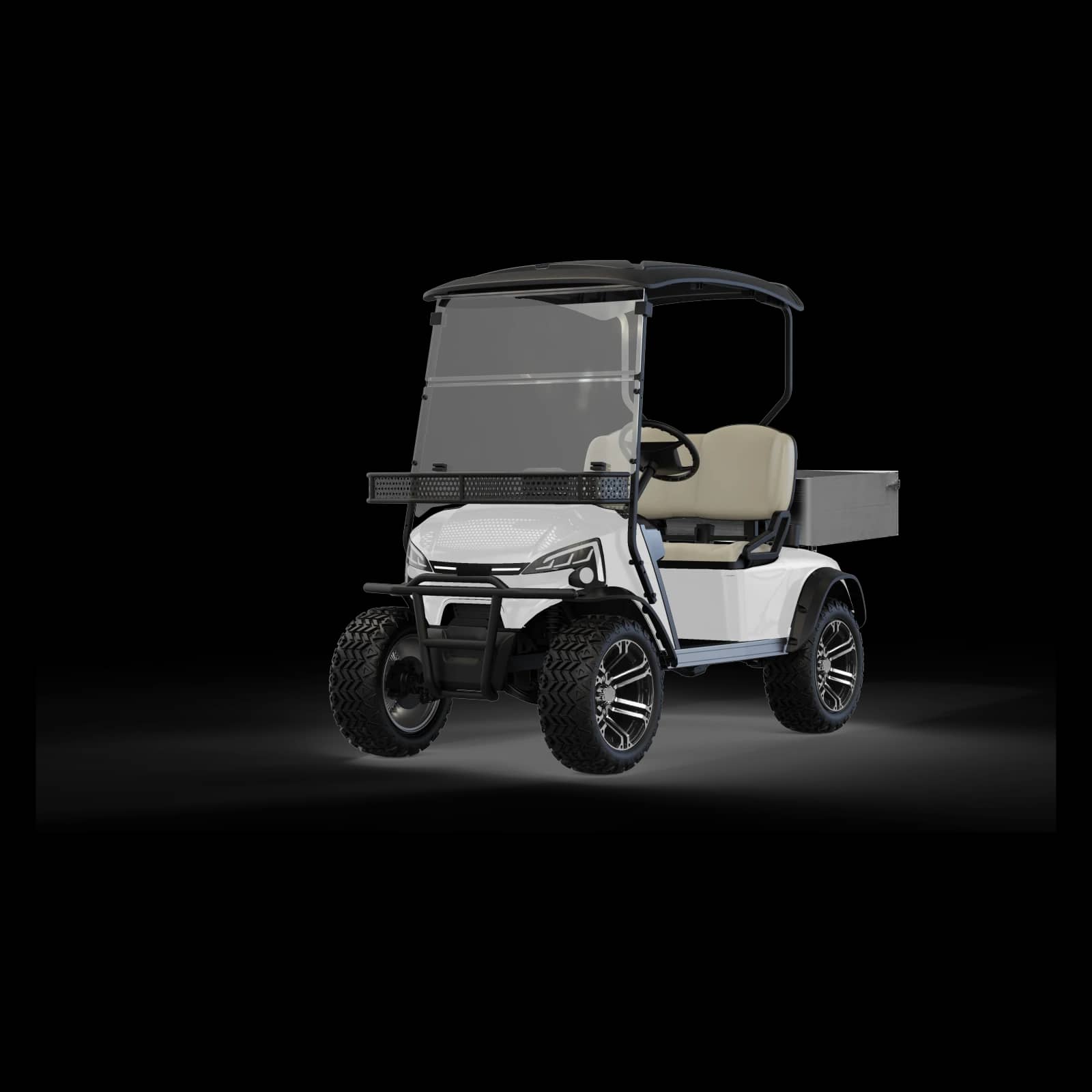
2 Seater Lifted Golf Buggy
lifted 2 seater electric buggy with a cargo bed
- Seats
- 2
- Stated range
- 80 km
Specification and quote
Lifted buggies
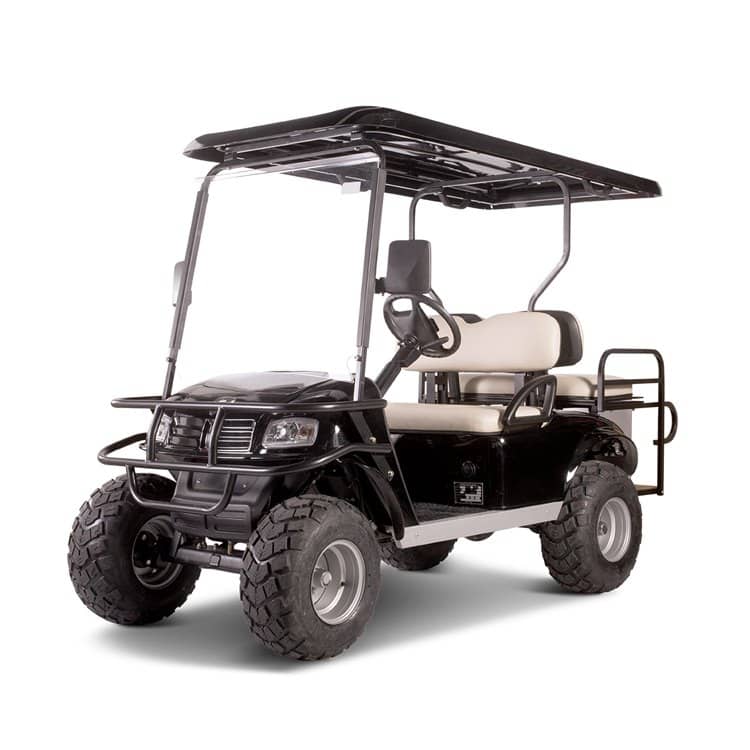
4 Seater Lifted Golf Buggy Classic
lifted 4 seater buggy in the classic body style, with a rear flip seat
- Seats
- 4
- Stated range
- 85 km
Specification and quote
Lifted buggies
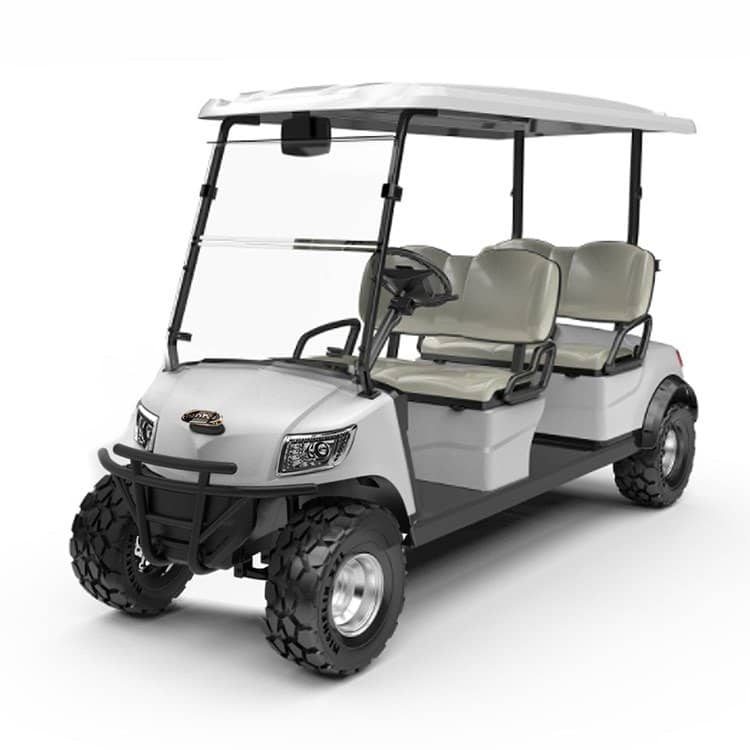
4 Seater Lifted Golf Buggy
lifted 4 seater electric buggy with two forward facing benches
- Seats
- 4
Specification and quote
Not sure whether to buy or hire
As a rule, buying wins if you would use it more than a few weeks a year or need it available without arranging anything. Below that, hiring usually costs less and takes the maintenance off you. The calculator works it through on your own numbers rather than ours.